
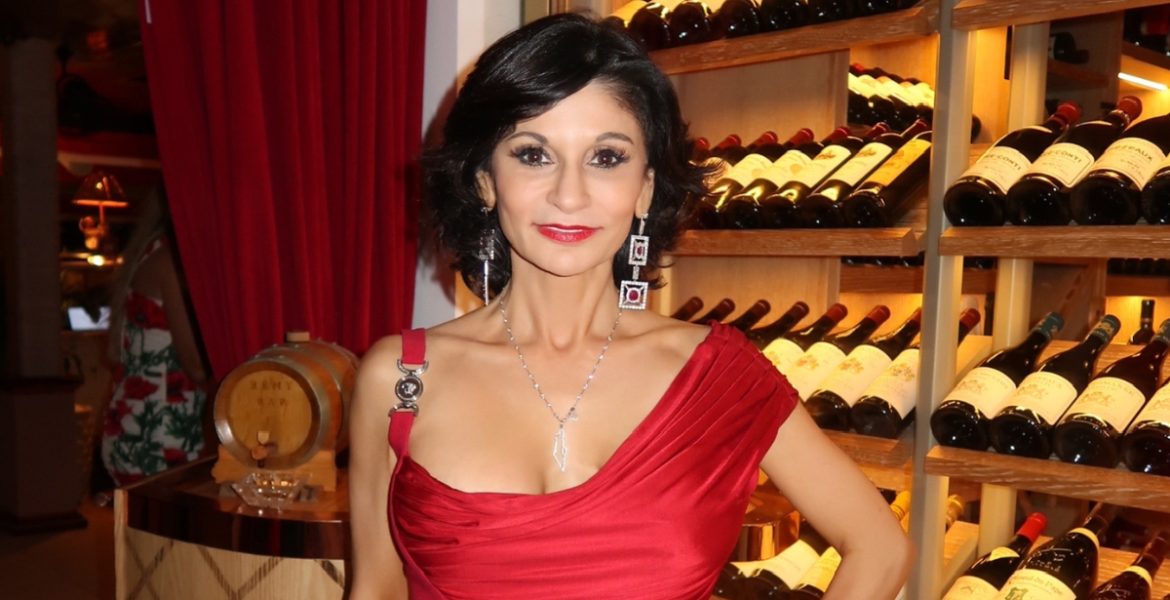
Julia Haart is known for many things: as a fashion mogul, the Netflix star behind the award-nominated show My Unorthodox Life, a mother of four, and a bestselling author. While her accomplishments are impressive, what truly sets her apart is her incredible personal transformation – a journey so unbelievable, it could be a Hollywood film.
She was raised to be invisible, but she ultimately became unstoppable. Embodying the rising Phoenix, she let an old version of herself burn to the ground and rise from the ashes – not once, but twice. In this intimate and in-depth conversation, she opens up about fear, ambition, the art of reinvention, and the mission that drives everything she does: helping women everywhere claim their freedom.
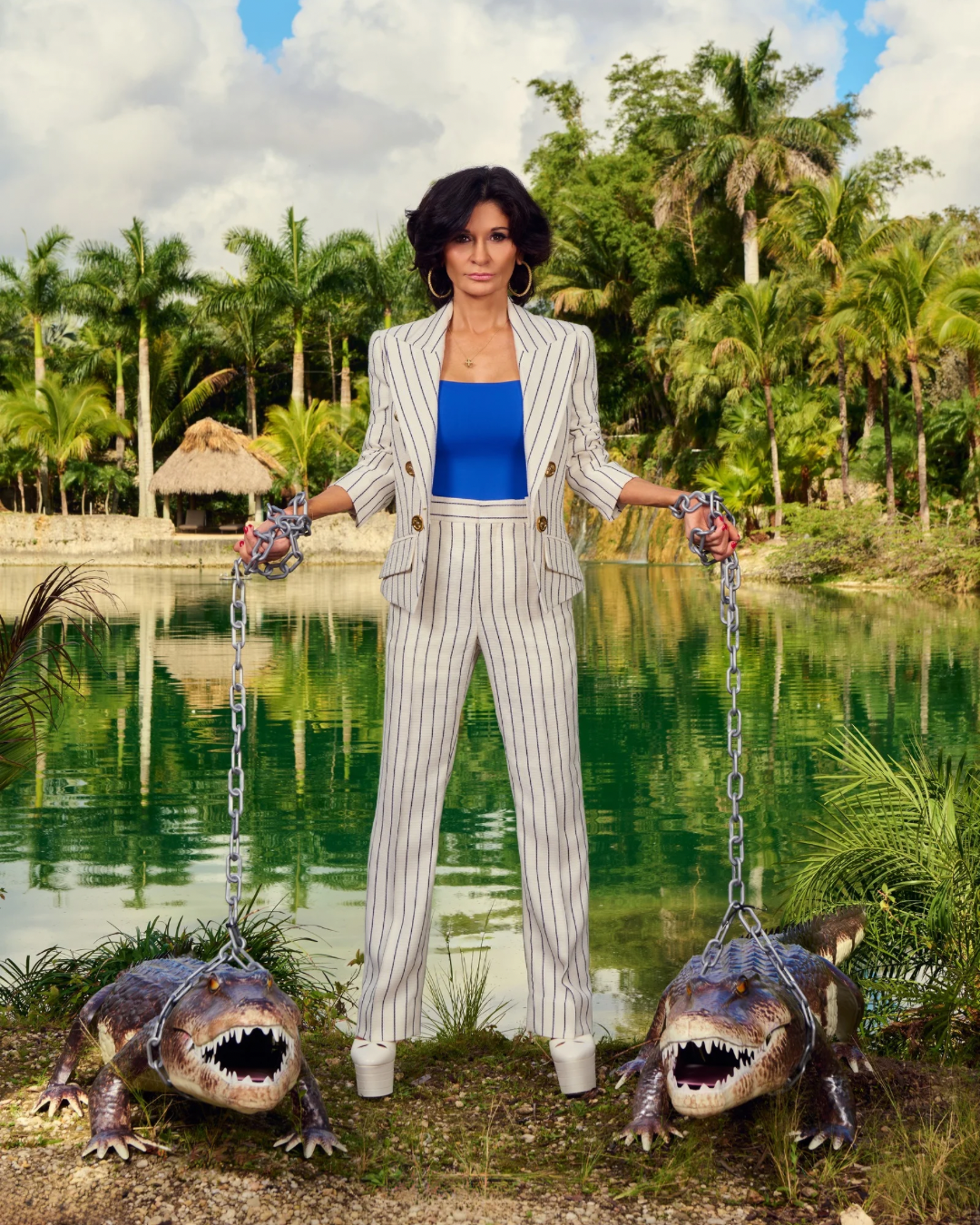
Some people are reinvented once in a lifetime. Julia Haart has been reborn twice.
The first time, she was 42. Born in Moscow in 1971 and raised in an ultra-Orthodox Haredi community, she was married at 19, raised four children, and lived covered from wrist to ankle in a world that measured a woman’s worth by how unseen she could be. For eight years she planned her escape in secret, quietly selling life insurance to build a freedom fund and teaching herself about a world she had been shielded from. In 2013, she stepped out of that life and into the 21st century, a transition she has described as time travel.
What came next defies every timeline. With no résumé, formal training, or industry connections, she launched her own shoe brand, which quickly got distribution in retail stores. By 2016, she was named Creative Director of the Italian luxury house La Perla, where she designed the sheer gown Kendall Jenner wore to the 2017 Met Gala. In 2019, she became CEO and co-owner of Elite World Group, reshaping the storied modeling agency into a billion-dollar talent media company that taught models to leverage social media to build personal brands that could outlive their careers on the runway.
In 2021, she opened her life to the world in Netflix’s My Unorthodox Life, which premiered in 190 countries and ran for two seasons. A year later came her memoir, Brazen: My Unorthodox Journey from Long Sleeves to Lingerie. She then launched her vibrant shapewear line, now BODY by Julia, designed to be seen rather than hidden.
Then, in 2022, the life she had built was upended almost overnight. She was removed from the company she led and filed for divorce, beginning a four-and-a-half-year legal battle that tested everything she was. In September 2026, the court ruled in her favor and awarded her full ownership of Elite World Group.
That was her second rebirth, and in many ways the more profound one.
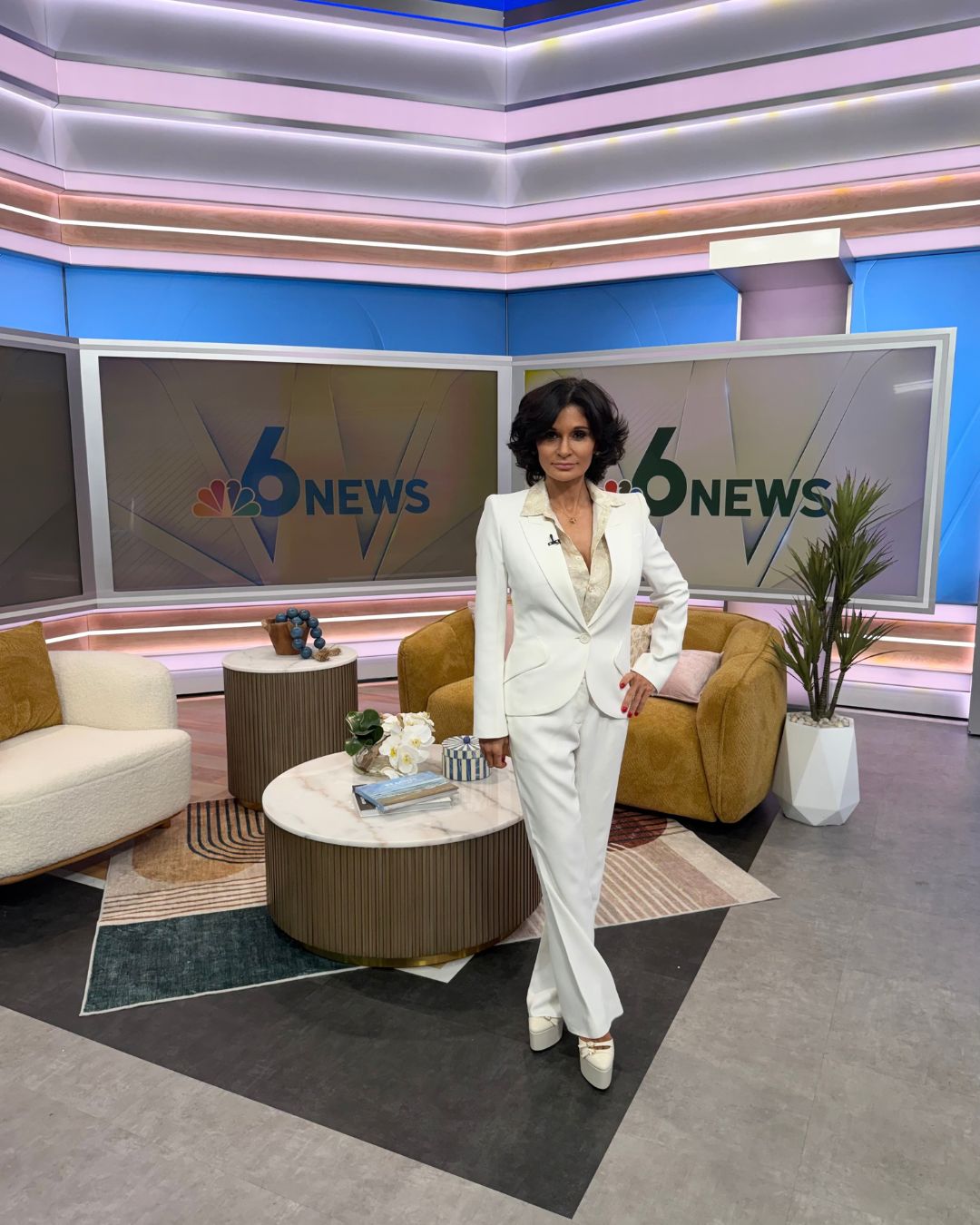
I first saw Julia speak at New York Fashion Week in 2019, before anyone (including myself) really knew her story. Aside from learning she was the CEO of Elite World Group, I didn’t know much more about her background, but I had an intuitive feeling: this woman is important in a way that goes far beyond titles or influence. There was an undeniable fire in her, like a trailblazing spirit that made everyone in the room take notice. I left the event feeling inexplicably moved – it was like she spoke to my soul and catalyzed something within. She later contributed her words of wisdom to my International Women’s Day feature story in 2020, a year before My Unorthodox Life made her a global name.
What I didn’t realize then was how much she would become a quiet mentor to me. My father was a self-made entrepreneur from New York, born in the Great Depression, an era when women were expected to be the support system: stay home, raise the family, and never be too loud, opinionated, or ambitious. Throughout my career, I learned to speak up and voice my opinions – which often became a source of conflict between us (as we worked together in our 50-year-old family business). But by the end of his life, he finally respected and admired me for becoming a strong, independent woman.
Watching Julia over the past seven years has given me the courage to keep going: to use my voice, to share unconventional ideas with industry leaders in fields I’m still learning, and to go deeper with people instead of staying on the surface for fear of how they might respond.
Over time, I’ve come to realize that sometimes your destiny finds you, and it often asks you to become a bolder, more authentic version of yourself. That can be confronting, as it asks you to let go of the identity the world projected onto you, whether that was looking perfect, saying the right thing, or staying quiet.
That’s why I wanted to tell her story, because I innately resonated with her from the moment I saw her speak. And once I finally learned her true story – from growing up within an ultra-Orthodox community that limited women’s freedom to her own meteoric rise in her illustrious career – I realized that everything she stands for – female empowerment and fearless leadership – struck a chord within me, daring me to step into a bolder, braver version of myself. As a result, she’s become one of my role models, without her even knowing it (until our recent in-depth conversation a week ago).
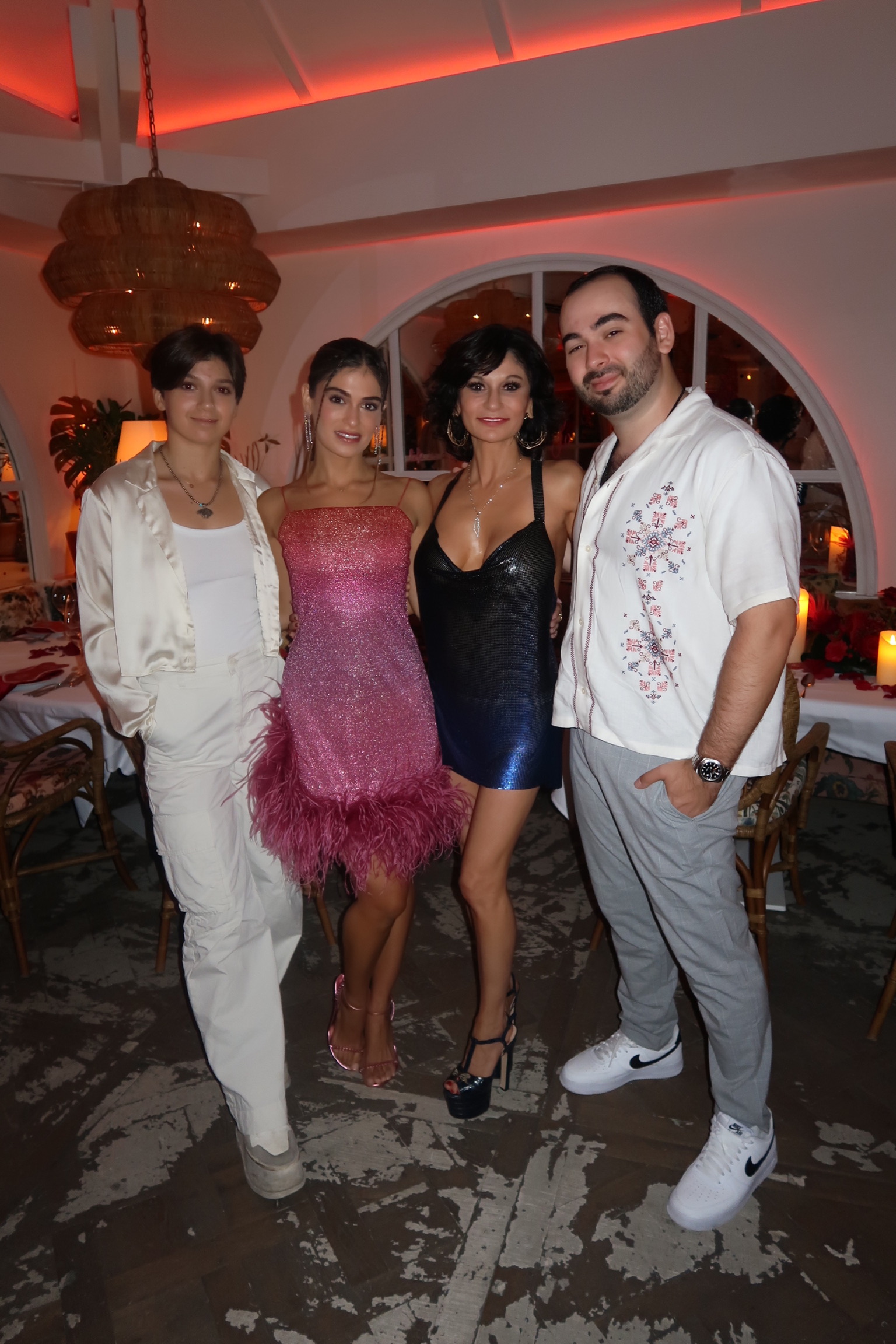
From the outside, Julia’s life looks like a gilded dream: beauty, wealth, power, fame. What the world rarely sees is the pressure, fear, and private battles beneath a confident, brazen exterior. Julia has chosen, again and again, to show us both. A woman raised to be invisible who became a global force of nature, teaching women around the world, many of whom have been told to stay small, what is truly possible when we find the courage to follow our dreams, believe in ourselves, and to go beyond our perceived limitations.
When we reconnected over Zoom this month, she had just emerged from a massive 4-year legal battle with her ex-husband and business partner, and was now reclaiming her global company, agency by agency, across Europe. What began as an interview quickly became a conversation between two women who recognized something in each other, one that nearly brought us both to tears. Here it is: honest, unfiltered, and as fearless as Julia Haart is.
An Intimate Conversation with Julia Haart
CLP: You grew up in a world where a woman’s worth was measured by how invisible she could be. You were married at 19, raising four children, and covered from wrist to ankle. Yet somewhere inside, a different woman was waiting. Who was she, and how did you keep her alive all those years when no one could see her?
JH: “I’m going to say something that will sound absolutely ridiculous, but it’s the closest way I can explain how I felt: constipated. You know when you’re completely clogged up and you desperately need to get it out? That’s what it felt like being me.
I had all these ideas in my mind, all these things I knew I could accomplish, inventions, creations. At a certain point, it just has to get out of you. It has to explode. There was so much inside of me, and I couldn’t keep it in anymore. It was severe, extreme mental constipation.”
I told her it feels as if her life has become a massive demonstration of human potential, of what happens when you believe in yourself despite every odd being stacked against you. My father taught me something similar: where you come from does not determine where you’ll end up. It’s up to you. “Exactly,” she said.
CLP: Your escape wasn’t one brave night. It was eight years of quiet strategy: secretly selling life insurance to build a freedom fund, teaching yourself about a world you had been shielded from, and essentially living a double life. What does it take, psychologically and emotionally, to hold a secret that big for that long? And what kept you from giving up on that version of yourself?
JH: “I don’t think I had a choice. The misery and pain got to the point where it couldn’t be contained anymore. It was either fight to get out or die. Sometimes we need to reach such a level of difficulty and pain that the only way out is to change, to grow, to move forward and take action. I had to get to the point where I wanted to die.”
I told her that in my own life, it has always been the lows that transformed me. A diamond is formed under pressure, and what often feels like is happening to us is, in truth, happening for us. She took that thought even further.
JH: “I am defined by my struggle. I look forward to the day that I’m defined solely by my achievement. But today, when I look at who I’ve become, how much more calm and joyful and confident I am, I know I had to break myself into pieces and recreate myself. It was that or not survive. The odds have to be that extreme, I think, to make those kinds of choices.”
CLP: You’ve described leaving at 42 as time travel, stepping from something like the 1800s into the 21st century overnight. Most people would have been overwhelmed just learning how to navigate everyday life. What was the hardest belief about yourself that you had to unlearn, and what replaced it?
JH: “Truly, everything. Every belief I had about myself, I had to replace. I had spent a lifetime being told that I was a lesser being, that my intellect was less than a man’s, that my role was to be a support figure, to stay in the background, to be quiet, submissive, and modest, and never put myself forward. Pretty much every part of who I was had to change.
And it didn’t happen all at once. I didn’t even realize it had happened in one part of my life and not in the rest. When it came to business, I had such clarity about what I wanted to accomplish and such confidence that I could do it. It’s strange to say now, but what I saw in my head felt more real to me than my present circumstances. It felt as real as the shirt I’m wearing. I never really doubted I could do it, because I had already done it in my head.
So in business, I had managed to eradicate that inferiority complex. But in my personal life, it took the divorce for me to recognize that I was still that woman in my marriage. My daughter literally said to me, “Ema [Mom], when you speak to him, your voice changes. You talk like a little girl.”
As much as I had eradicated it from the business persona I created, it was still totally inside of me when it came to how I saw myself as a person. I still felt inferior to men. I still had to prove myself, still needed their approval, their permission. It took a traumatic divorce to force me to eradicate it from my being.”

CLP: Within months, you launched a shoe brand and showed in Paris. By 2016, you were Creative Director of La Perla, designing the gown Kendall Jenner wore to the Met Gala. And by 2019, you were CEO of Elite World Group. This isn’t a career path; it’s a quantum leap. What inside you made it possible to move that fast with no résumé, training, or connections?
JH: “I see what should be as clearly as most people see what is.
When I came into La Perla, I said it was all about luxury and comfort. Editors of some of the top fashion magazines yelled at me: “Julia, comfort is a dirty word. You suffer for beauty.” I thought, you’re all crazy. It’s 2016, and women are still okay with suffering for beauty? Who came up with this nonsensical concept? Eventually everyone caught on. Two years later, an editor told me, “Wow, you did it. Comfort’s not a dirty word anymore.”
When I came into Elite World Group, it was the same thing. I said it’s not about the billboard or the runway or the magazine anymore. It’s all about social media. Build yourself into a brand. You are a network; you have the audience. We shifted the power dynamic, so it wasn’t women standing in line waiting for a creative director or magazine editor to choose them. Now the editors and creative directors were chasing them, because they had the audience. Saying this in 2026, everyone says, “Duh.” But I could show you the emails and messages I got saying I was crazy, that this was the way it had been done for hundreds of years.
One of my favorite sayings in the world is, “They come to mock, but they stay to pray.” That has been the trajectory of my life. Everything I’ve done, people ridiculed me and told me I was crazy, and then it worked.”
As she spoke, I found myself on the verge of tears. My family was always a little different in my conservative hometown of Pebble Beach, and I was mocked for standing out when I was a kid, to the point that I just wanted to be a wallflower in middle school. “I’m hugging you,” she told me. “We get mocked.” Then she shared a story that proves her point.
JH: “At La Perla, I wanted to create a stretch lace so lingerie would actually be comfortable. I had found threads with the elastane inside, so the thread stayed just as light and soft as a regular one. When I brought the idea to one of our lace makers, whose family had made lace for the kings of France, he literally patted me on the head like I was five years old and told me how long they had been making lace. A year later he sent me an email: “Julia, you saved my company. Everybody’s buying my stretch lace.” I kept it framed in my office.
Because I didn’t know how things were done, because I didn’t have a traditional education, and because I’m a constant learner, I just went with what I thought should happen instead of what everyone was used to. That has been the secret of my success: ignoring the status quo and doing what made sense to me logically.”
A couple of summers ago, I took my first official art class. One assignment was to draw an object by drawing only the empty spaces around it. That’s the magic, I think: finding those empty spaces in between. And 99.99% of people are comfortable in the known and terrified of the unknown. I love the unknown. I live in the unknown. That’s what gets me up in the morning. Entrepreneurs aren’t just unafraid of the unknown; we’re excited by it. It gives us life.”
CLP: With My Unorthodox Life, you opened your home, your family, and your past to audiences in 190 countries. That’s a radical choice for a woman who was essentially raised to be unseen. What did it cost you to be that visible, and what did it give back that you didn’t expect?
JH: “It was probably the most terrifying thing I’ve ever done in my life. I had nightmares for months leading up to it, and nightmares the whole time I was filming. The crazy thing is that I’m actually a very private person. Left to my own devices, I would never tell anyone anything.
I did it because I thought my story was so wild and extreme that it could help others create their own stories. Two women wrote me letters saying they chose not to end their lives because of the show. There are two human beings walking around on planet Earth because of it.
What did it give back? Community. I have close to a million DMs, emails, and letters from women as far away as Rwanda, Saudi Arabia, and Lebanon. People still come up to me on the street, and they don’t ask for a selfie. They tell me their story, and how my story changed theirs.
At one fashion show, a six-foot-tall woman literally lifted me up and burst into tears. Before she said a word, she lowered the back of her dress, and there were cigarette burns all over her back. She said, “Julia, I was married to this man as a teenager, just like you, and I survived years of abuse. I thought, I have no money, no education. How can I leave? Then I binged your show, and the day after, I packed my bags and left. Look at me now. I have an amazing life. I built a business.”
That’s what it gave back: an incredible sense of community, of shared suffering and shared vindication. It is possible. We can help each other. We can hold each other up.”
It struck me how much courage it takes for a deeply private person to be that honest in front of the world, knowing the reactions will be polarizing. I told her I believe our darkest moments are often what shape us into the strongest messengers, and that she has become a kind of new world leader for women. Which led us to her book.

CLP: In your book Brazen, you wrote about things many women would never say out loud: an arranged marriage at 19, losing your sense of self, and moments so dark you didn’t want to keep living. Why was it important to put that truth on the page, and what would you want someone in that darkness right now to know?
JH: “When I first left the community, I entered a design contest and won a trip to London, where I got to meet some of the biggest names in fashion. At one panel, someone asked a designer how she balanced it all: a family, a design career, a successful company. She answered that it was all so easy.
I remember thinking, this is the opposite of helping. Making it seem easy makes every other woman in the room feel like a failure. So when I wrote the book, I asked myself, what’s the purpose of sharing my experience if not to help other women? If I’m not going to tell the truth – the dirty, messy, disastrous, difficult truth – I’m helping no one. If you make yourself look perfect, you just make people feel worse about themselves, not better. If I was going to do it, I was going to do it with the truth.
Honestly, I didn’t feel safe. I felt it was the right thing to do, and I got attacked for it, big time. But I have never once regretted it. For most of my life, I had to live a lie. When I left, my driving force became freedom: financial freedom, freedom to be who I am. Part of that is not having to lie about myself, not having to smooth over or cover up the messy parts. Saying this is who I am, all of me, and I’m okay with it. I’m not going to hide it, because I’m free and I don’t have to. And when you always tell the truth, you never have to worry about what you said before.”
CLP: In February 2022, the life you had built was upended almost overnight. You were removed from the company you led, you filed for divorce, and your integrity was publicly questioned. For a woman who fought so hard for her own name, that kind of attack goes deeper than business. What did those years do to you on the inside, and what did you hold on to when everything external was being taken away?
JH: “To be honest, it almost killed me. I don’t like the word “triggering” because it’s misused, but it was the most triggering thing that had ever happened to me, specifically because of the journey I’d been through. I had left a male-dominated society where men could take credit for what I did and take control of what I had. I built myself up from nothing.
At Elite World Group, I worked 20-hour days. I spent most of my honeymoon on the phone, working. I had hundreds of messages from bankers and investors. What I had accomplished was so thoroughly documented. I took a modeling agency valued at $70 million and built a billion-dollar business during COVID. And then, almost overnight, it all went away, and I was the bad guy.
I went to a very dark place. It literally almost killed me. And then August of 2022 was the paradigm shift in my life. I realized two truths. Number one: this is killing me. And number two: I should let it.
What do I mean by that? I decided the old Julia had to die. This had happened to a woman who was so naive, so insecure, so desperate for her husband’s approval. I realized that if I wanted to become someone others could aspire to, if I wanted to achieve my goal of making as many women financially independent as humanly possible, that woman had to die, and I had to be reborn in a completely different way. And that’s what I did.
I used to joke to my kids that I Humpty Dumptied myself. I broke myself into a million pieces and said goodbye to that woman. I’m rebuilding from scratch. I’m going to create new neural pathways. I’m going to change the way I think and the way I act. I had to break myself down and rebuild myself. So it killed me, and then I rose from the freaking ashes as a different person. I love the person I am today. I hope I’ll be even stronger tomorrow, and I’m never going to stop changing. But I literally had to die and be reborn.”
Listening to her, I could feel the groundedness she described, as if she had tethered herself to something unbreakable. People could say anything they wanted, but they no longer got to decide her fate.
CLP: In September 2026, after more than four years, the court ruled in your favor and awarded you full ownership of Elite World Group. You didn’t just get back what you built; you came out stronger than you went in. You’ve framed this as a victory for every woman who has been financially bullied, discredited, or stripped of her power in a divorce. What do you want those women to hear from you?
JH: “Please don’t give up. That’s all I want them to know. Winning is not just possible; it’s possible if you choose to believe it. I really do believe in manifestation. I believe we create our own destiny.
Fix yourself internally. Make the core of who you are so strong that nothing can break it. Then get help from your friends and family. It’s not a weakness to ask for help; I had to learn that. And don’t stop.”
The Next Chapter for Julia Haart
For Julia, this recent victory isn’t just an ending; it’s only the beginning. Now that the ruling is final, she is doing the work of reclaiming what she built, country by country. And once she does, she plans to turn her own hardest years into a lifeline for other women.
“I’m going to start a fund for women who are in my situation,” she says. “At least I had things to sell. I had my jewelry, my clothing. I had people who could help me. There are a lot of women who don’t have that, so I think it’s important for us to create something that helps women in this situation.”
It’s the same thread that runs through everything she has created, from comfortable luxury at La Perla, to models owning their audiences at Elite World Group, to BODY by Julia, shapewear made to be seen rather than hidden. Each one gives women a little more freedom over their bodies, their names and their futures.
In the very first episode of My Unorthodox Life, Julia said this isn’t just a job or a career for her. She feels it’s her mission: helping women become financially independent and empowered. Years later, after everything she has survived, that mission hasn’t dimmed; it has only burned brighter.
Watching her transformation and rebirth has helped me trust my own voice, which is probably why our time together felt like a conversation between soul sisters, or as she likes to call it, “kindred spirits”.
She’s living proof that sometimes we have to go through the fire, allow our old identities to disintegrate so that we can be fully transformed, and then come out stronger, wiser, and more powerful than ever.
As we concluded our interview, she left me with a few words of wisdom that women everywhere can feel inspired by. She said, “You are in charge of your own destiny. You can change everything. You just have to change yourself first.”
[Disclosure: Images courtesy of Julia Haart. All opinions are my own.]