
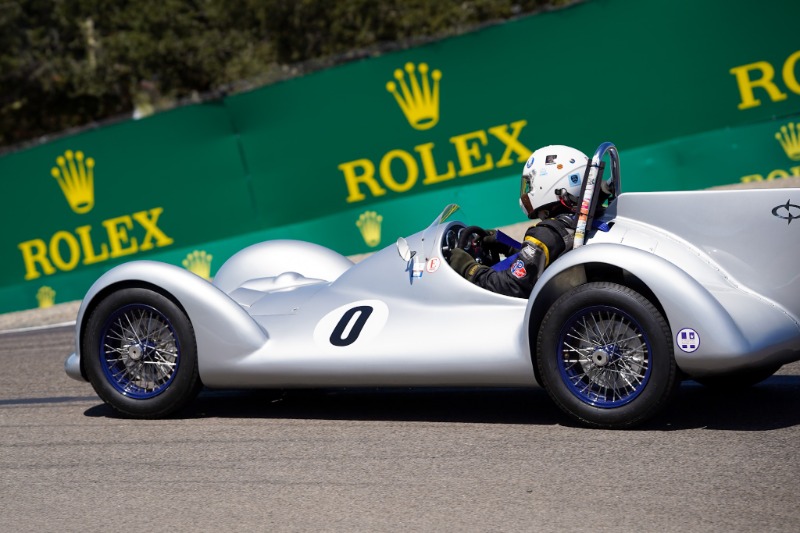
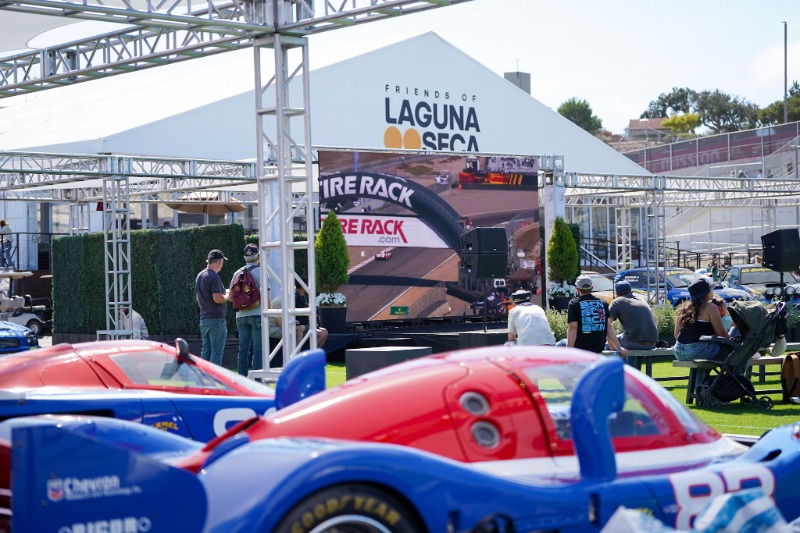
WeatherTech Raceway Laguna Seca has always been a place where eras collide — where historical race cars from decades past prove they still have racing stamina, while the roar of modern hypercars can share the same legendary track all within hours of each other. A few weeks ago during Monterey Car Week, Rolex Monterey Motorsports Reunion leaned fully into that duality, delivering four days that felt equal parts museum and proving ground, and nowhere was that tension between heritage and horsepower on more vivid display than in the paddock Czinger Vehicles built just steps from the Corkscrew.
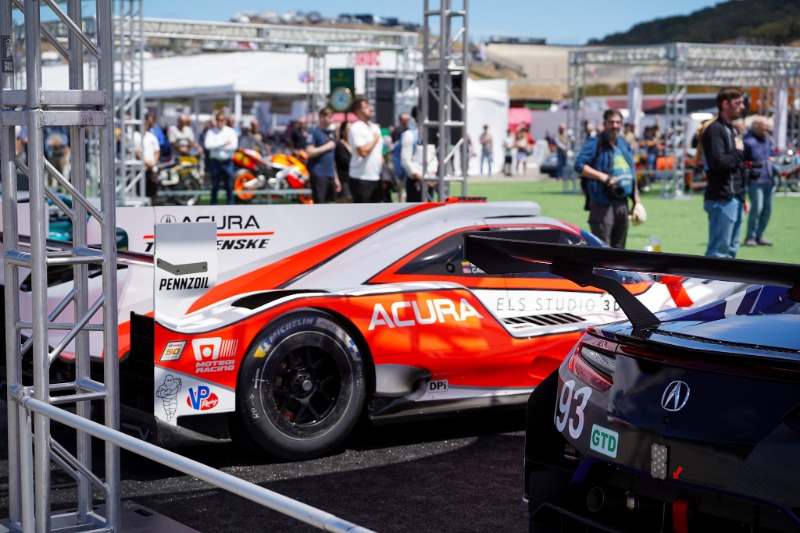
The Reunion’s 2026 edition carried a theme — Japanese Icons of Motorsport — that gave the event an added layer of storytelling beyond its usual mix of Trans-Am, Can-Am, IMSA GTP, and FIA Group C machinery tearing around the circuit at speed. The Japanese Heritage Display alone drew steady crowds to see more than 40 cars and motorcycles, anchored by the 1991 Mazda 787B (the first Japanese car to win Le Mans outright) and the 2018 Toyota GAZOO Racing TS050 Hybrid that delivered Toyota its first overall Le Mans victory.
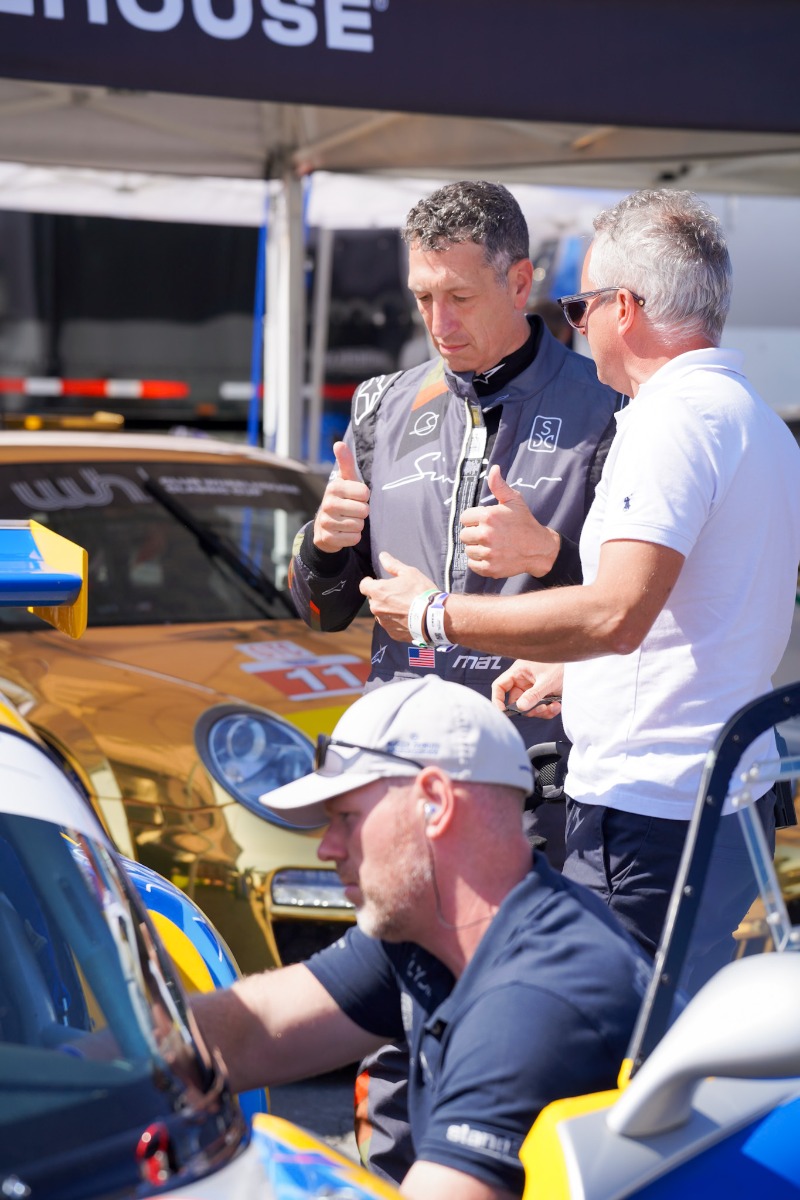
Two wheels got their own moment in the spotlight, too. For the first time in nearly two decades, all six living American 500cc World Grand Prix Champions — Kenny Roberts, Freddie Spencer, Eddie Lawson, Wayne Rainey, Kevin Schwantz, and Kenny Roberts Jr. — reunited at the raceway where each built part of his legend, a group that combined for 14 of the 23 500cc World Championships awarded between 1978 and 2000.
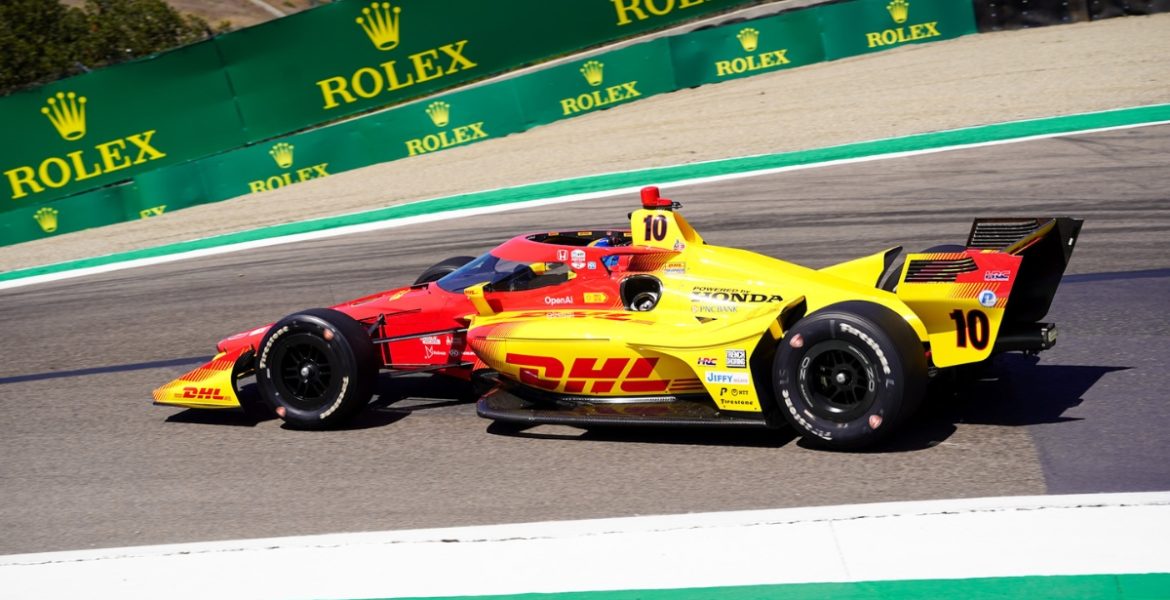
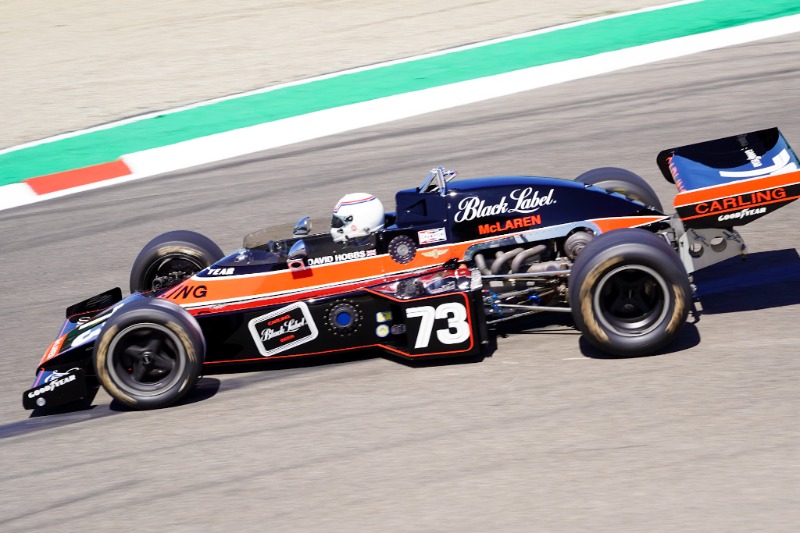
The Indy Car exhibit traced a parallel arc through American open-wheel racing, spanning more than two dozen cars from a 1911 National and 1931 Miller through the 1983 March that won Laguna Seca’s first Indy Car race, up to Alex Palou’s 2022 Dallara.
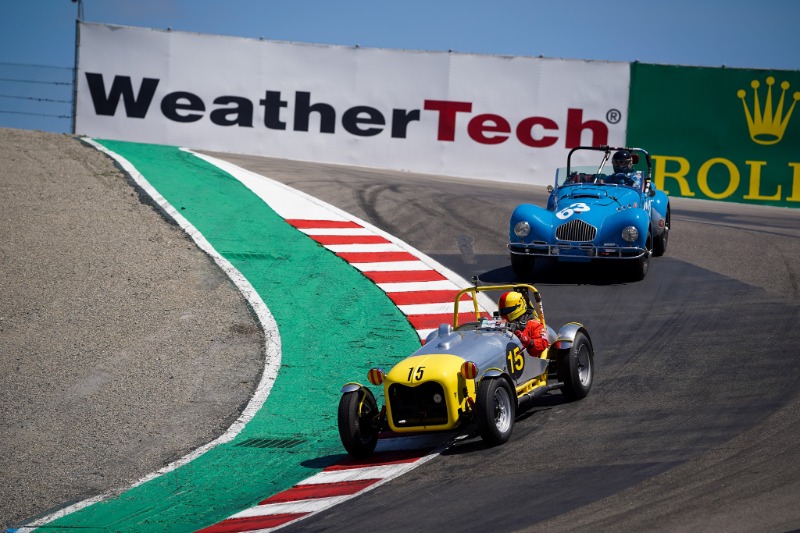
Two milestones marked genuine firsts for the event. Bonhams brought its storied Monterey Car Week auction to the raceway for the first time, ending nearly three decades at The Quail Lodge and forging a new link between the collector-car market and the track itself. And the inaugural Hypercar Parade sent more than 40 modern hypercars around the circuit in a single procession — a rolling counterpoint to the historic race cars competing all weekend, and a fitting stage for what may have been the weekend’s loudest declaration of dominance.
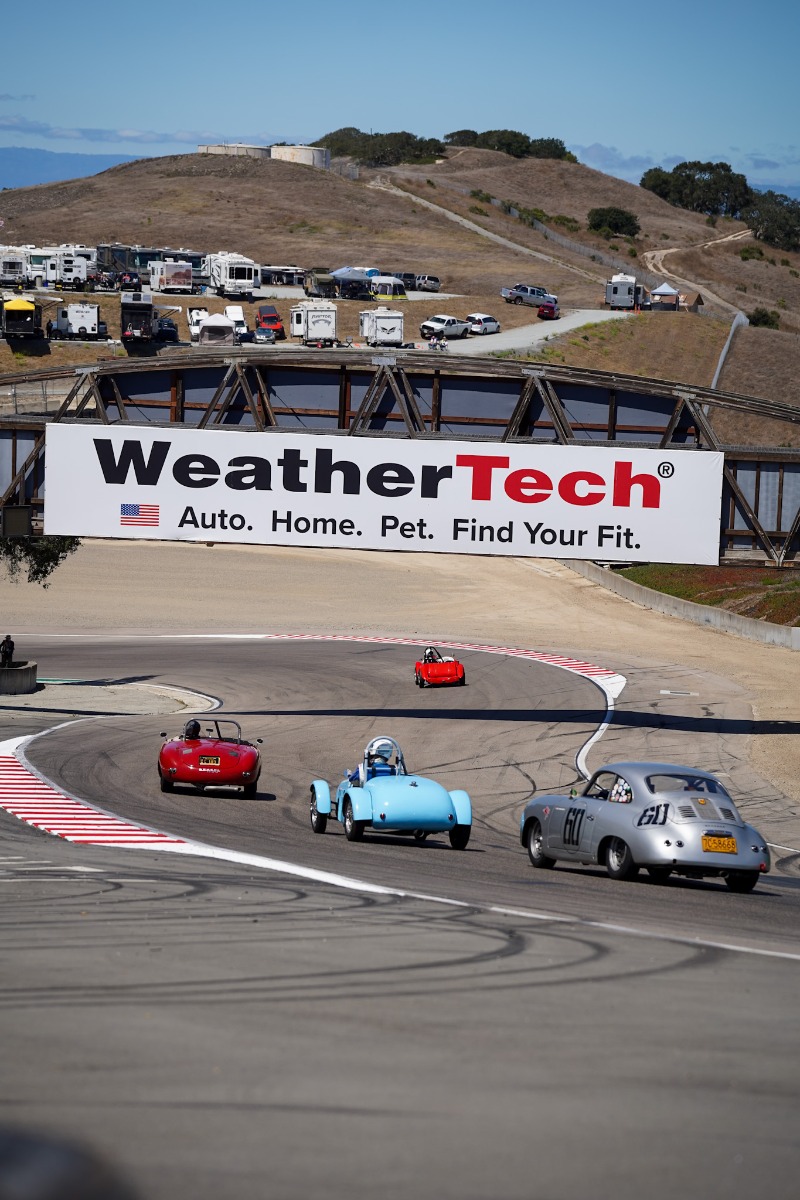
WeatherTech Raceway Laguna Seca president and general manager Mel Harder captured the scale of it best, calling this year’s Reunion “truly extraordinary.” Between the Japanese motorsport celebration, Bonhams’ debut, and the first Hypercar Parade, there was, in his words, something happening at every turn of the property — and the fans showed up to prove it.
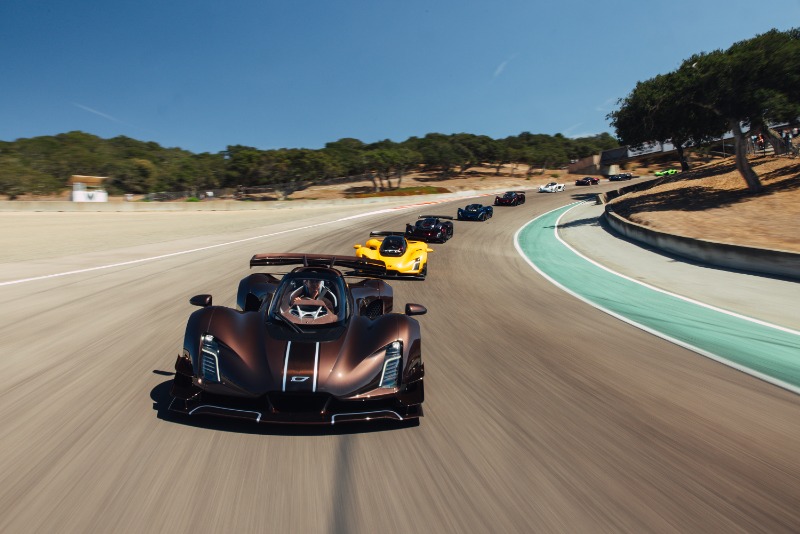
If the Hypercar Parade was the Reunion’s nod to where performance is headed, Czinger Vehicles turned its own paddock garage into a shrine to how fast it’s already gotten there. The Los Angeles-based hypercar manufacturer has quietly turned Laguna Seca into something like a proving ground of its own: since 2021, the Czinger 21C has claimed and reclaimed the production car lap record at the circuit four separate times, most recently in December 2025 with a 1:22.30 lap — nearly two seconds quicker than the Koenigsegg Jesko Absolut’s Spear time set just a month prior. That earlier record chase was documented in Czinger’s own “California Goldrush” film, giving the rivalry a cinematic backstory long before this year’s Car Week crowds arrived.
Czinger used its Monterey Car Week presence to celebrate that streak outright, branding its activation “King of Laguna.” All week, fans packed the paddock garage to walk through a gallery tracing the story behind each of the brand’s four Laguna Seca records, displayed alongside the actual cars and components that set them — gearboxes, steering wheels, and dive planes pulled straight from the record-setting vehicles.
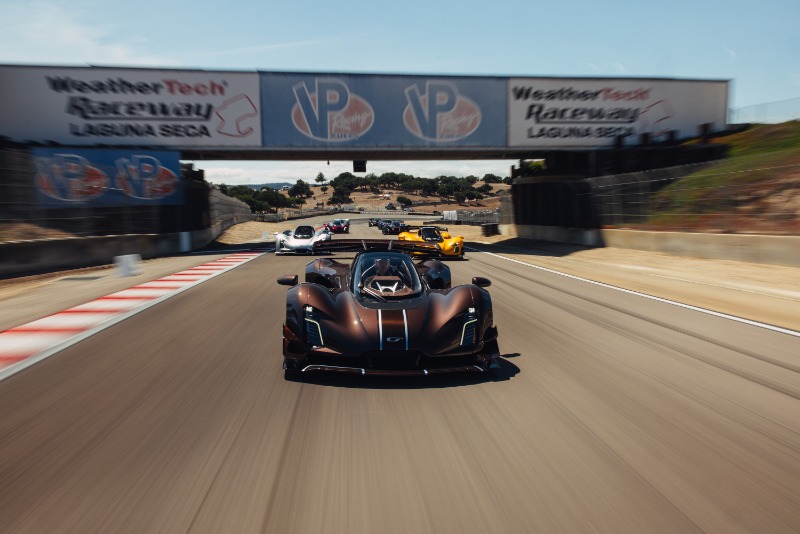
The activation climaxed on Saturday, August 15th, when Co-Founder & CEO Lukas Czinger led the largest gathering of Czingers assembled to date onto the track in the new 21C Spyder. Nine cars in total joined him: the Spyder, three 21C VMaxes, and five 21C HDFs, marking the first time all three 21C variants had appeared on track together. After an opening parade lap, the cars spent roughly 20 minutes lapping the circuit in dedicated Czinger track time — a fitting capstone to a week that had already crowned Laguna Seca’s fastest production car four times over.
Last year, I sat down with Lukas Czinger to discuss their triumphs, especially at Laguna Seca, as they achieved a record-setting lap time, despite the car getting in a crash.
He said, “If you just want to go fast, you build a race car. That’s easy. But we’re an OEM, building road-legal, homologated cars. That means crash testing, emissions certification, safety engineering – the full process. The 21C isn’t a track toy – it’s a road car you can register with the DMV in California. That’s what makes it impressive: you can drive it 500 miles on public roads, then arrive at a racetrack, not even change the tires, and set a record. The 1,000 miles proved both sides: usability and reliability on the road, plus record-setting performance on track. That duality is the definition of the 21C.”
Between the Hypercar Parade, the inaugural Bonhams auction, and Czinger’s record-setting encore, this year’s Rolex Monterey Motorsports Reunion made its case as more than a heritage event — it’s becoming the place where motorsport’s next chapter gets written, too.
[Media access c/o WeatherTech Laguna Seca. Image credits: Christina-Lauren Pollack / Inspirations & Celebrations and Czinger Vehicles]