
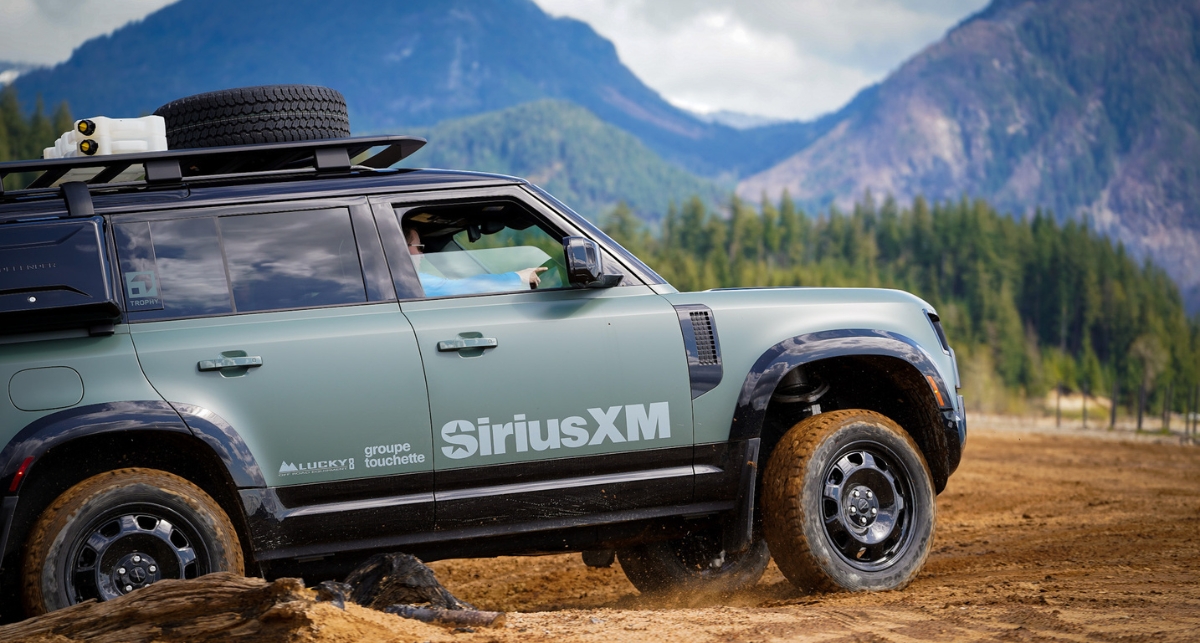
As the British-American poet, T.S. Eliot, said, “Only those who will risk going too far can possibly find out how far one can go.” Embodying that statement, the Defender Trophy Competition arrived in the untamed wilderness of British Columbia with one unmistakable message: discover what you’re made of while embracing the impossible.
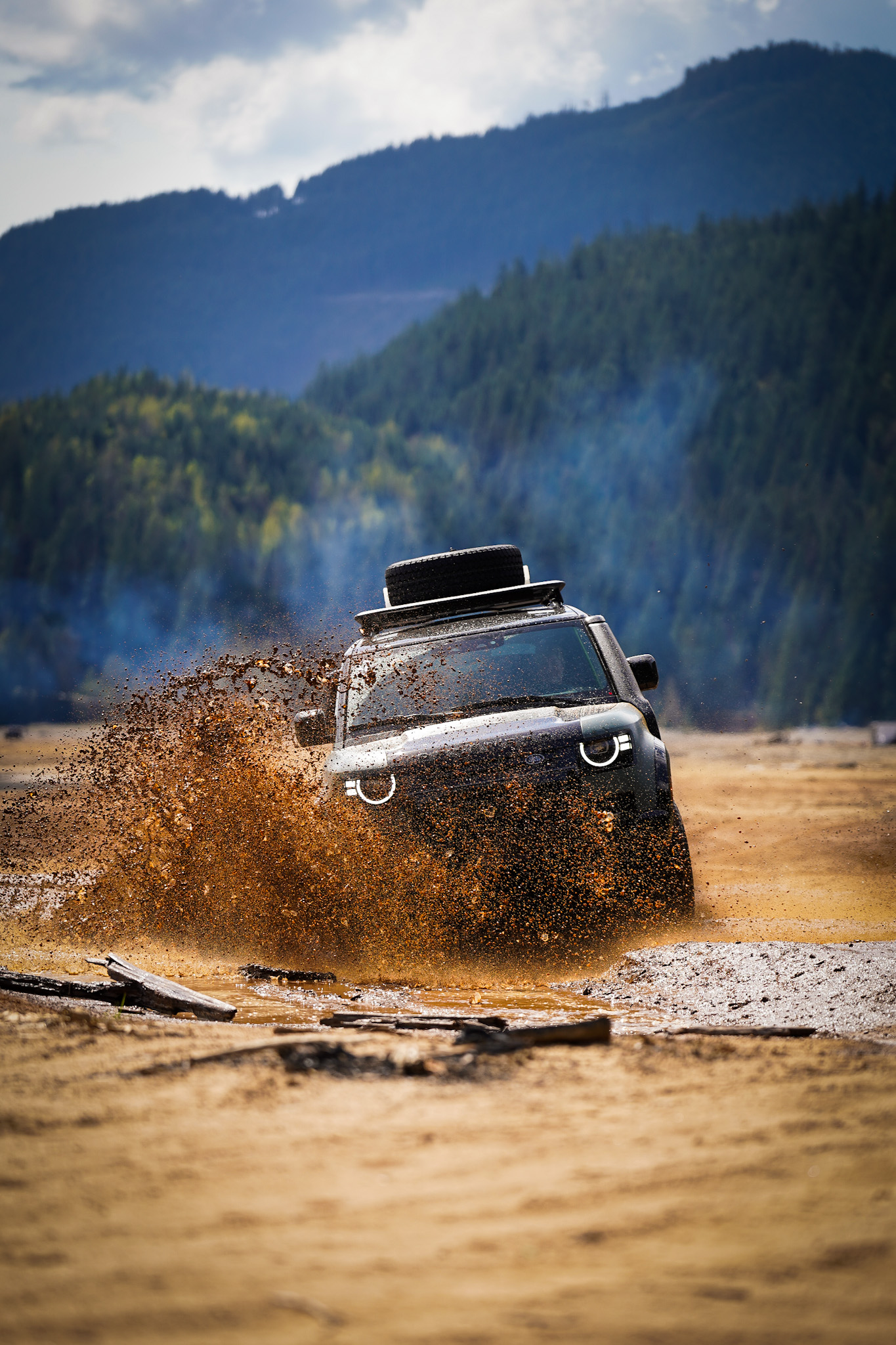
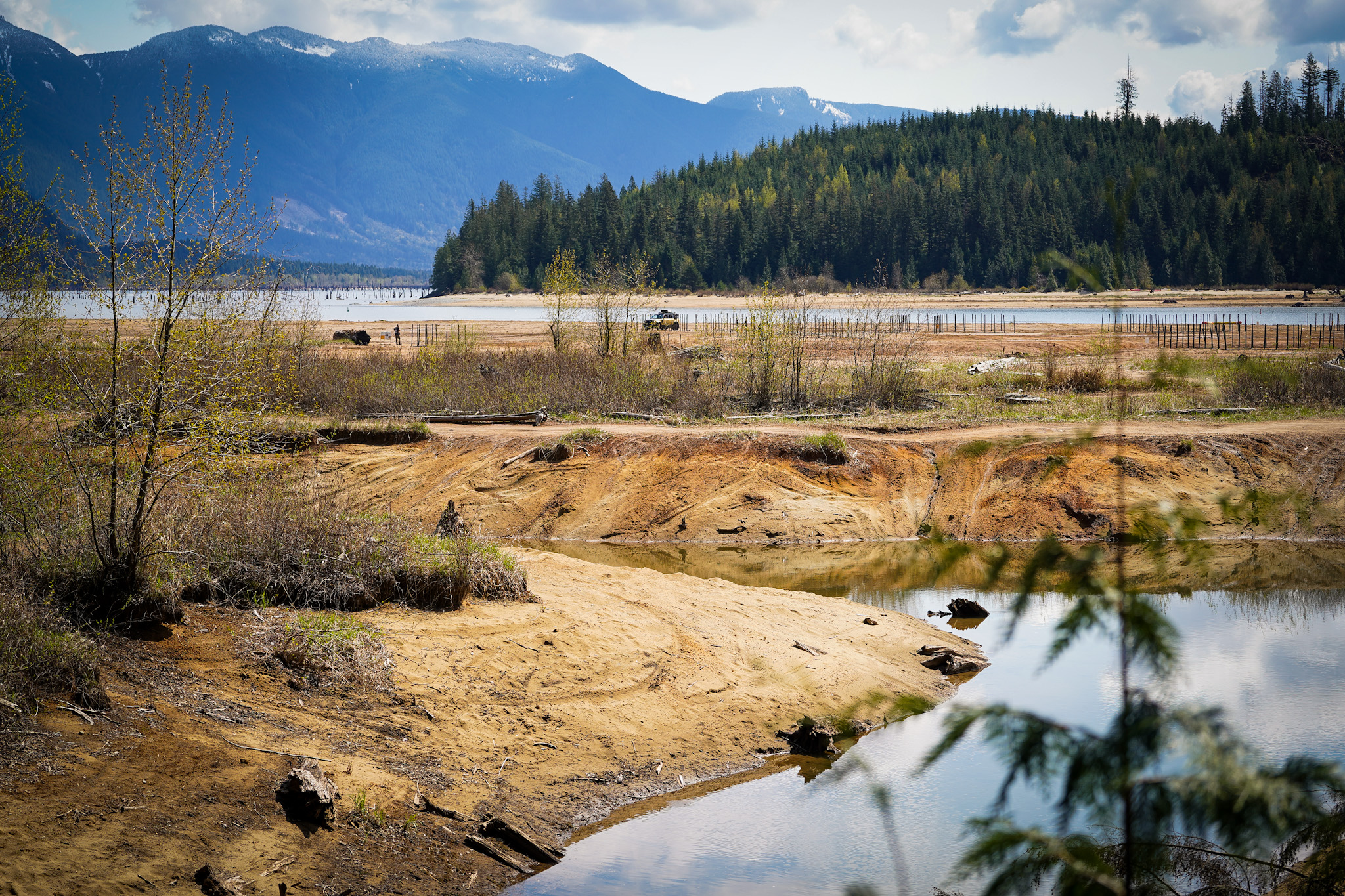
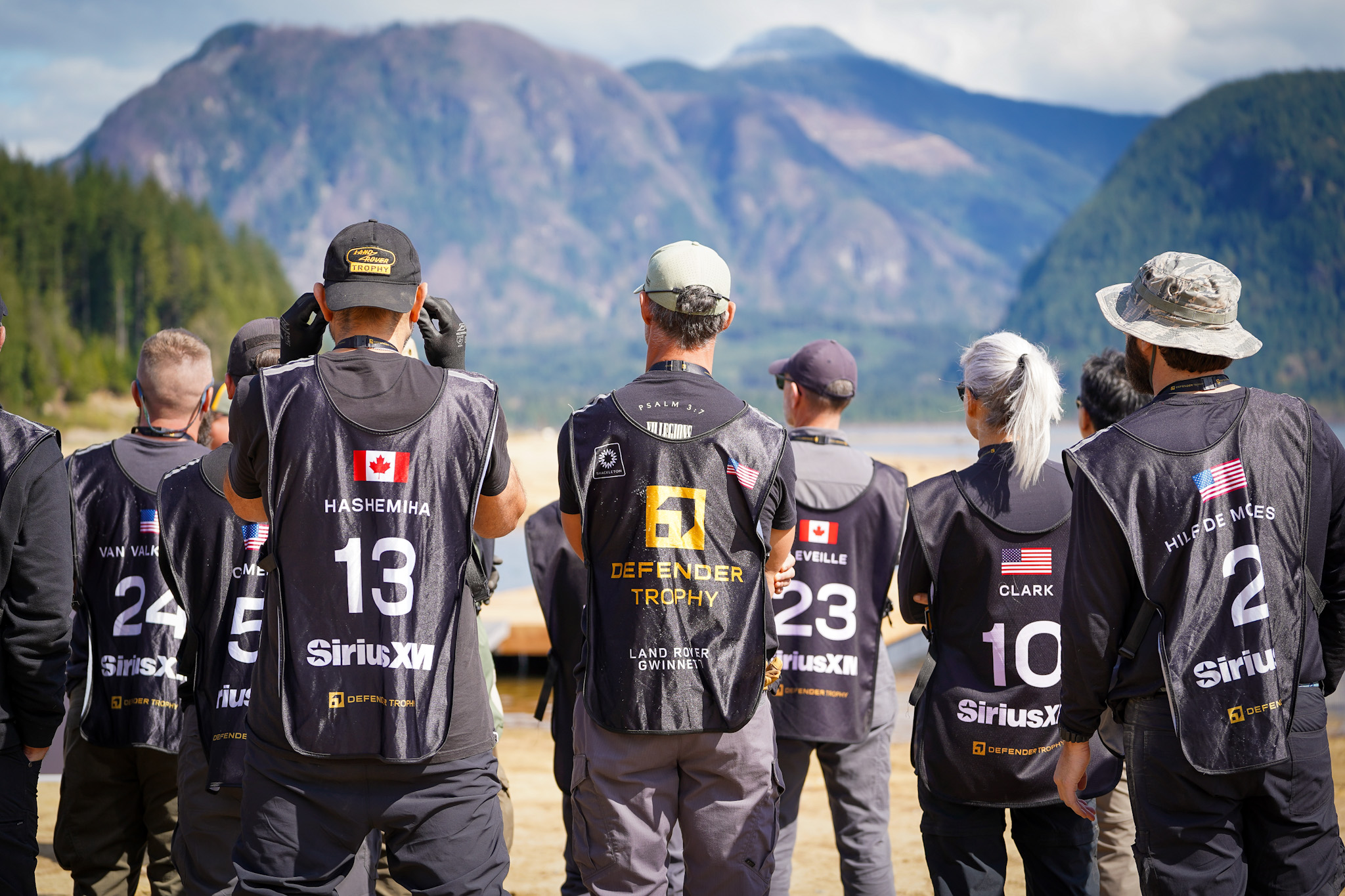
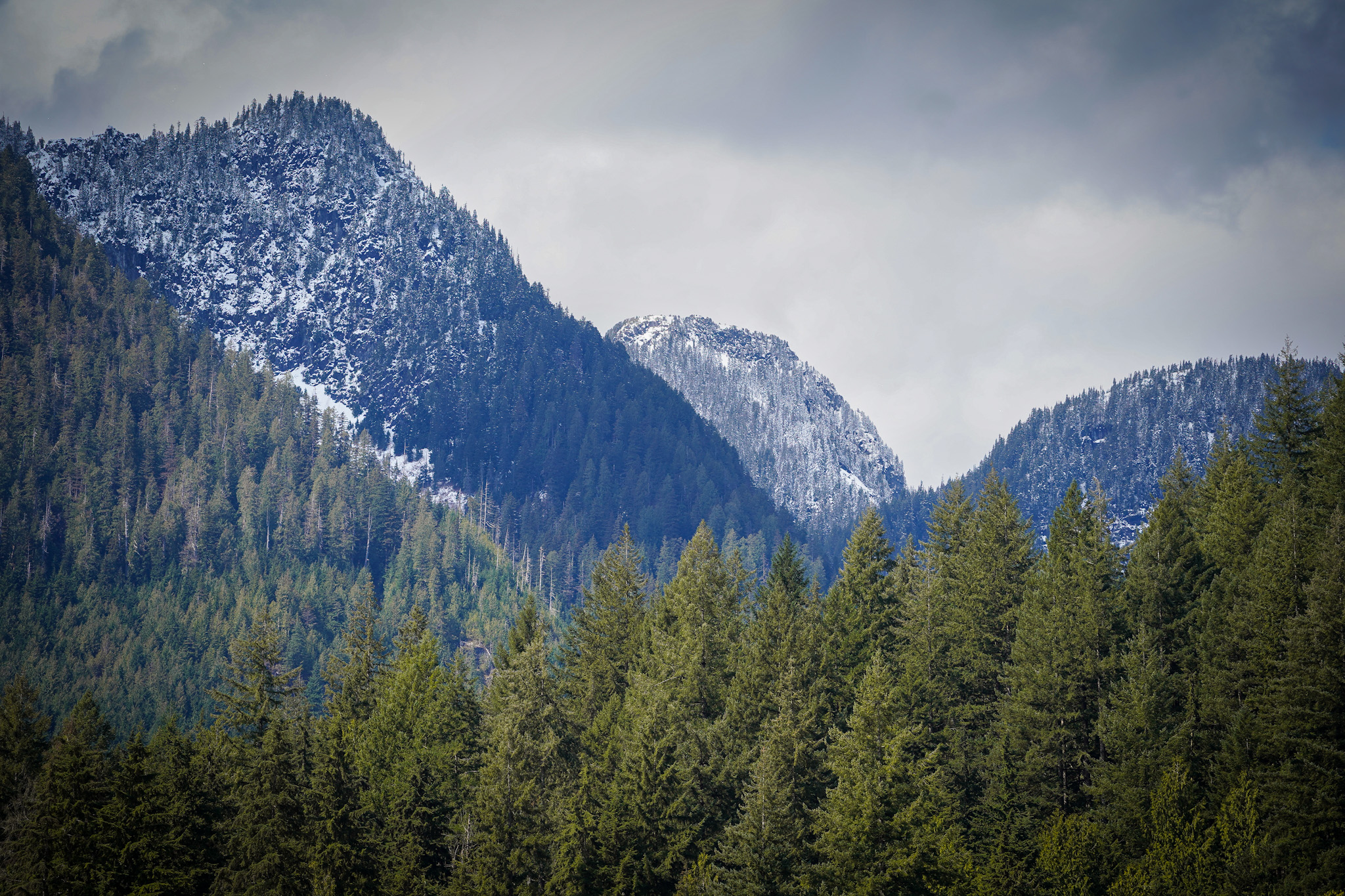
The North American Qualifier for this exhilarating competition was recently hosted in mid-April 2026 at Stave Lake in Mission, BC. Surrounded by towering evergreens, rugged mountain backdrops, and the wide open expanse of the Dirt Church mudflats, a couple hundred contestants (from the USA and Canada) descended on the region across two grueling days to prove they had what it takes to advance to the Global Final.
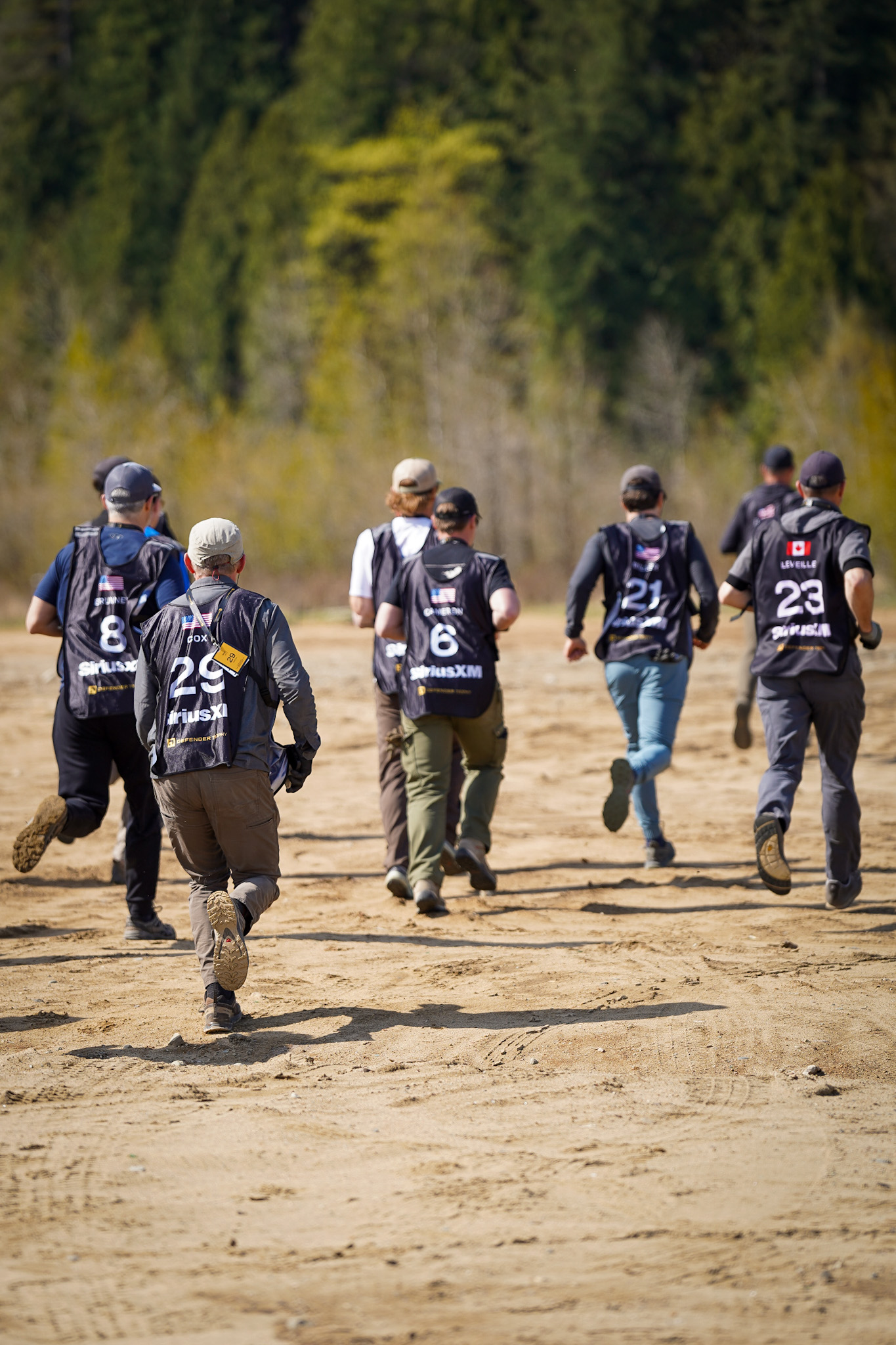
Executives, entrepreneurs, adventurers, and outdoor enthusiasts from every walk of life arrived in numbered competition vests bearing American and Canadian flags, all on an unwavering mission to unleash their “beast mode” (as one competitor called it).
What unfolded over those two days proved to be something far more powerful than just a competition. It was a demonstration in human grit, collective strength, and the kind of courage that only reveals itself when you’re forced to confront your own limits.
As a luxury lifestyle journalist who has covered everything from hypercar previews to five-star resorts and Michelin-starred dinners, I was invited by Land Rover’s PR team to witness and document the inaugural Defender Trophy North American Qualifier.
While this rugged experience was definitely off the beaten path for me (let’s just say I had to pull my hiking boots from my storage closet), I had an innate level of understanding of what the contestants were undergoing, at least to some degree.
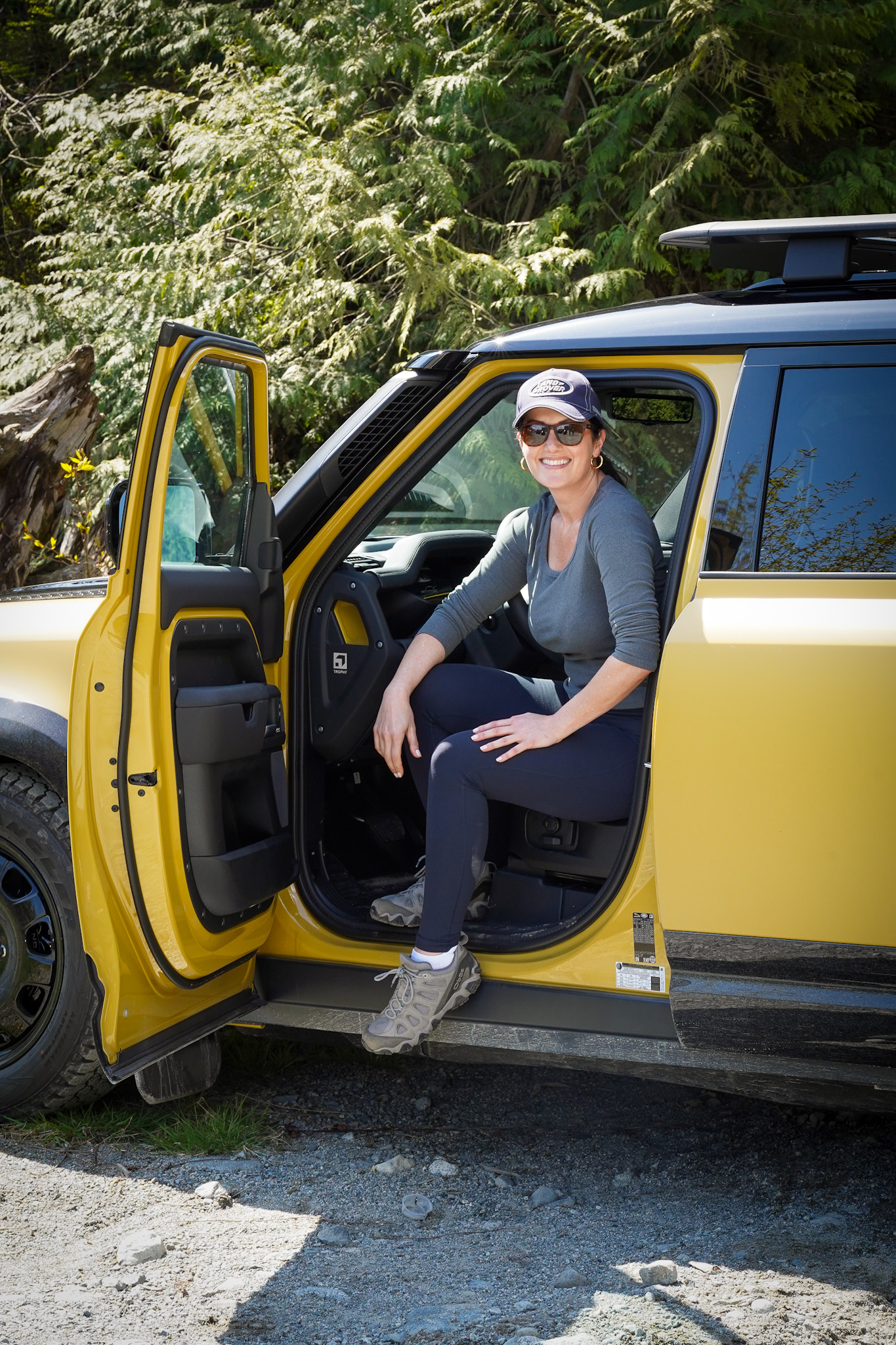
Last year, JLR invited me to the Land Rover Experience Center in Carmel, California, where I learned firsthand what it feels like to navigate a Defender through rocky terrain, guided by Daphne Greene (a driving instructor who earned the prestigious title of first American woman to complete the Camel Trophy decades ago).
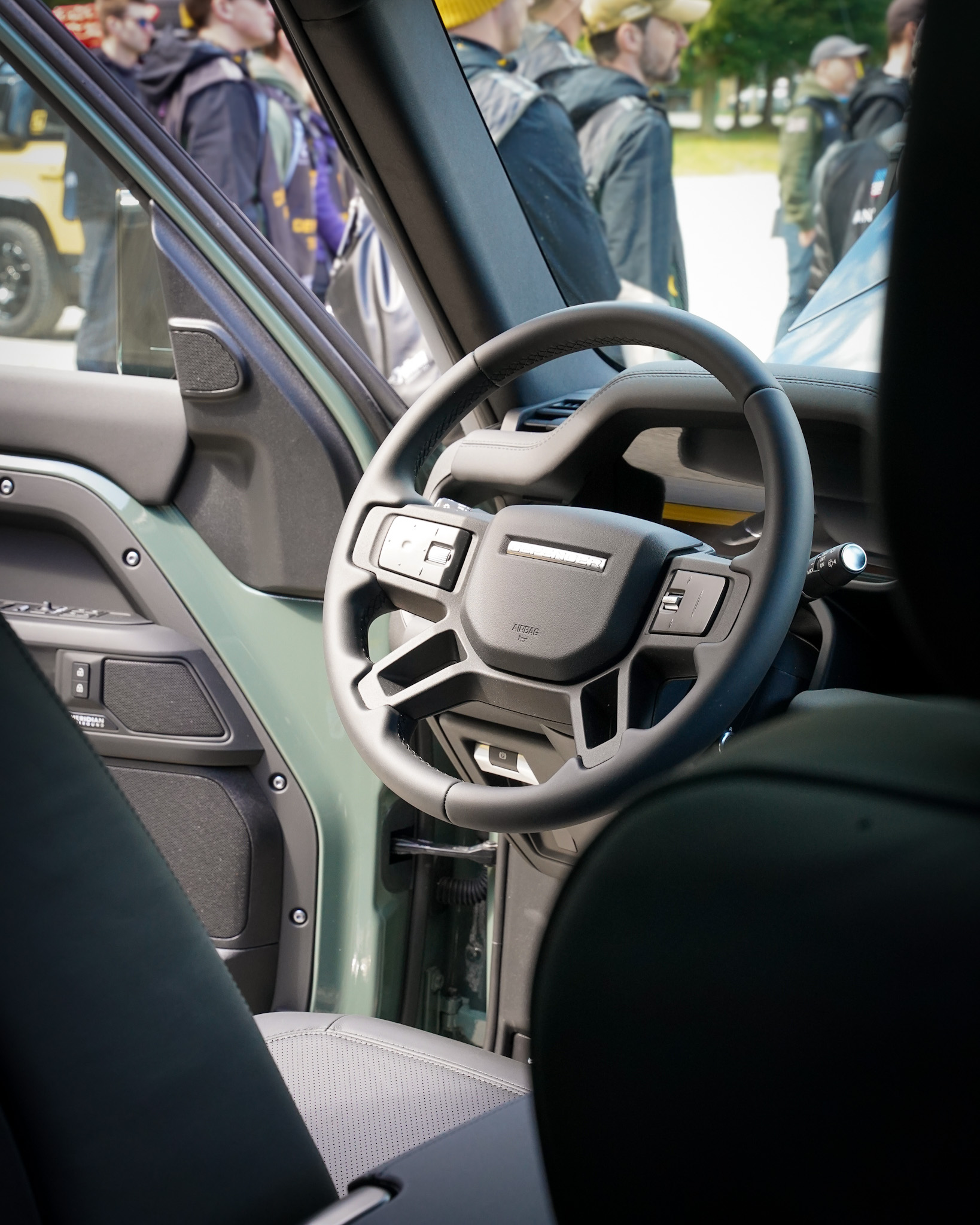
That experience gave me a perspective most observers don’t have. LRE taught me how to not only drive these vehicles in off-road terrain, but also how to manage stress under pressure, communicate with team members, and overcome mental limitations.
Standing at Stave Lake, I understood viscerally what these competitors were facing, yet what I witnessed exceeded every expectation.
What is the Defender Trophy Competition?
Exuding the essence of what Land Rover is all about, the Defender Trophy Competition is the spiritual successor to the legendary Trophy events of the past, which included iconic annual off-road expeditions that ran from 1980 to 2000. Often referred to as the “Olympics of 4×4 driving”, the Camel Trophy, in particular, became one of the most coveted adventure competitions in history, celebrated globally for its grueling expeditions across some of the world’s most remote terrain.
As Mark Cameron, Managing Director of Defender, stated at the competition’s launch in Summer 2025: “Global adventure and community have been the fabric of the Defender brand’s DNA for decades, staying true to its roots that can be traced back to the original Land Rover of 1948. Our unique new global adventure challenge will bring nations together, as competitors co-operate to navigate tough terrain, conquer extreme physical challenges, and solve tactical tests — all united by a greater purpose.”
More than 10,000 people applied to participate in the 2026 Defender Trophy Competition, a global initiative open to applicants from more than 50 countries. It began with a local application and selection process, followed by qualification events culminating in the Global Final in October 2026, the location of which will be revealed in August 2026. The two highest-ranking individuals from both the US and Canada will advance to the Global Final, where they will join finalists from around the world.
At the heart of the competition is Tusk, Defender’s conservation and wildlife preservation partner for more than 20 years. Winners of the Global Final will complete a real-world conservation mission in Africa, ensuring the Defender Trophy leaves a lasting legacy on the people and places it encounters.
While the competition’s promotional materials stated: “Epic adventure. Greater purpose”, I quickly came to learn this slogan goes far beyond marketing language, as it’s rooted in a deeply ingrained philosophy built over 70+ years.
Defender Trophy Challenges: Where Character is Revealed
Competitors arrived at each challenge knowing only what they could read on the challenge board and absorb in a 30-second brief. Three distinct venues (Zajac Ranch, DC Offroad Motorsports Park, and Dirt Church/Mudflats) set in the rugged landscapes of British Columbia each brought its own terrain which tested the limits of human capability.
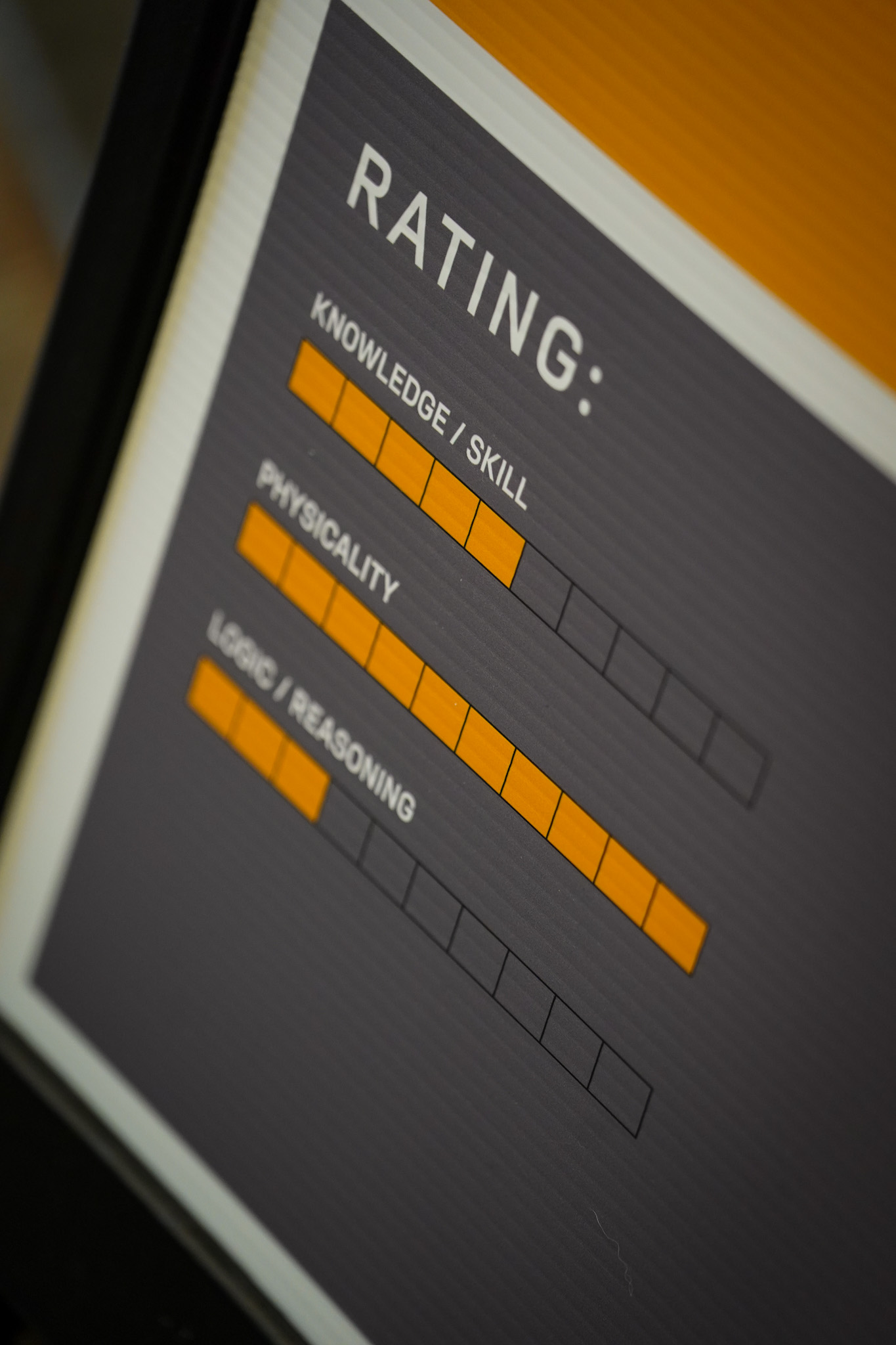
Scoring across every task was based on knowledge and skill, physicality, and logic and reasoning. To ensure accuracy, a third-party accounting firm calculated scores privately and independently at the culmination of the event. From speed tests to strength and agility, to mental alertness and even communication skills, contestants underwent a variety of challenges.
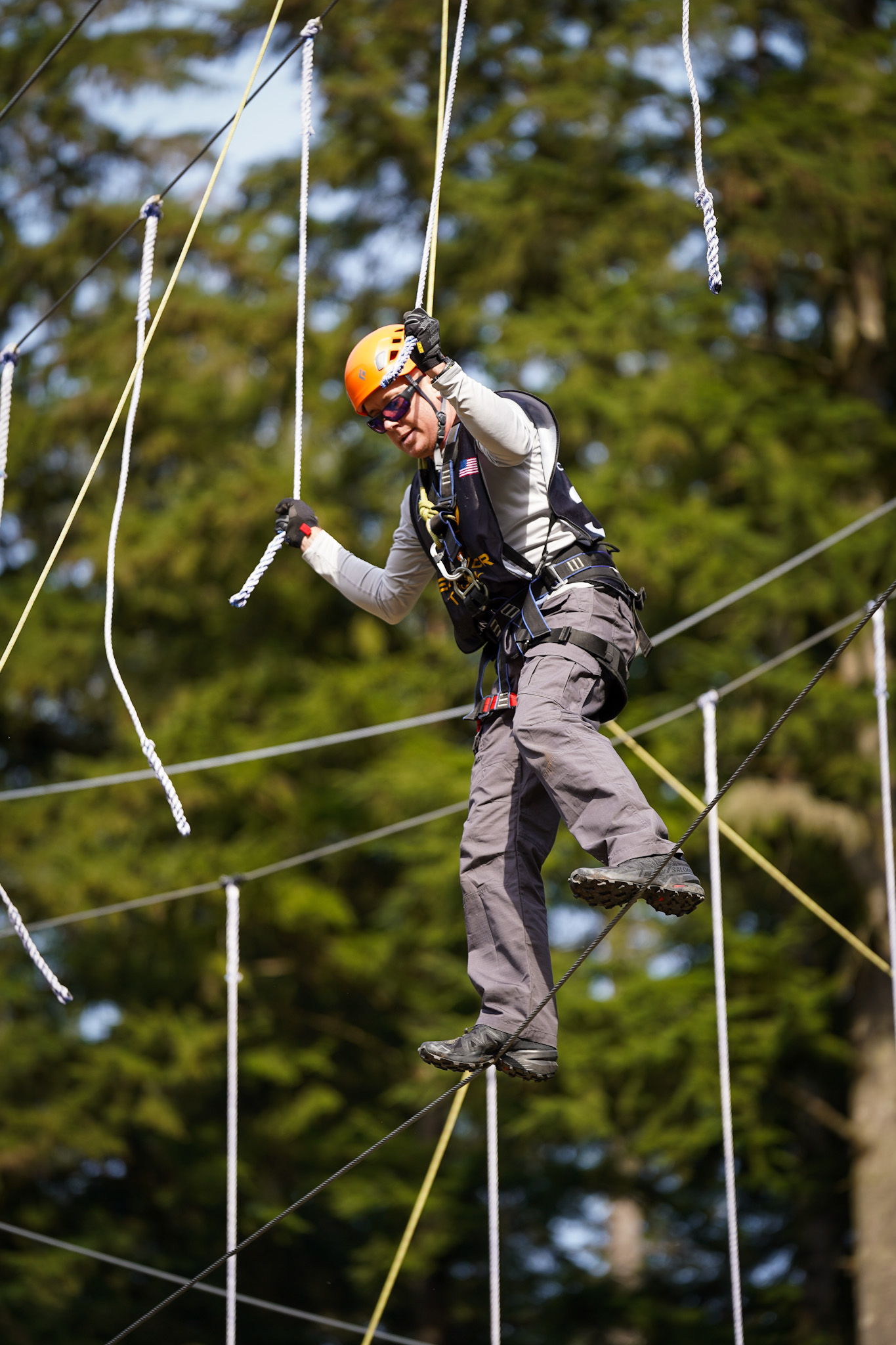
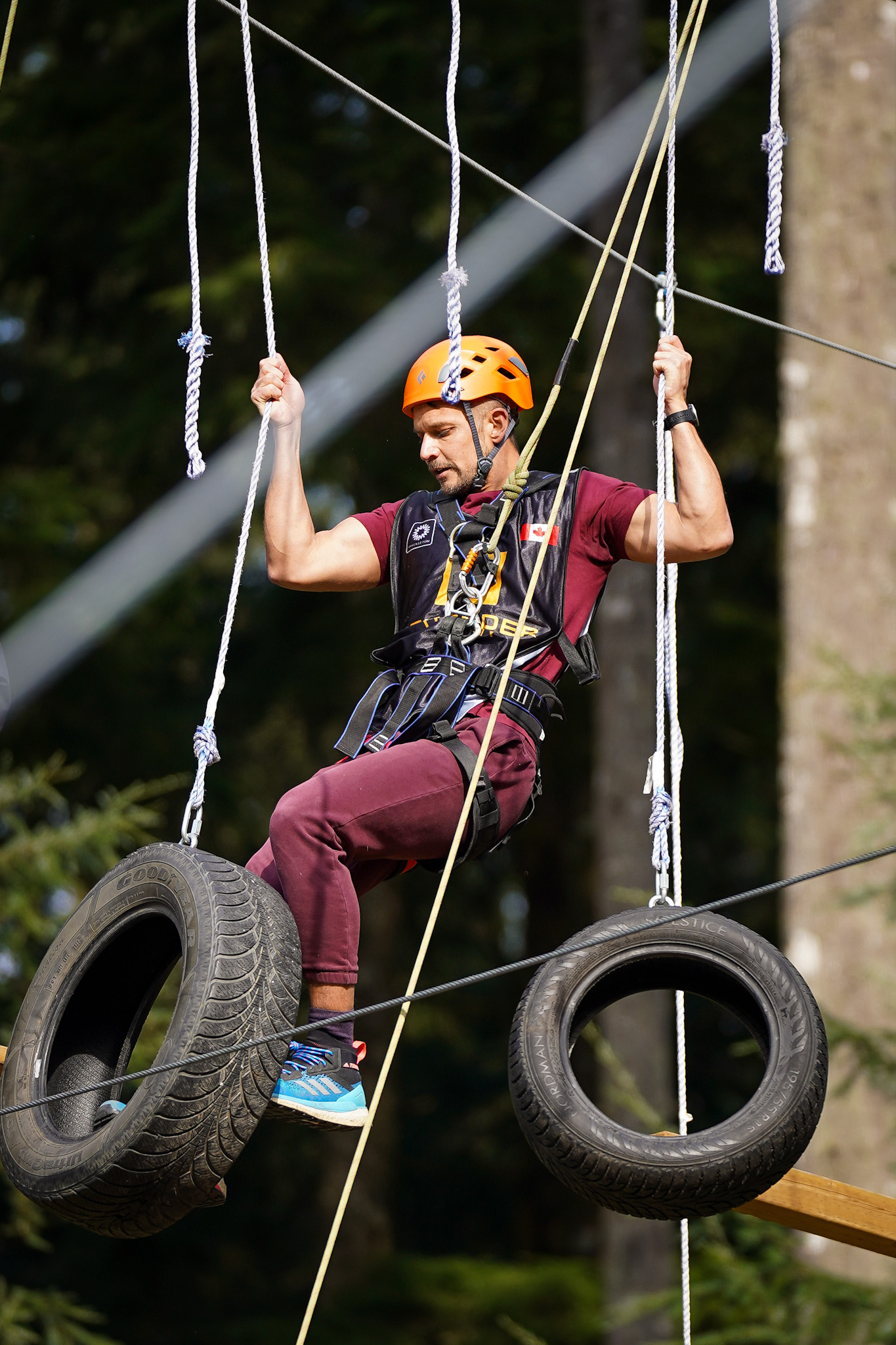
The High Ropes Course at Zajac Ranch set the tone immediately. At first glance, it looked like a supersized jungle gym (that even I wanted to climb on). But after watching a few contestants struggle to find their balance or fall behind as the clock kept ticking, it became evident that it was much harder than it initially appeared.
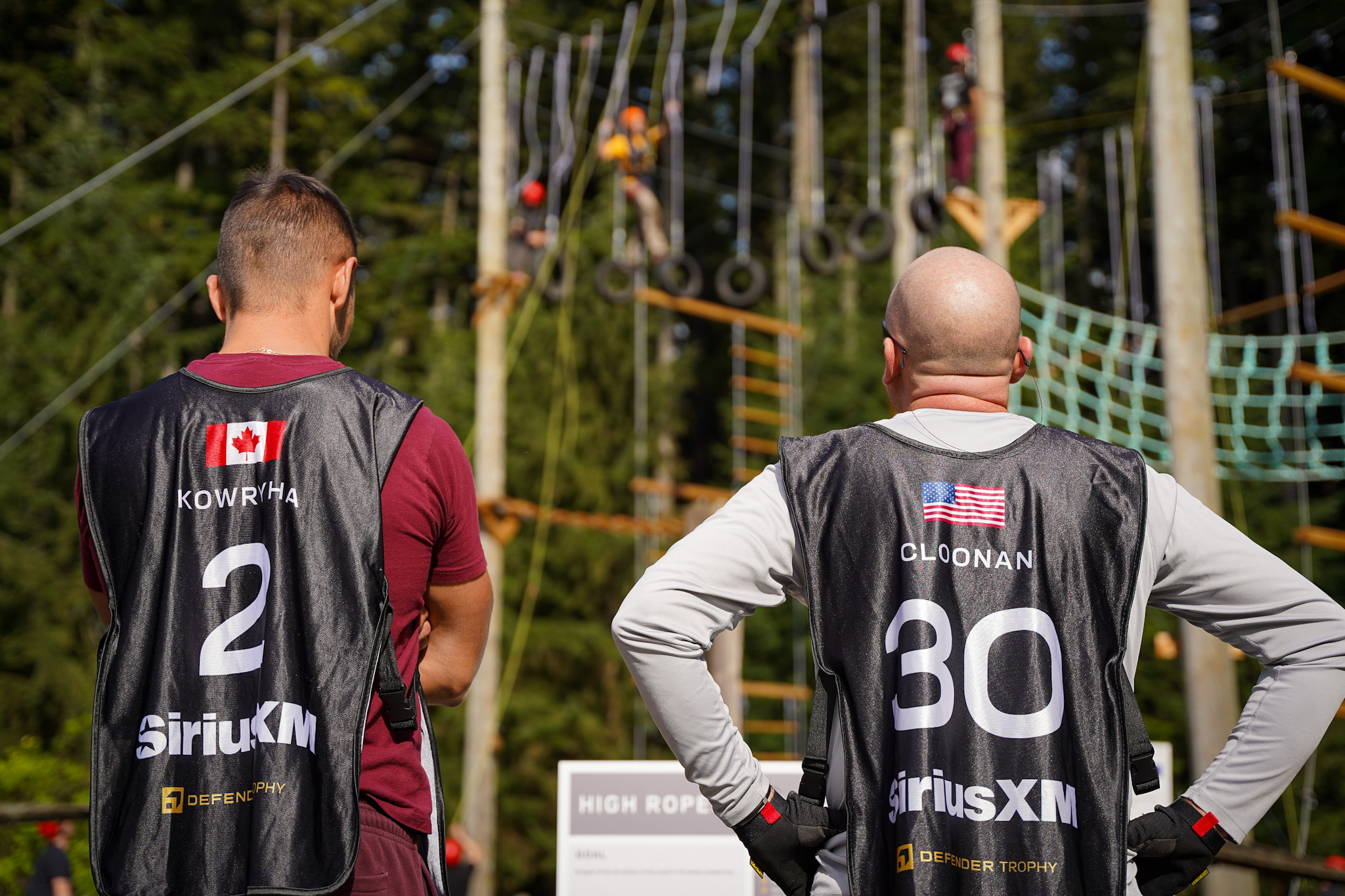
The course included a defined elevated route, four sections (such as tight ropes and hanging tires), color-coded flags to collect, a final section marked with a bell, and, to top it off, just five minutes per competitor. Of the roughly ten competitors in the wave we observed, only two finished under time.
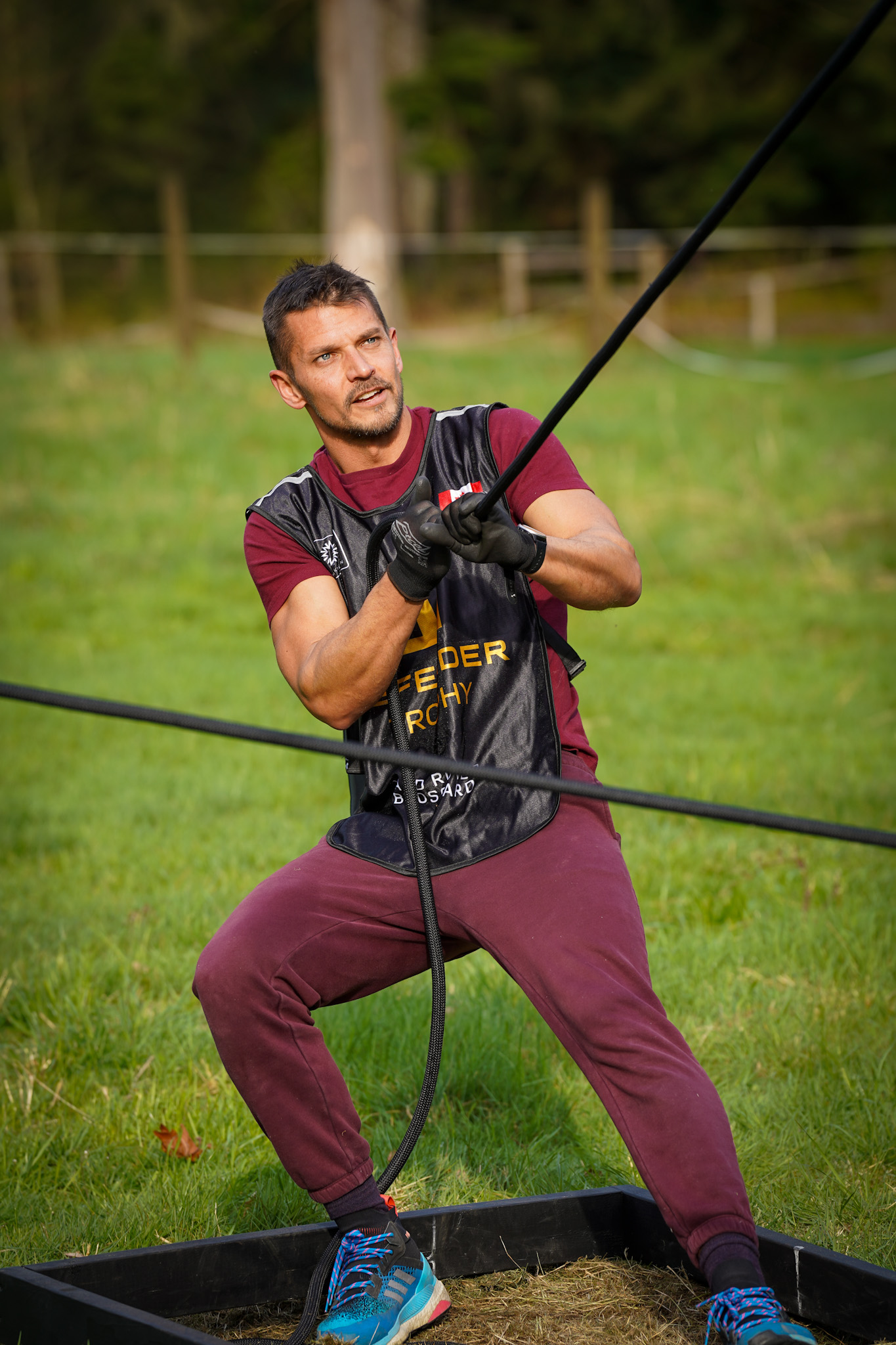
Le Pencilo was the challenge nobody anticipated. Eight competitors, a large weighted pole suspended by guide ropes, a spiral maze, and 40 minutes on the clock. The task was straightforward: Keep the pole upright, navigate the maze, don’t step outside your boundary box, and maneuver the pole through the maze repeatedly until the buzzer stops.
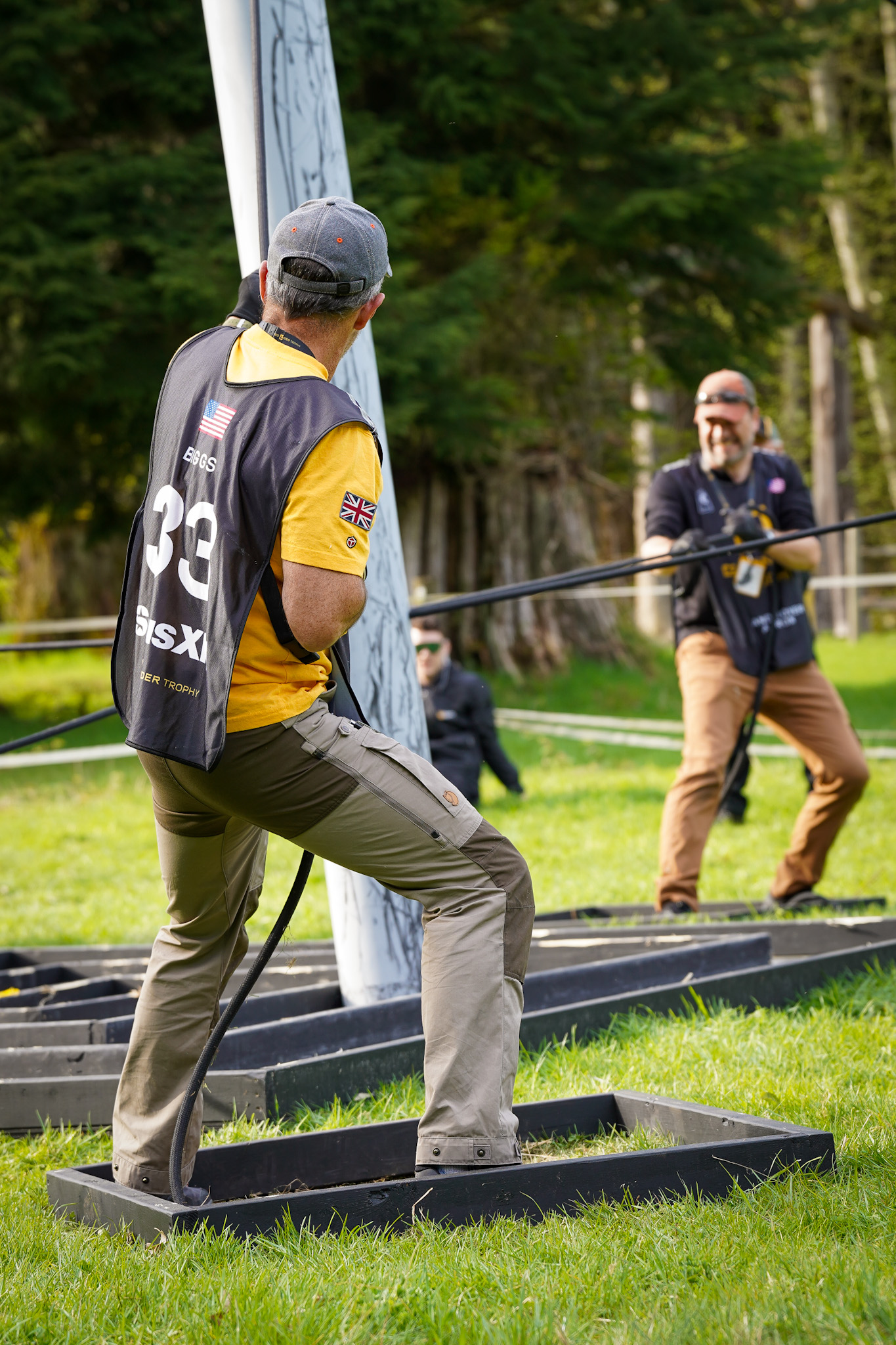
What looked deceptively manageable became an exercise in collective intelligence and strength, where one wrong pull at the wrong moment collapses everything, especially when your body is already experiencing muscle fatigue from the previous challenges. It was, in many ways, the perfect metaphor for everything the Defender Trophy values: just keep persevering, even when you’re exhausted and depleted.
To challenge their mental agility, Navigation sent groups of eight into the BC forest with maps, compasses, and whistles to locate and retrieve essential survival elements, including keys granting access to food, water, and fire flint, then carry everything to the campsite roughly a mile and a half away.
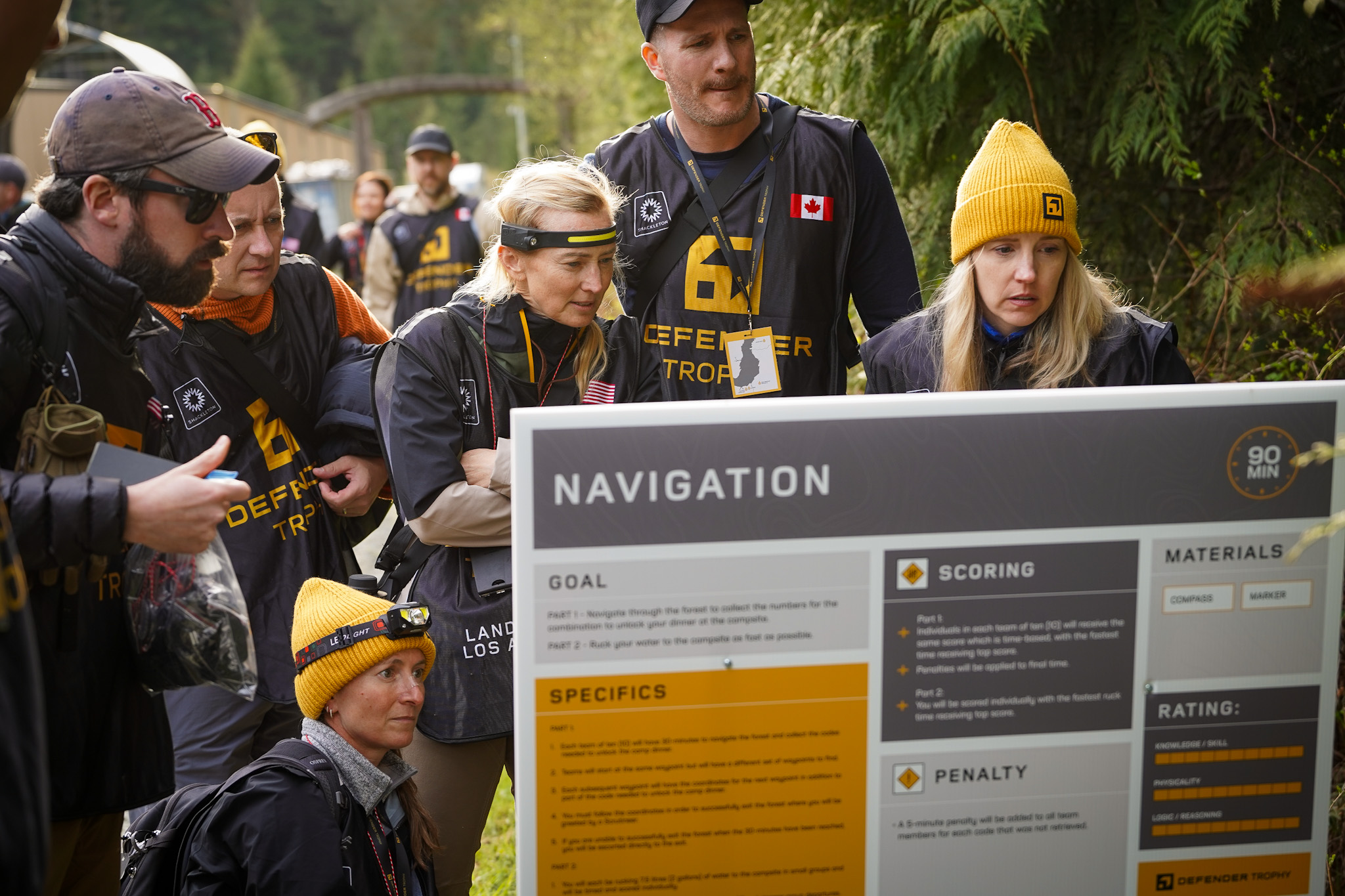
Different routes per team, equal in distance and difficulty, all converging at camp. One and a half to two hours in terrain that pushed competitors through fallen trees, tick-infested landscapes, slippery ground, and the stress of trusting a compass over instinct in unfamiliar wilderness. Beyond the physical aspect, it tested mental acumen.
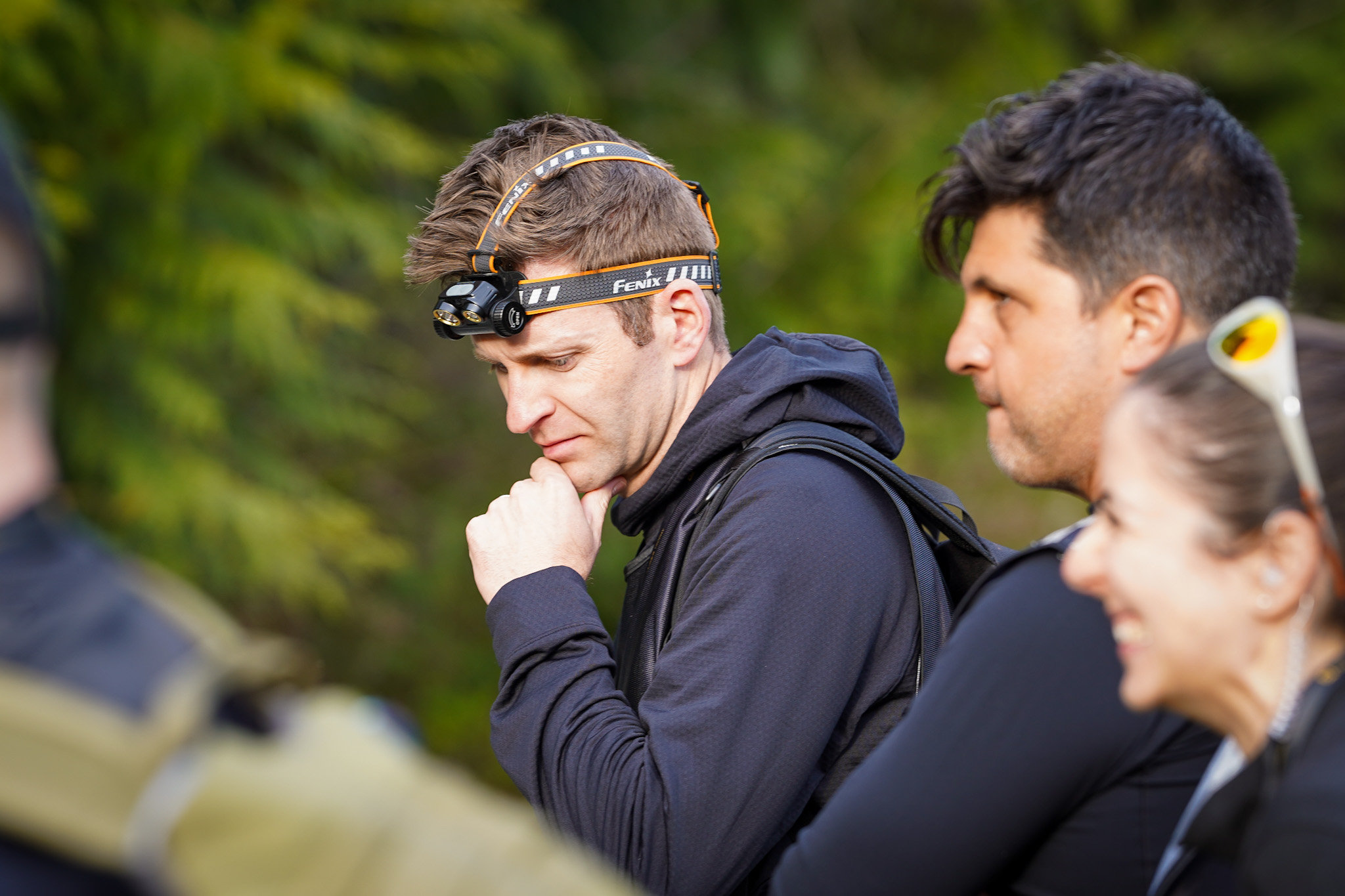
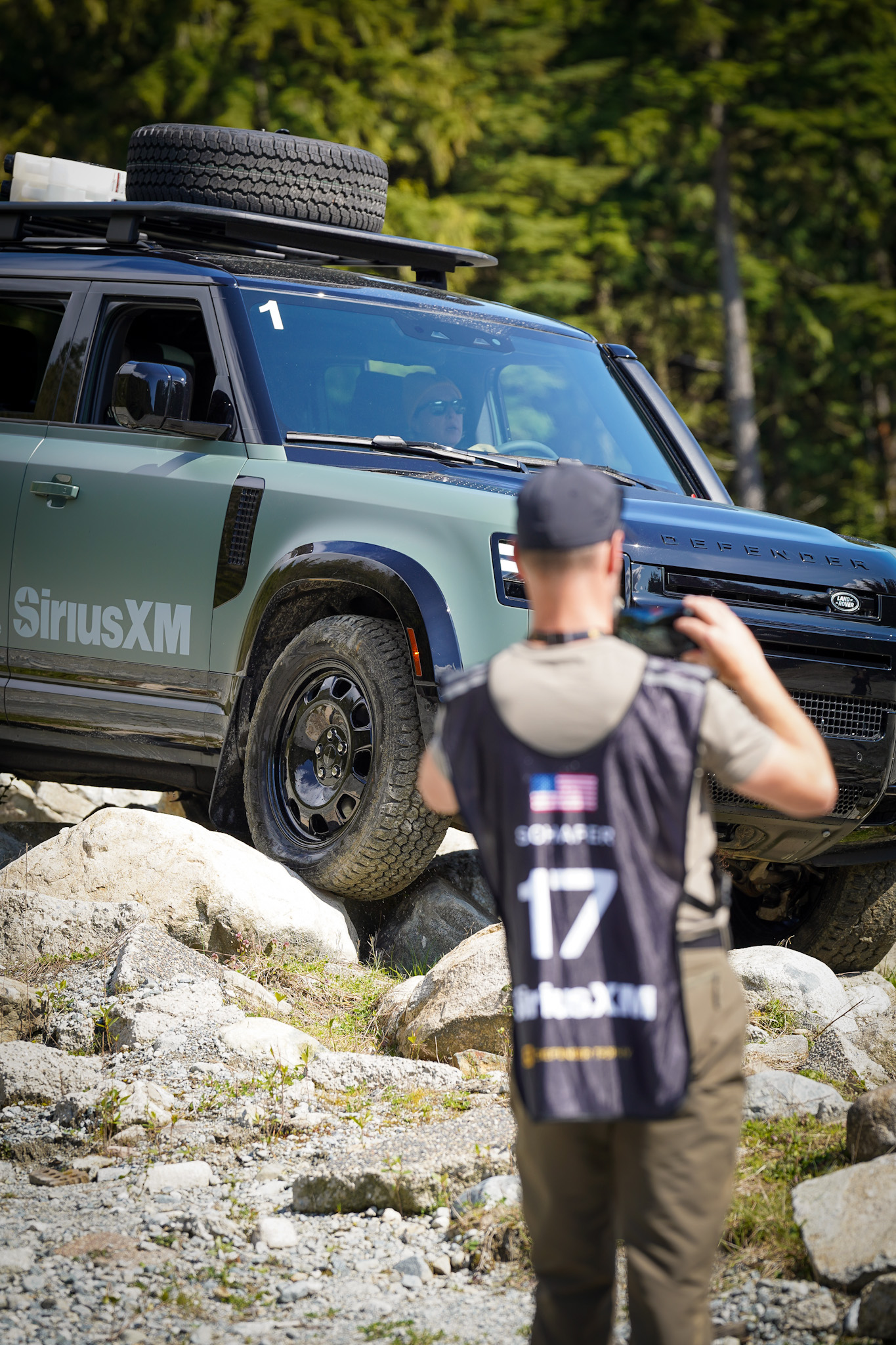
The Rock Crawl required a spotter positioned outside the vehicle and a driver inside, communicating through hand signals and verbal cues to guide the Defender over boulders and rocky terrain without contact. This is the challenge where experience reveals itself most clearly — the language of trust between driver and spotter, the spatial awareness demanded of both, the complete surrender of ego to partnership.
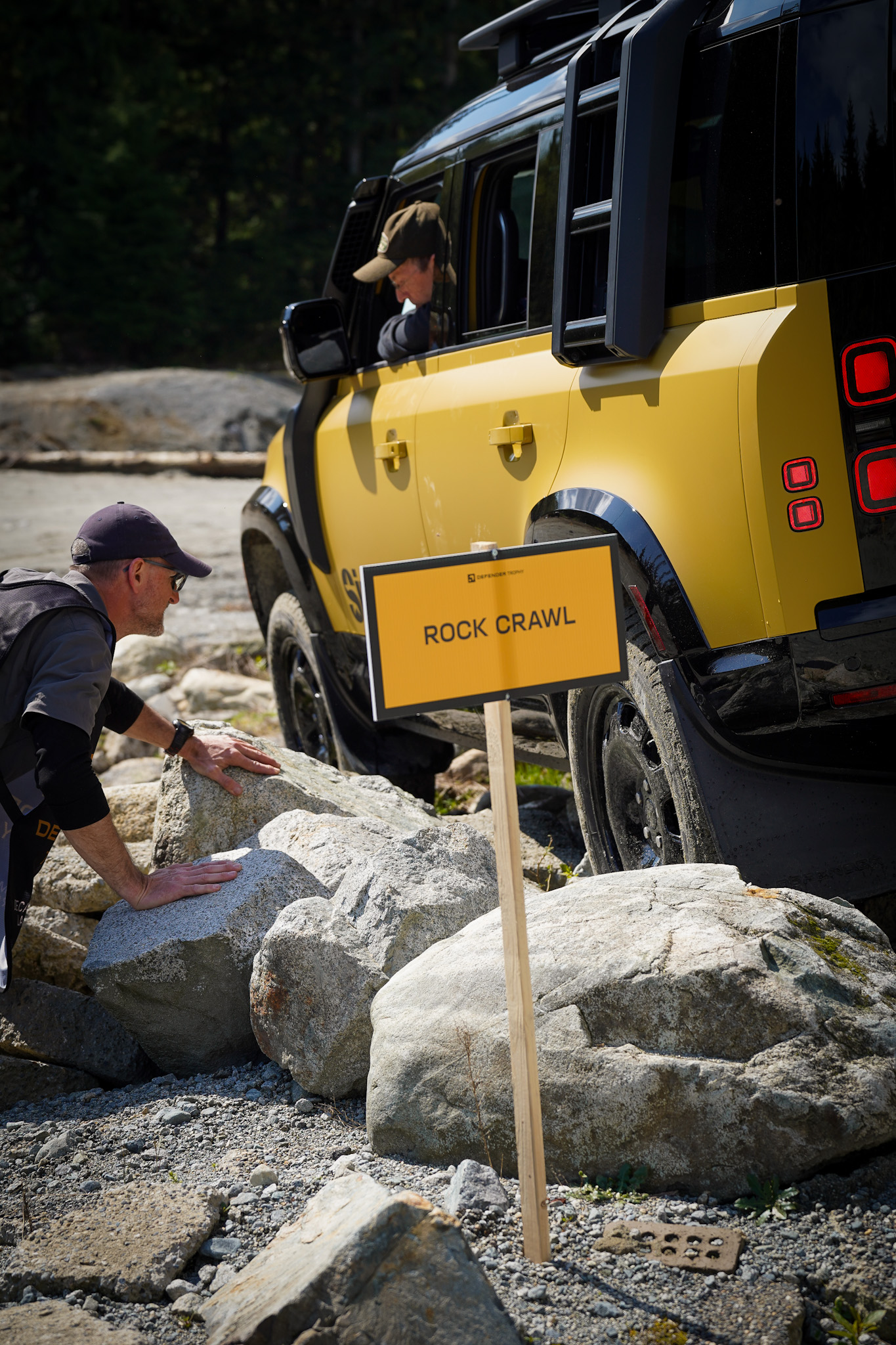
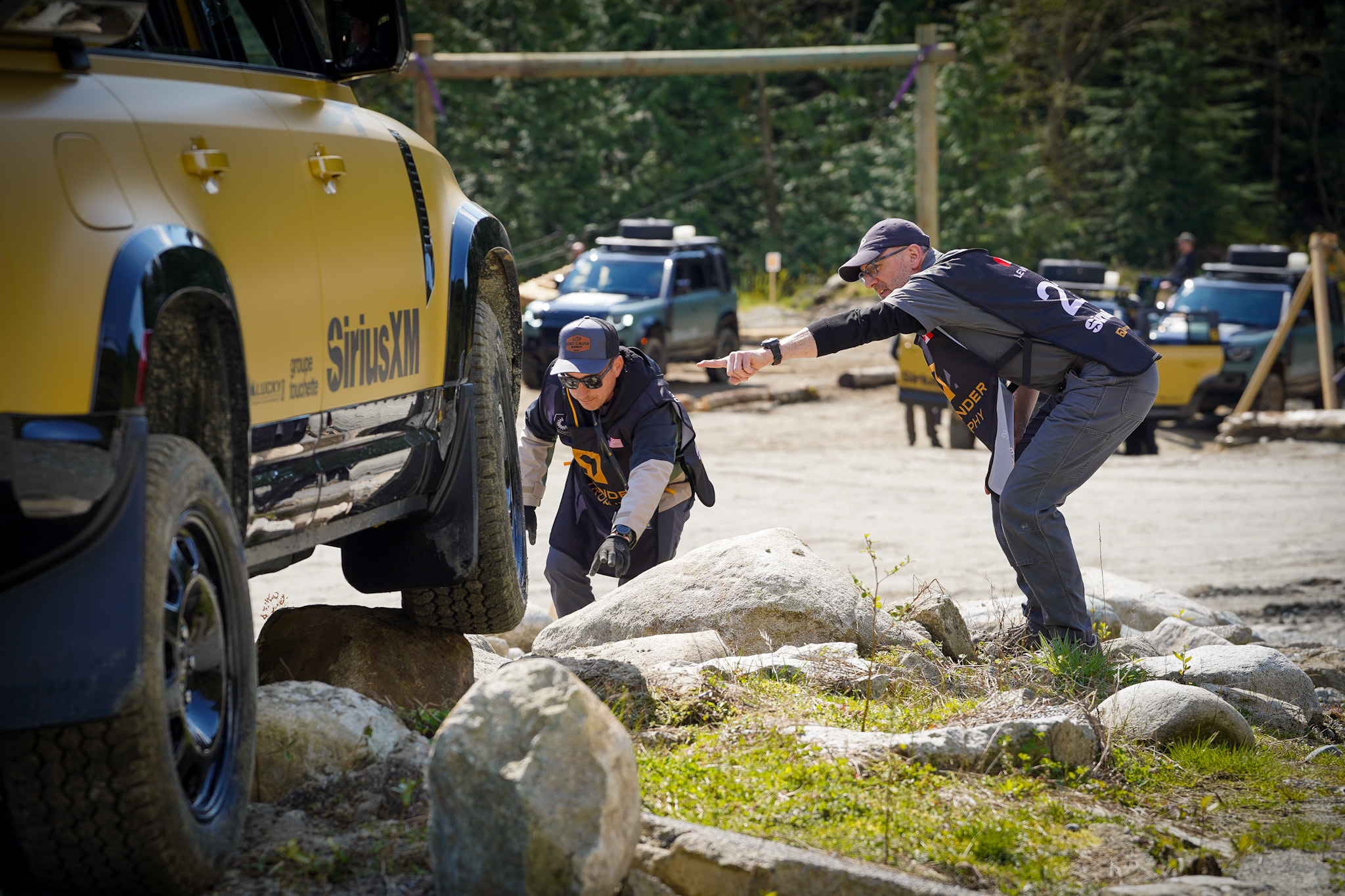
Last year at the Land Rover Experience in Carmel, I learned this language firsthand. Watching competitors build it in real time at DC Offroad, I recognized every signal and understood the pressure the driver was under, especially when we heard the dreaded sound of the underchassis scraping against a rock.
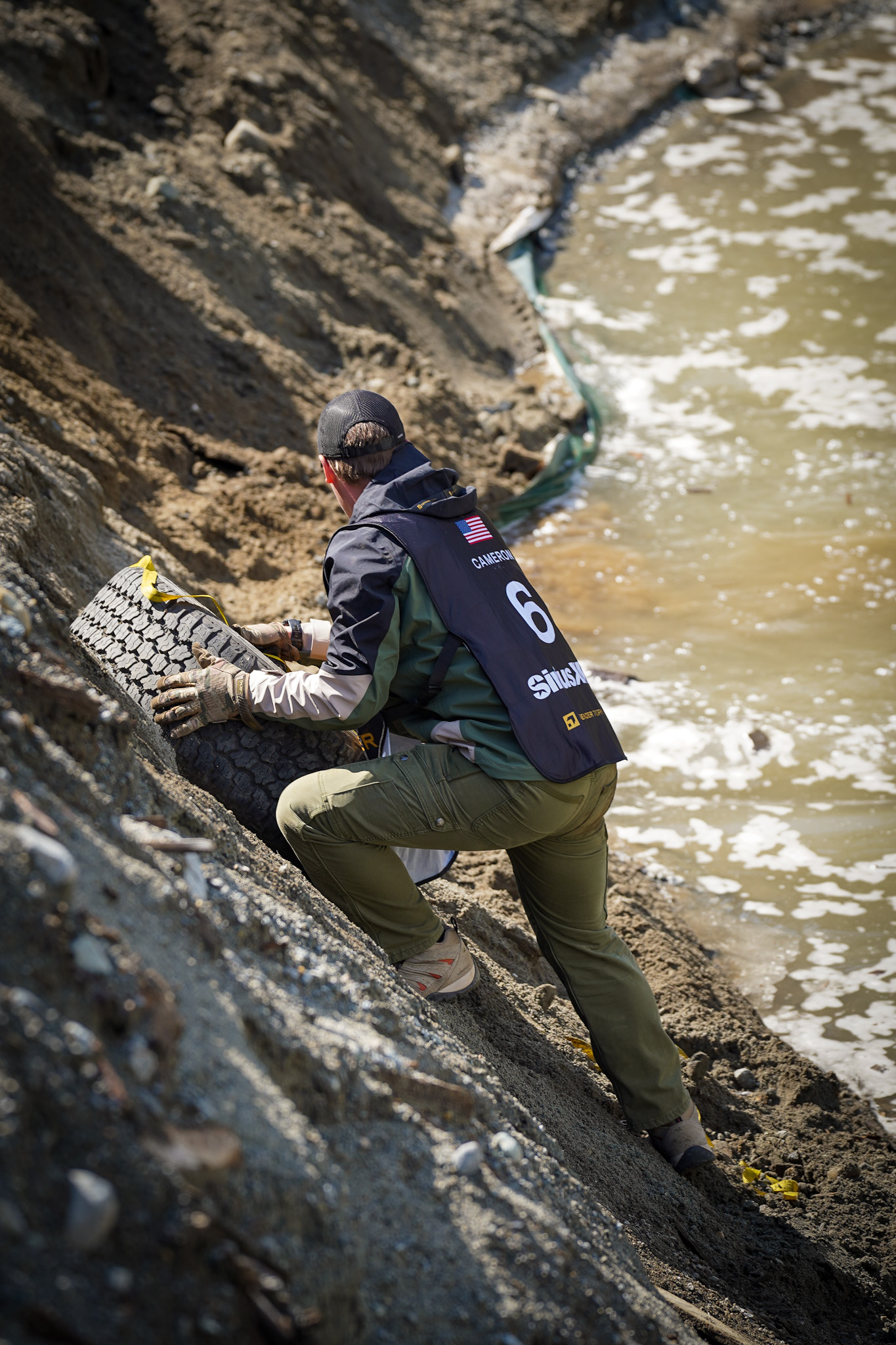
Change A Wheel transformed the most routine automotive task into something genuinely punishing. Teams worked against the clock using a pulley system to retrieve the jack, tools, and tires — and in at least one version of this challenge, a competitor had to be lowered down a steep, muddy embankment to physically retrieve the tire before the clock stopped. I was starting to wonder if they flipped a coin to determine who had to go into the pit of despair.
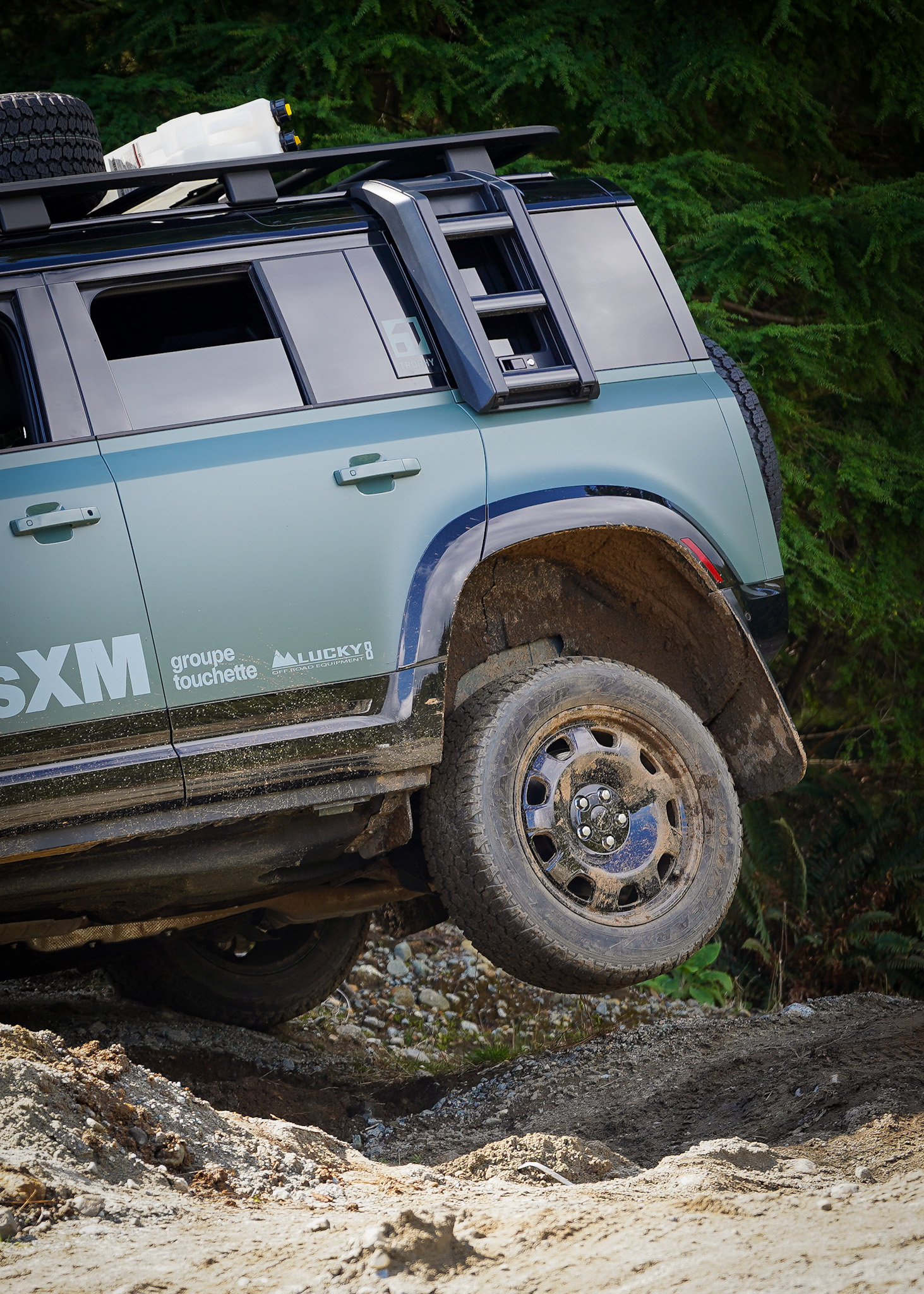
The Peak Performance challenge used two Defenders as precision instruments — operating a hoist system via ropes and cables to lift, maneuver, and re-stack large wooden blocks into a pyramid formation across a series of platforms.
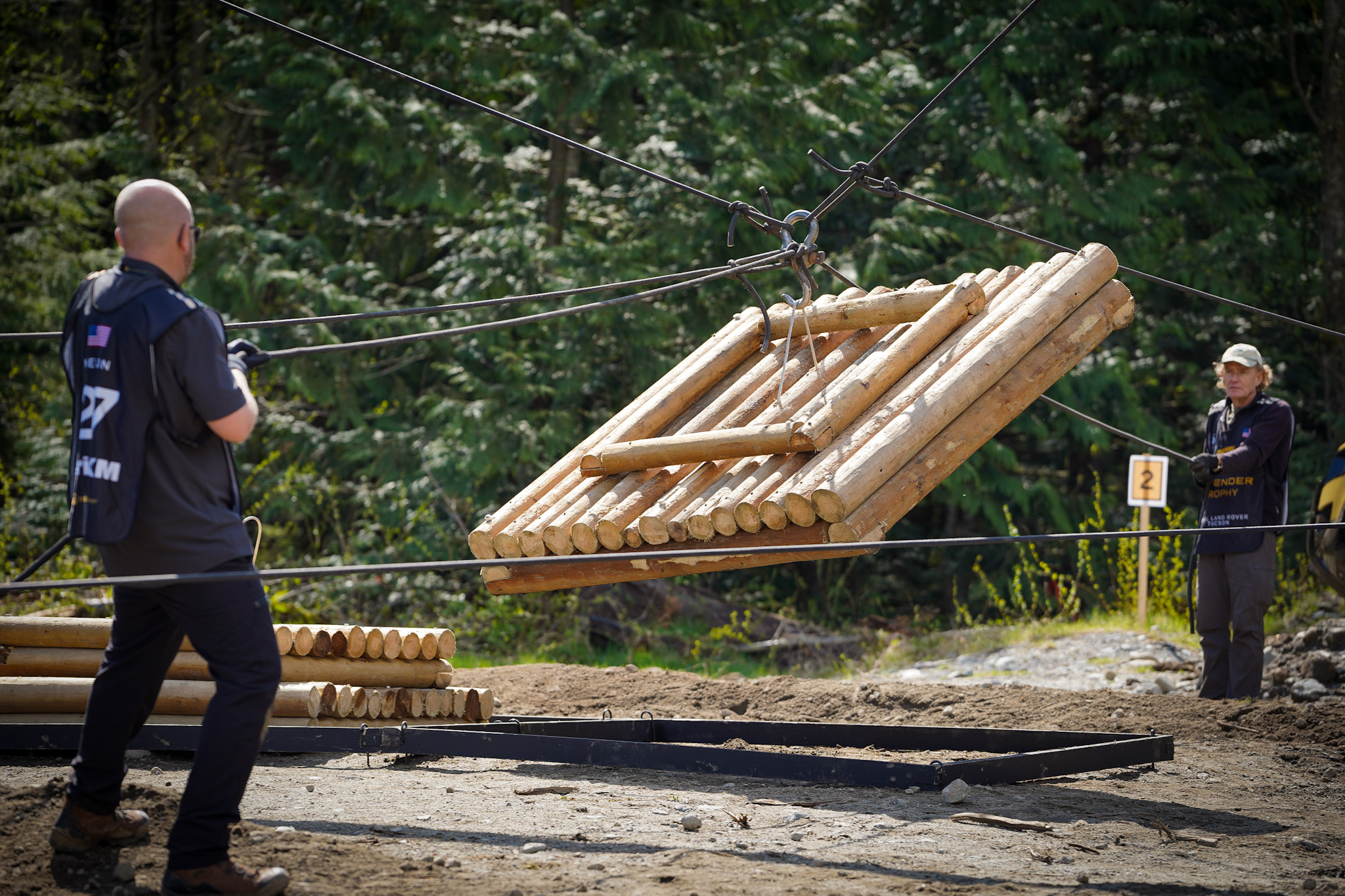
Drivers, winch operators, a conductor, rope handlers — every role was defined and every move required synchronized execution. For those who played Jenga as a kid, this looked like The Incredible Hulk’s version of that game.
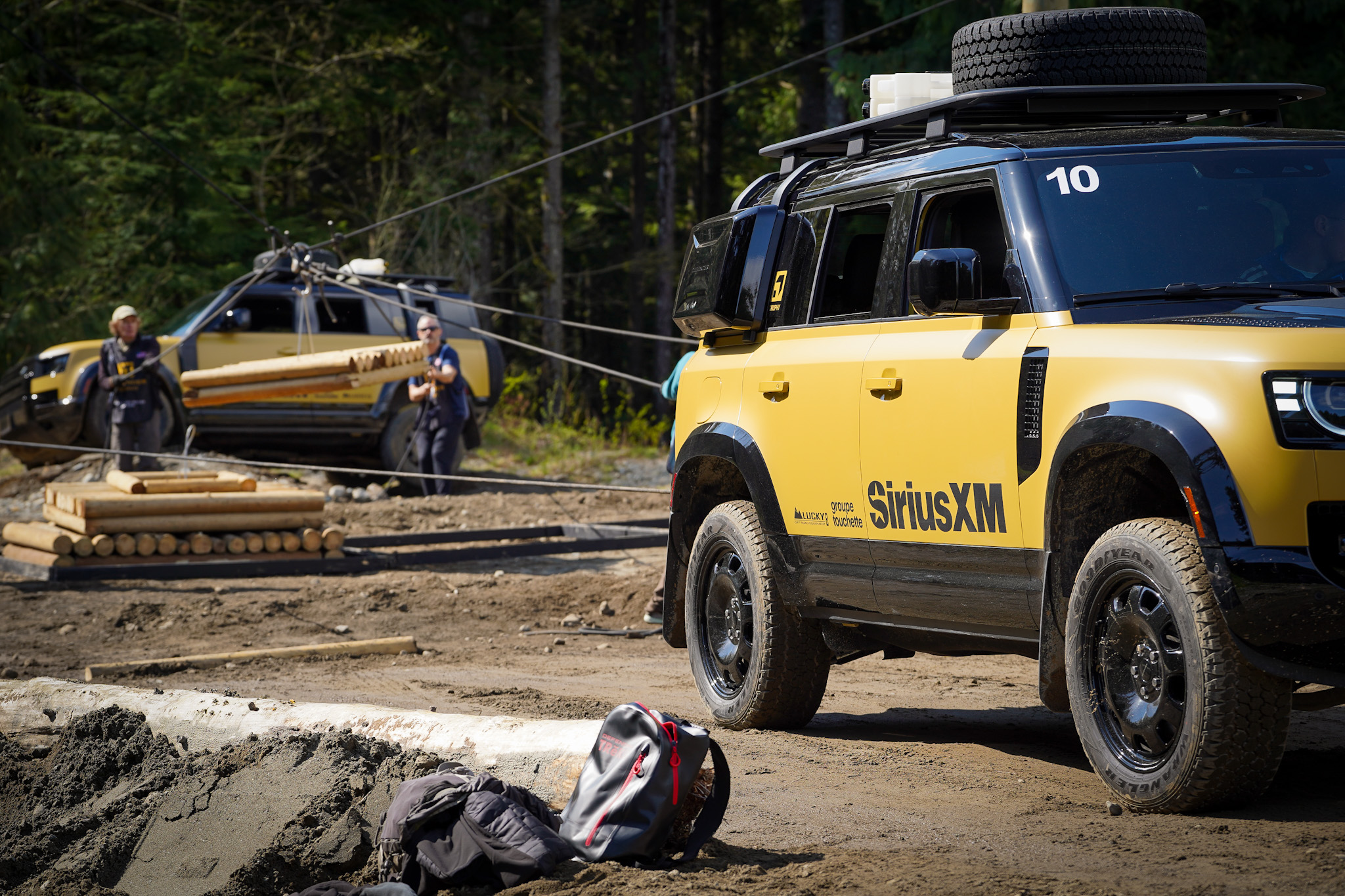
Parts Exchange and Wide Load combined a radio-guided packing challenge with reversing a trailer through an off-road articulation course on the mudflats. One person communicates while the other locates, retrieves, and loads with total accuracy. Then the team reverses through a marked course with a trailer attached.
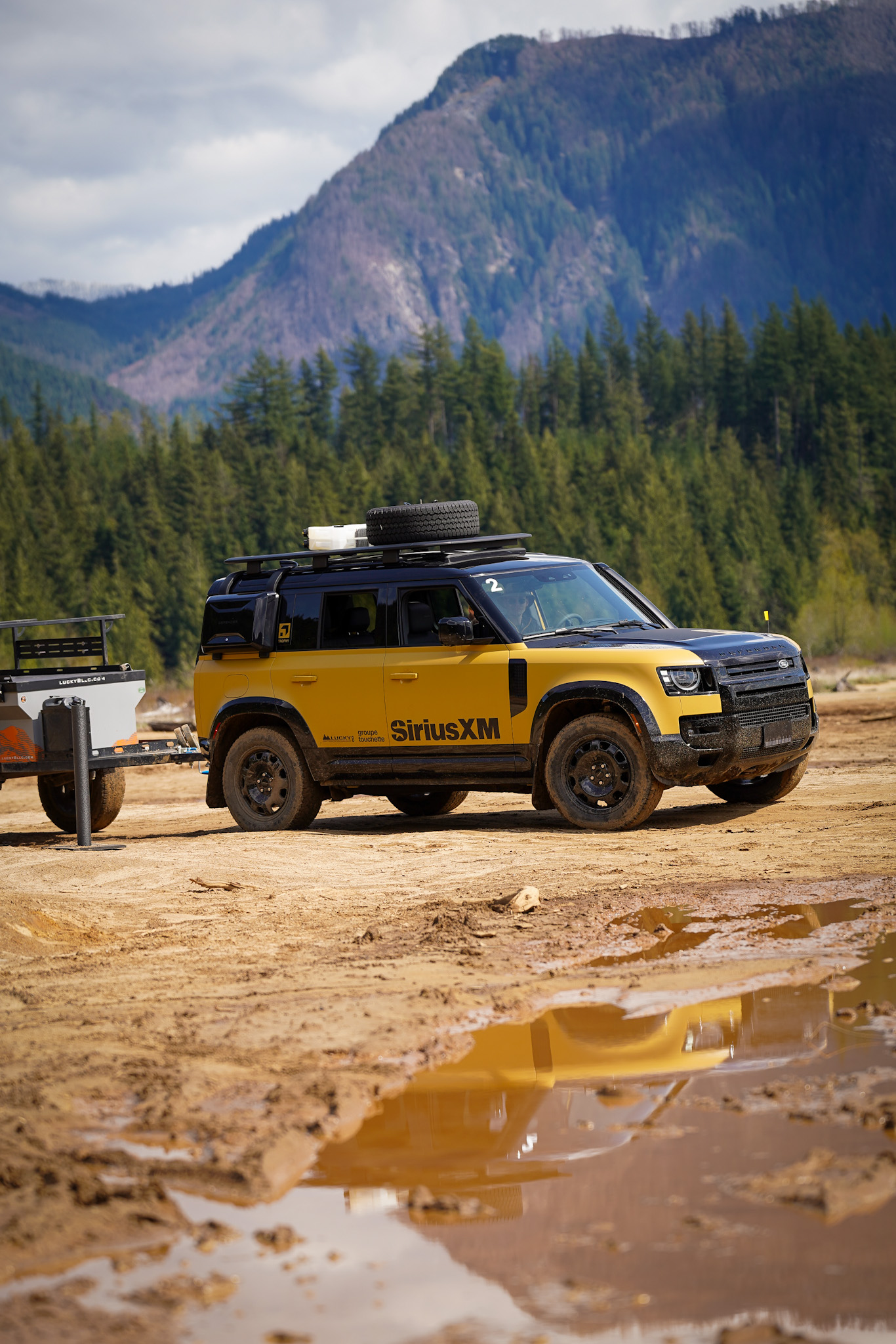
The Auto Test was pure individual accountability. Driving through tight angular gates in a specific sequence — each team assigned a different route, making it impossible to learn from the team ahead. To top it off, a fast time without penalties earned the highest score. No shortcuts and no advantages; just skill and communication under pressure. At least there were mud puddles to splash through, making it even more fun.
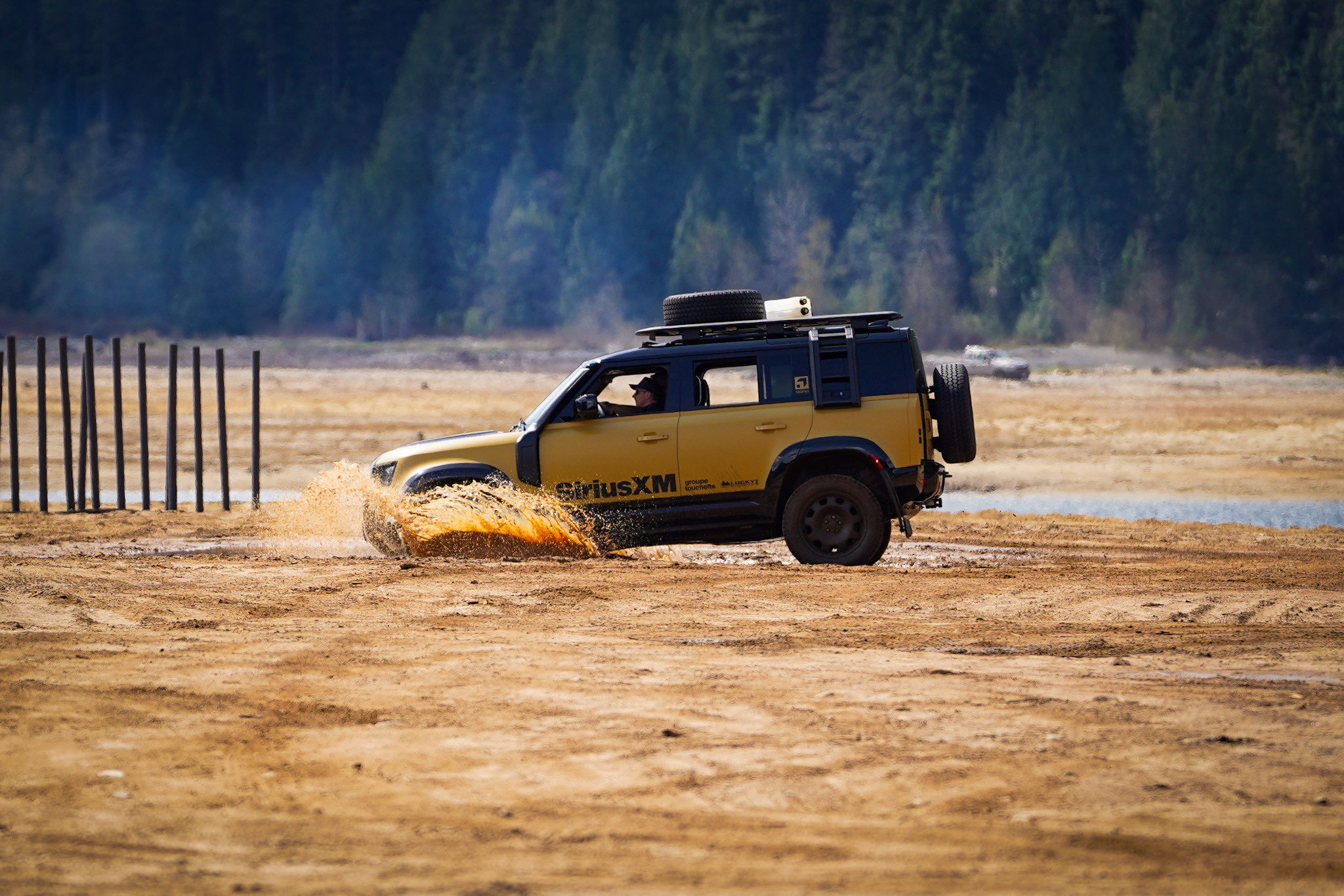
As we learned from members of the Defender Trophy competition team, the scoring philosophy was deliberately calibrated to reveal character as much as capability.
The evaluation encompassed personality, teamwork, camaraderie, and kindness alongside performance metrics. The rotating driver system (ensuring competitors were never in the same vehicle twice, always adapting to new partners mid-competition) was designed with exactly this in mind. “If we make it too tight,” one team member explained, “we don’t allow people’s personalities to exude.”
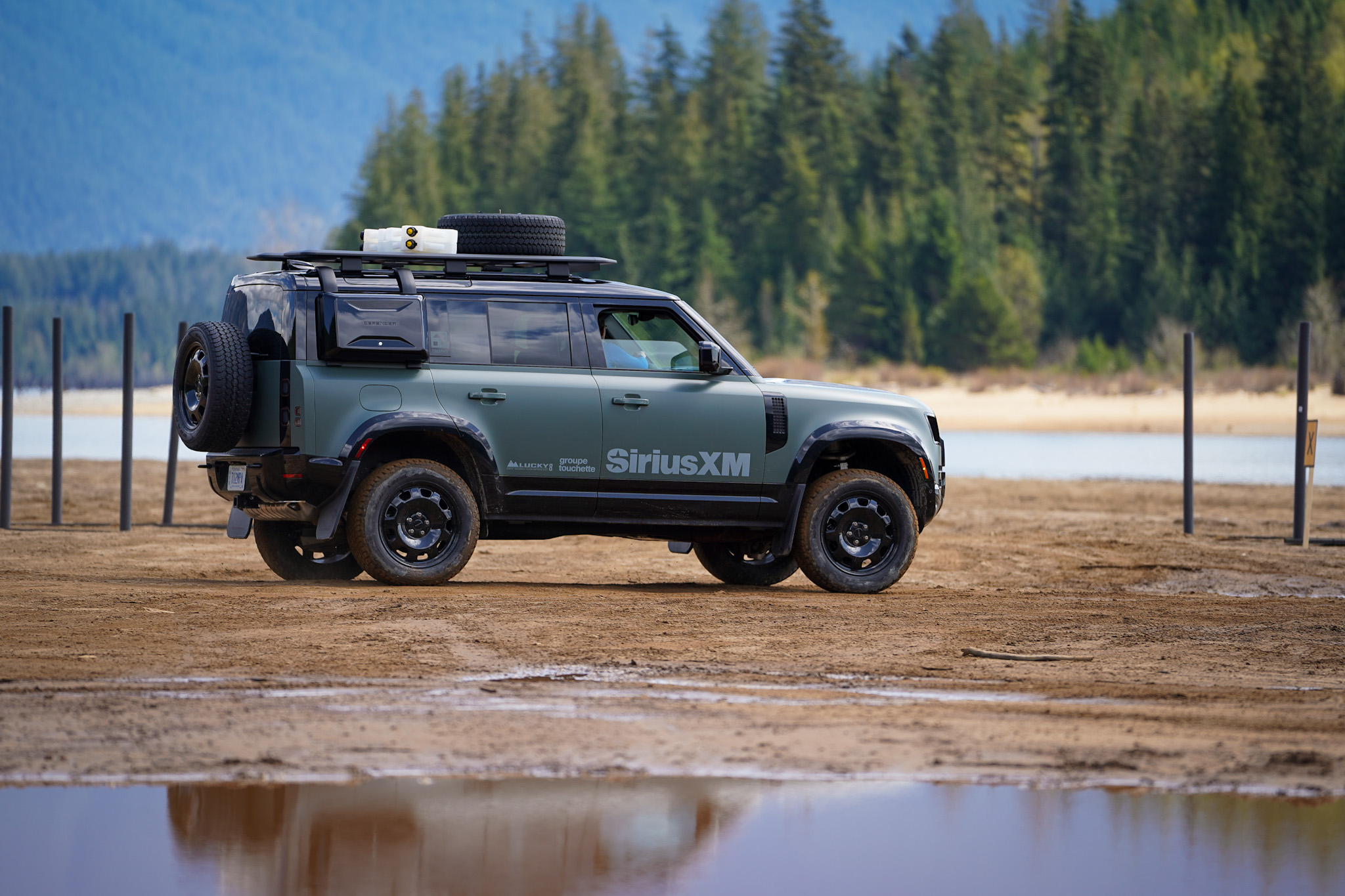
The Defender 110 Trophy Edition
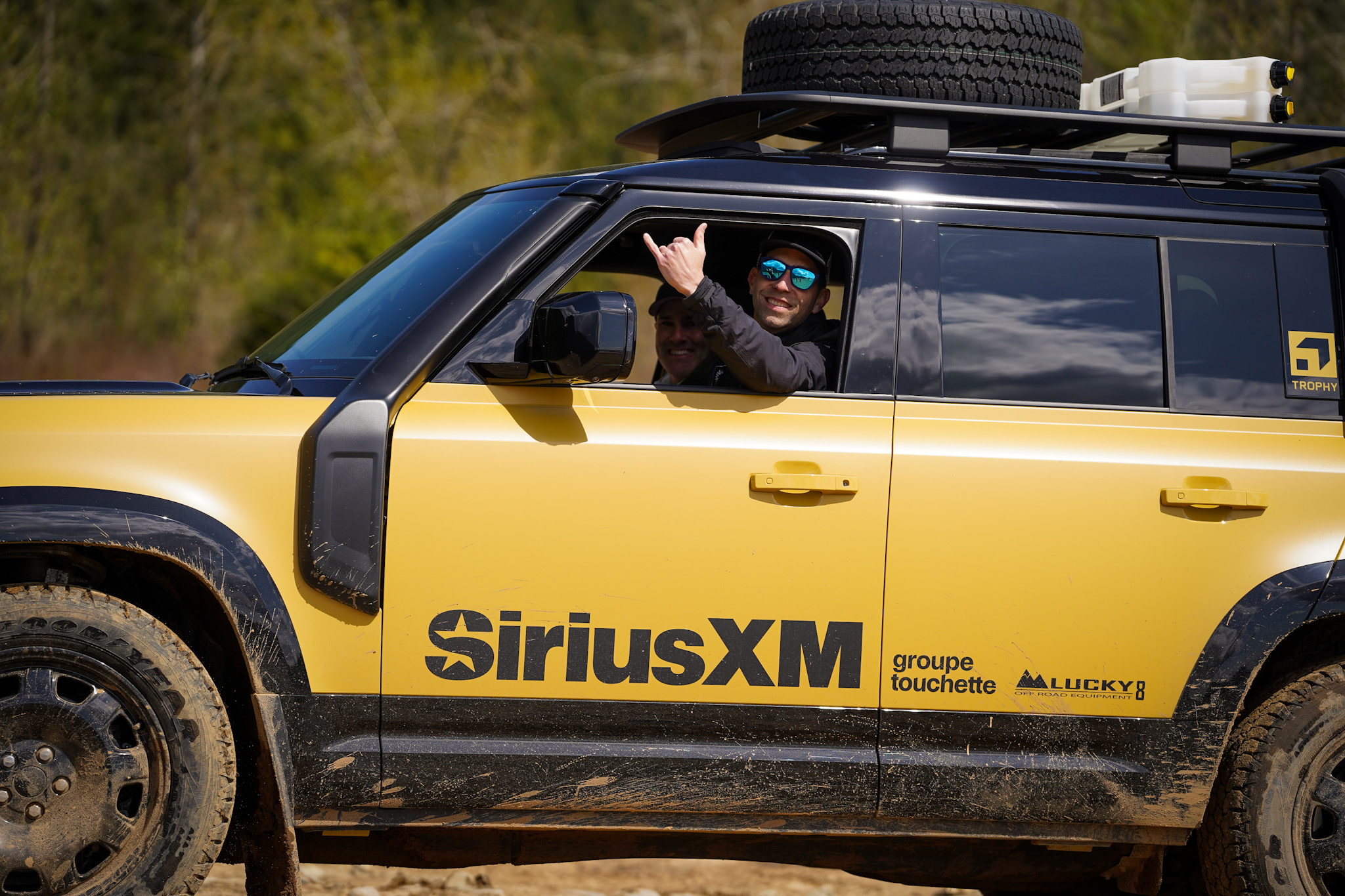
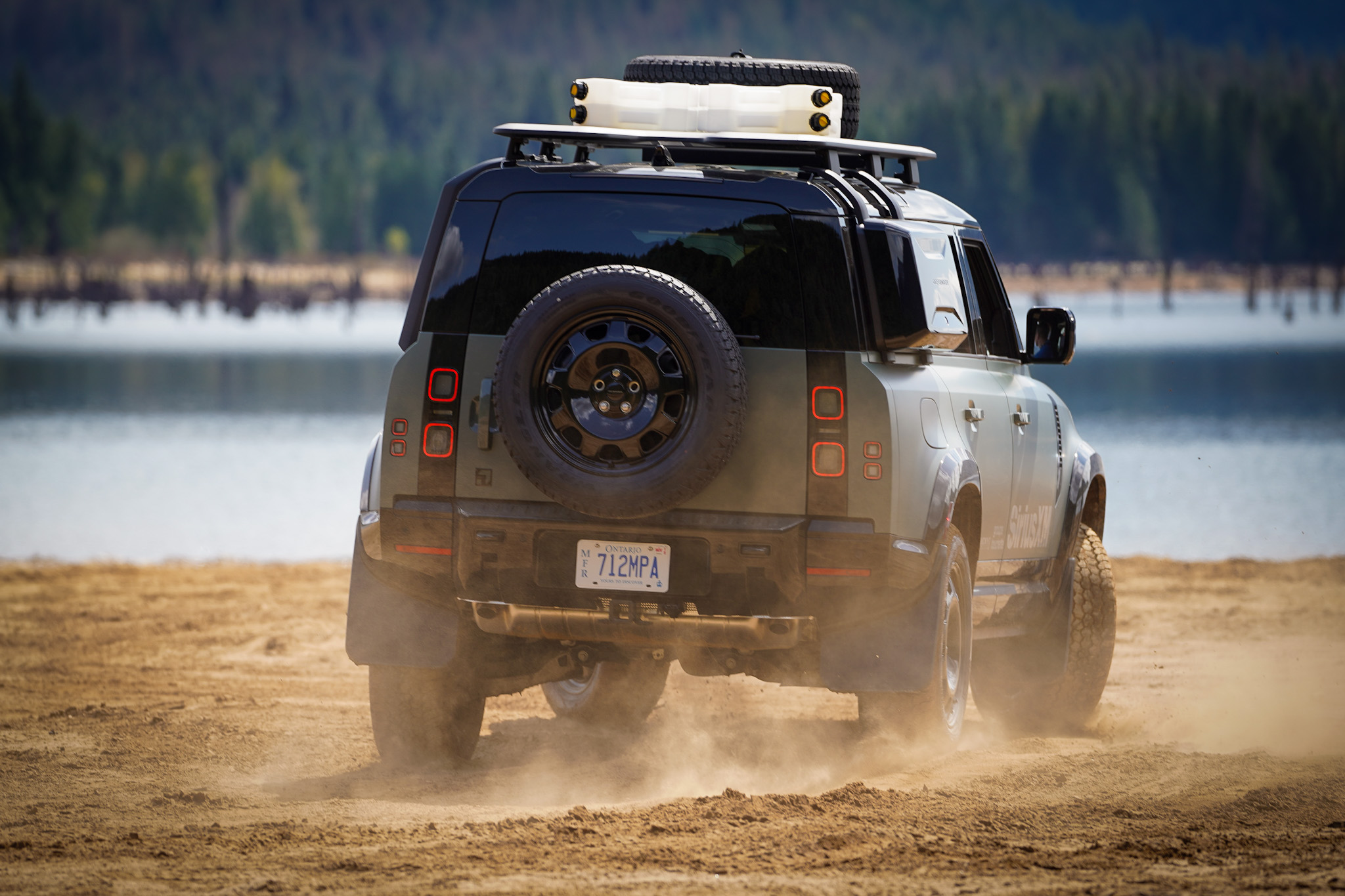
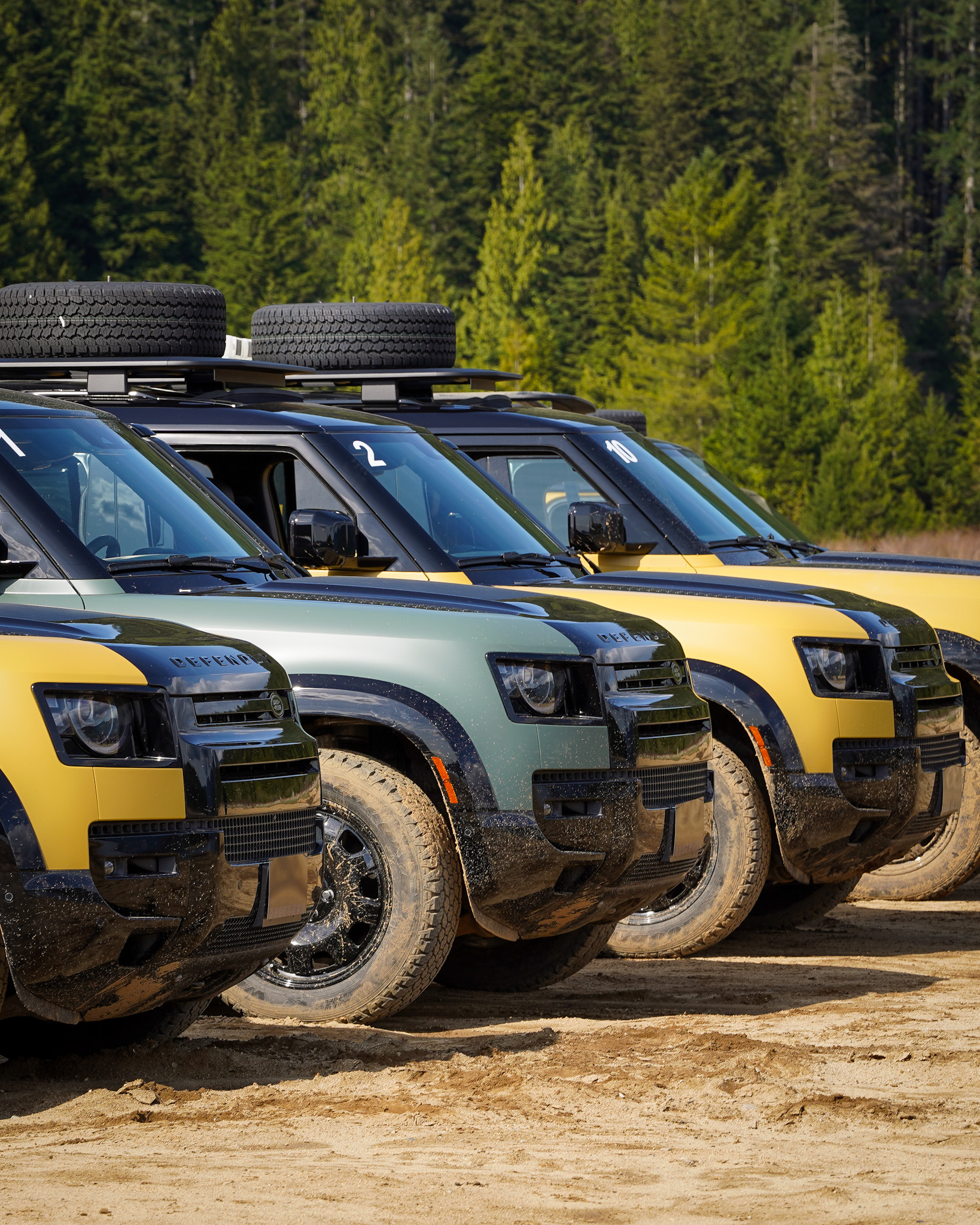
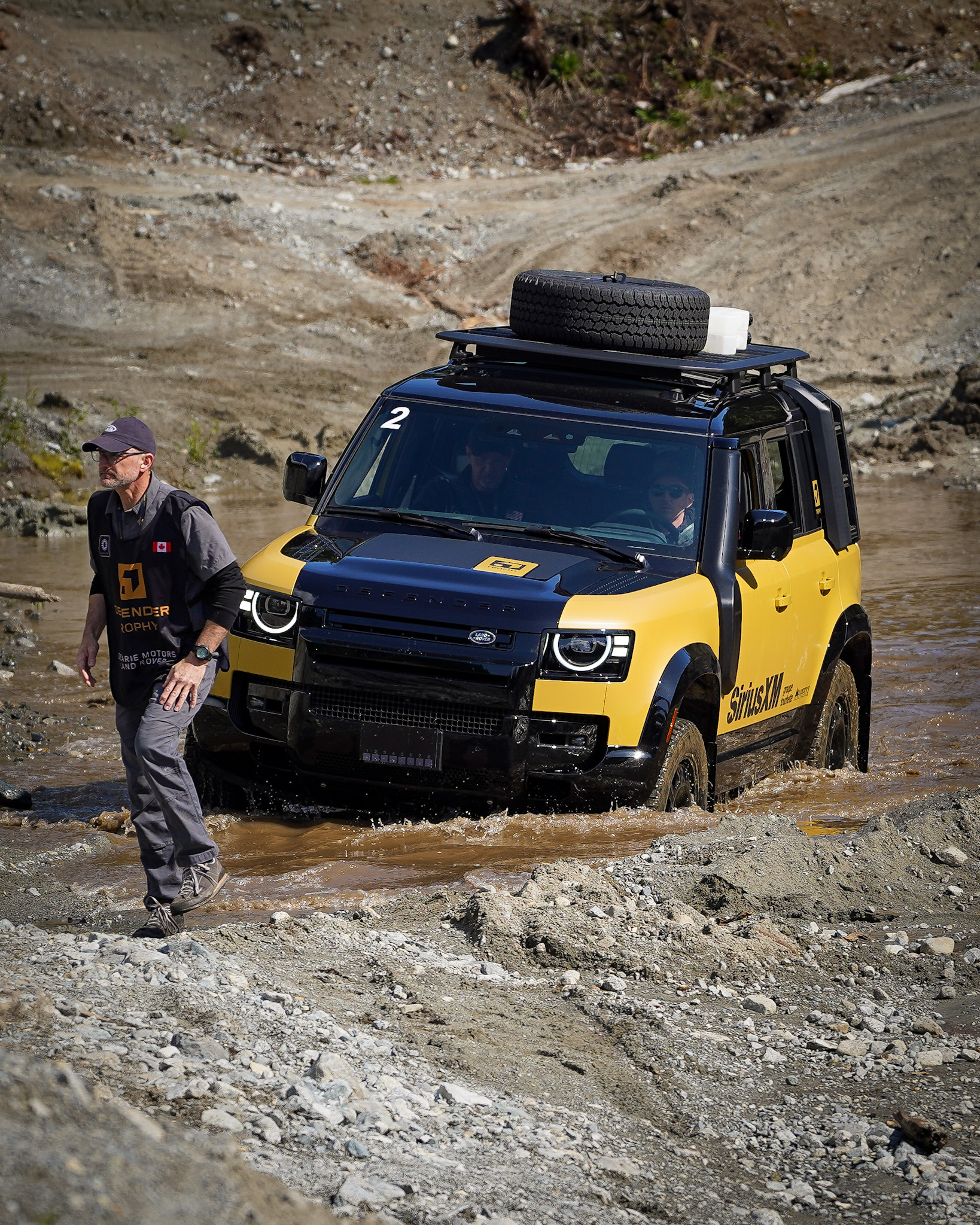
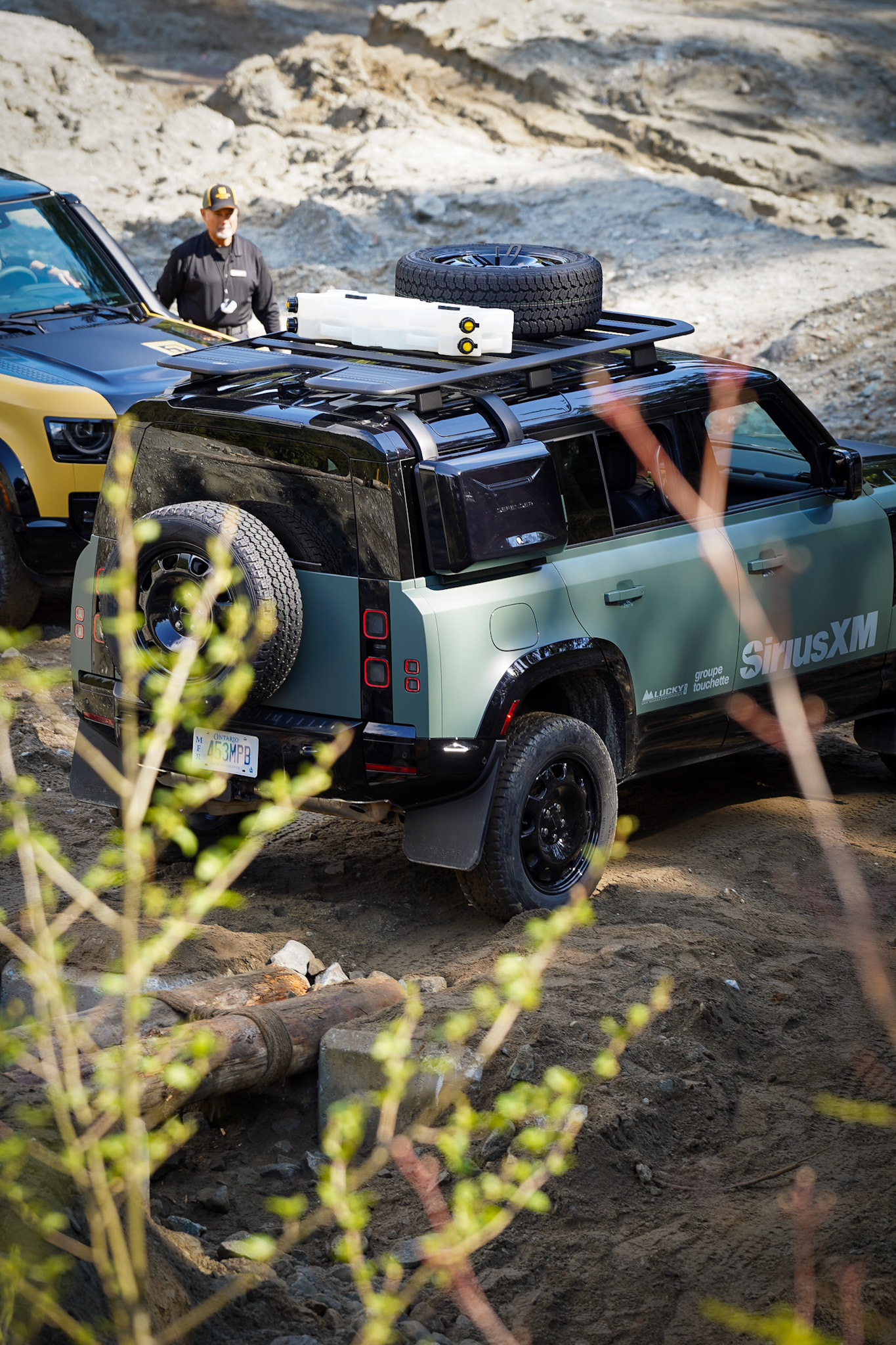
Every competitor drove the same vehicle. The Defender 110 Trophy Edition in Deep Sandglow Yellow (paying homage to the iconic Camel Trophy color) and Keswick Green (celebrating Defender’s UK heritage) arrived competition-ready from the factory.
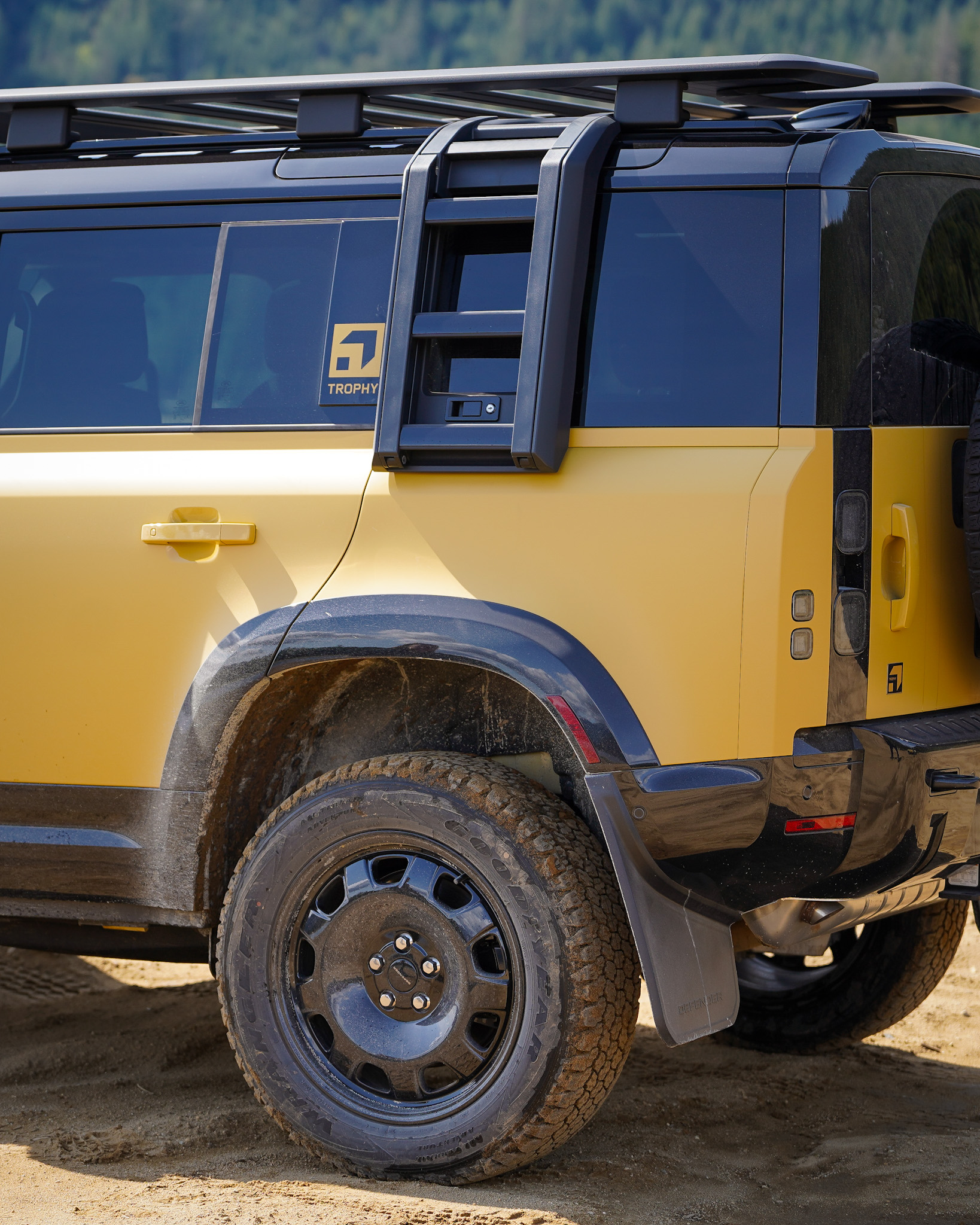
This beast was designed to handle serious off-road adventures, as the competition made abundantly clear. With rugged All-Terrain tires on 20-inch Gloss Black alloys, a raised air intake for dusty terrain, an expedition roof rack, a deployable roof ladder, a side-mounted gear carrier for anything muddy or wet, front and rear mud flaps, and Wade Sensing technology, whether you’re trekking across North American mountains or voyaging through African savannas, this SUV can handle all types of terrains.
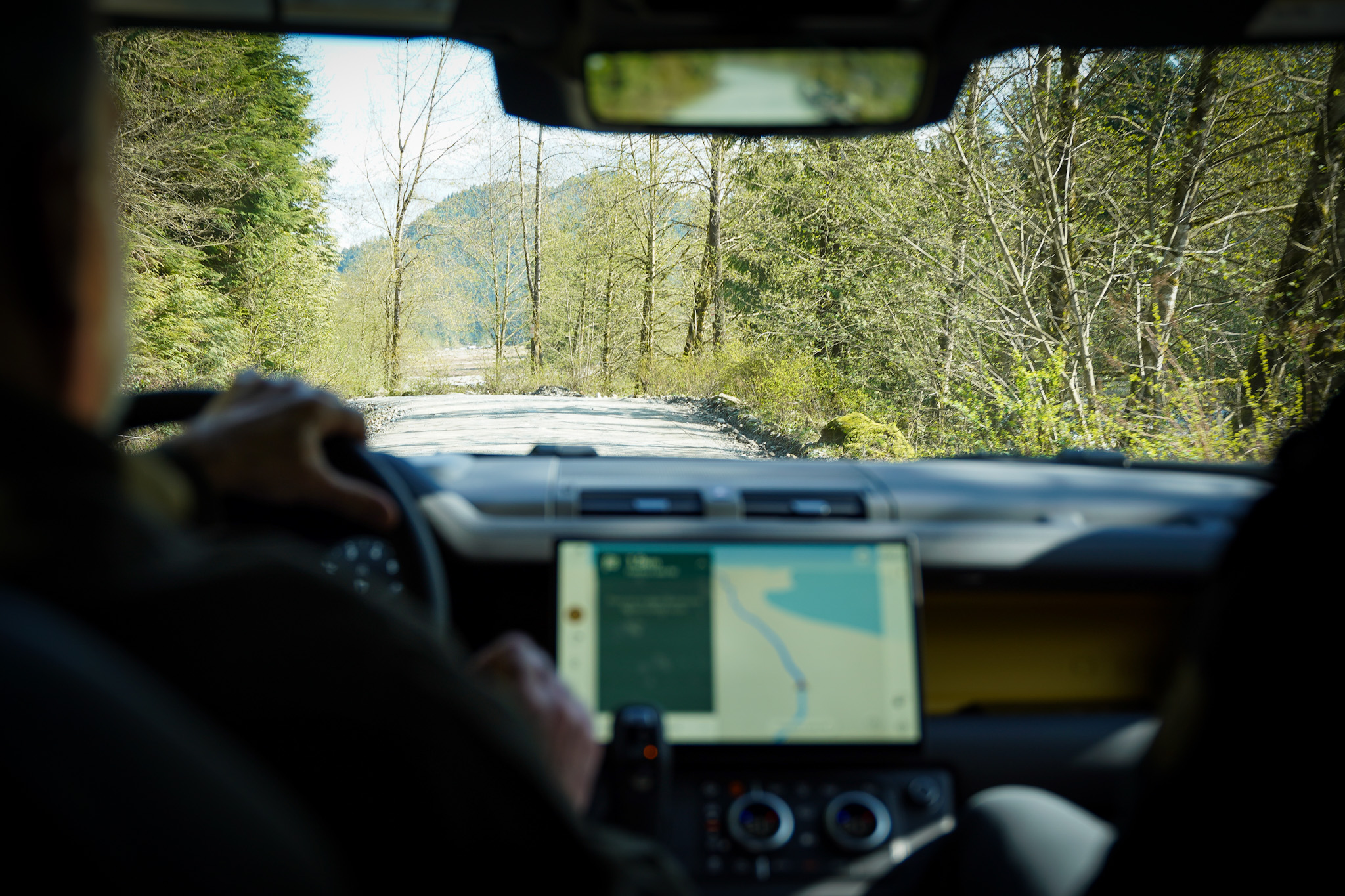
While the styling is apparent, the technology is where the Defender separates itself entirely.
The Hill Descent Control is perhaps the most intuitive illustration of this philosophy, and the best way to understand it has nothing to do with automotive language. To me, it’s remarkably similar to descending a steep rocky mountain on horseback. Every good riding instructor tells you the same thing: loosen the reins, lean back, and trust the horse to find its footing on the trail. Each wheel on the Defender operates with similar independence, reading and responding to the terrain the way a horse reads a trail.
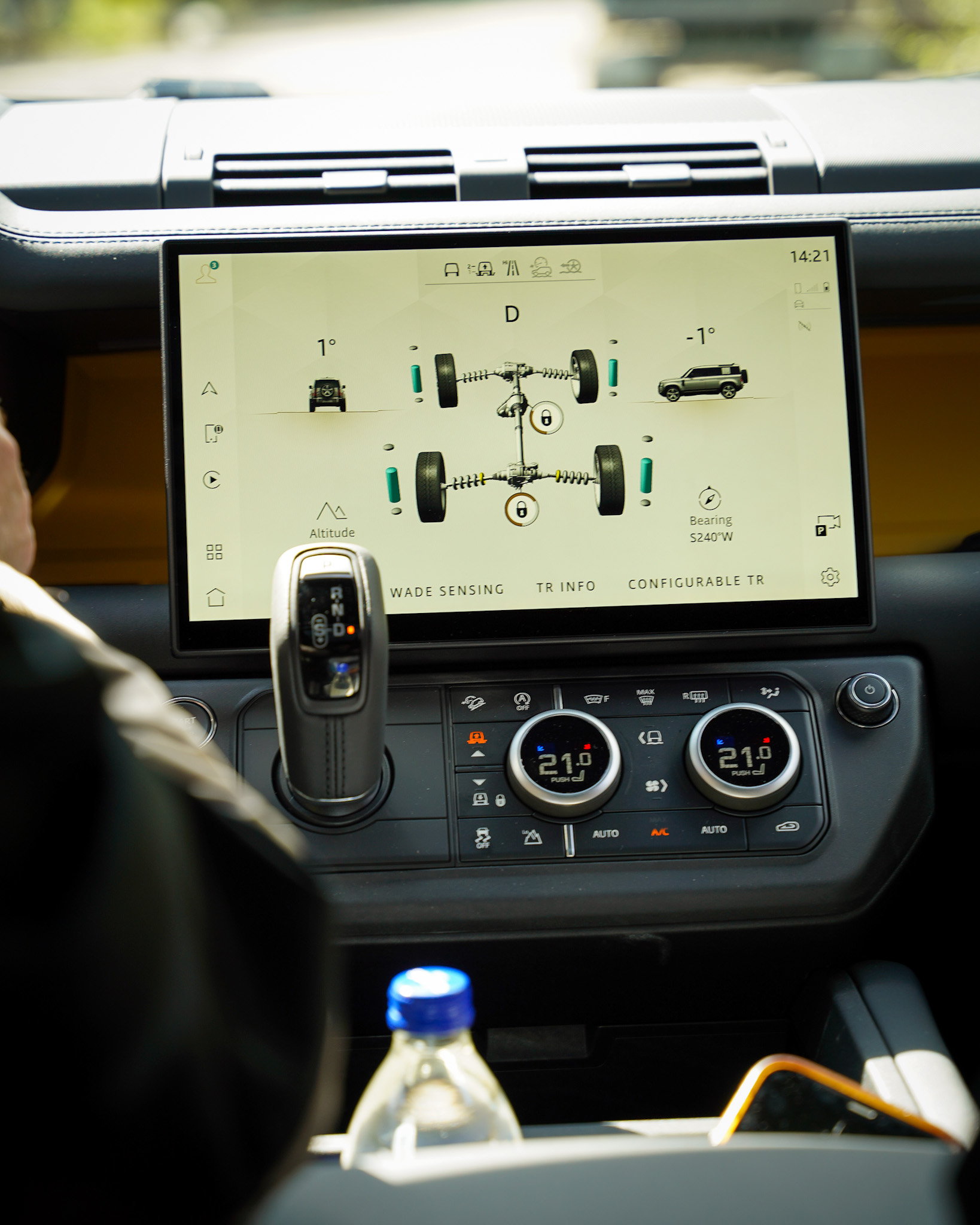
Add to that the Low Speed Cruise Control, freeing the driver to focus entirely on communication and terrain rather than pedal management, the 360-degree camera array, Wade Sensing for water crossings up to 33 inches, and the Terrain Response system, and you have a vehicle that makes the impossible merely demanding.
As one Defender instructor put it: “The advantages are probably not so much ‘will it get me there?’ but ‘will I still be enjoying it by the time I get there?'”

The Final Task
After two days of challenges scored on knowledge, physicality, and logic, the Final Task carried zero points. The board read simply: “0 points. Accomplishment-based.”
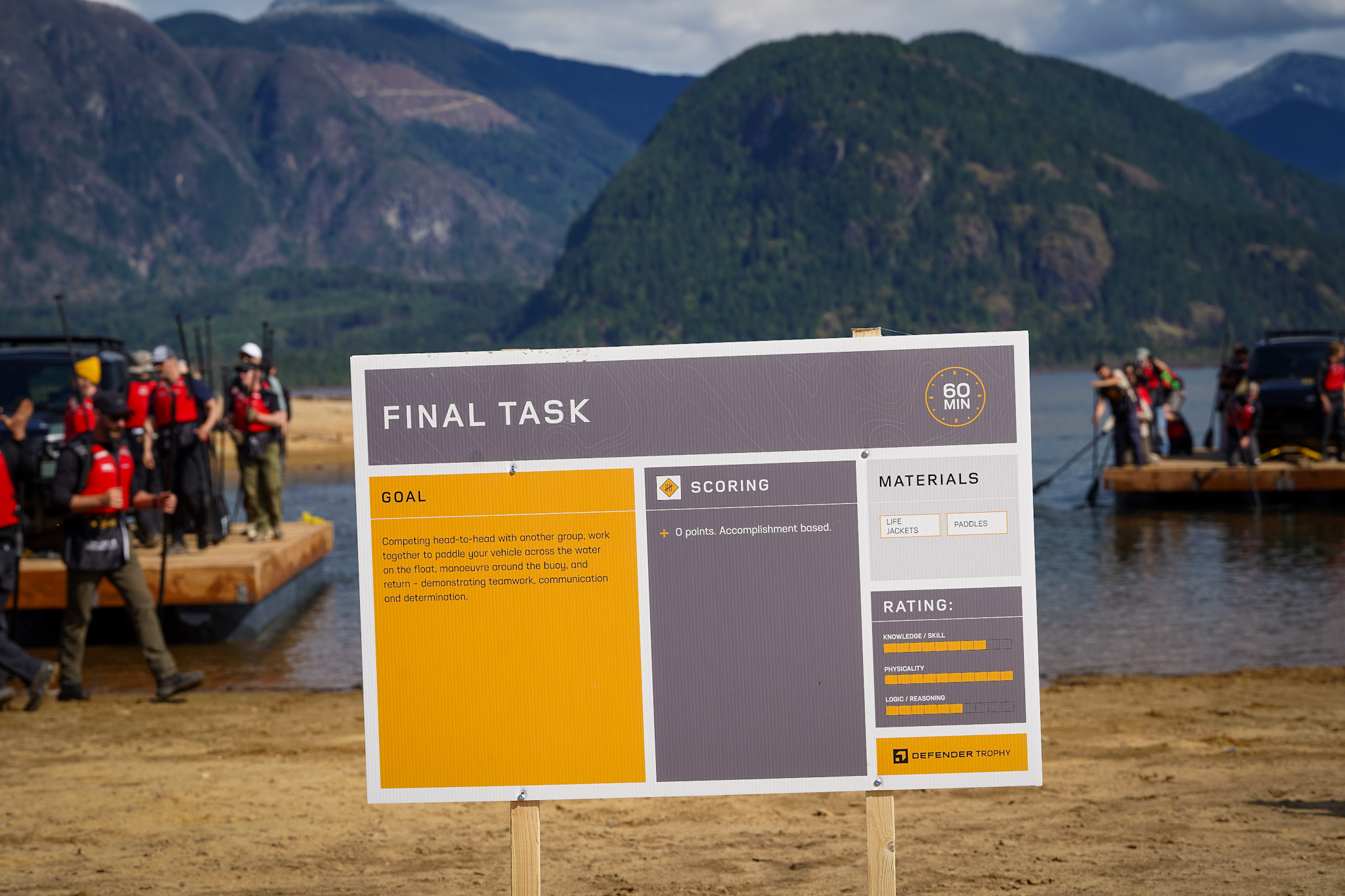
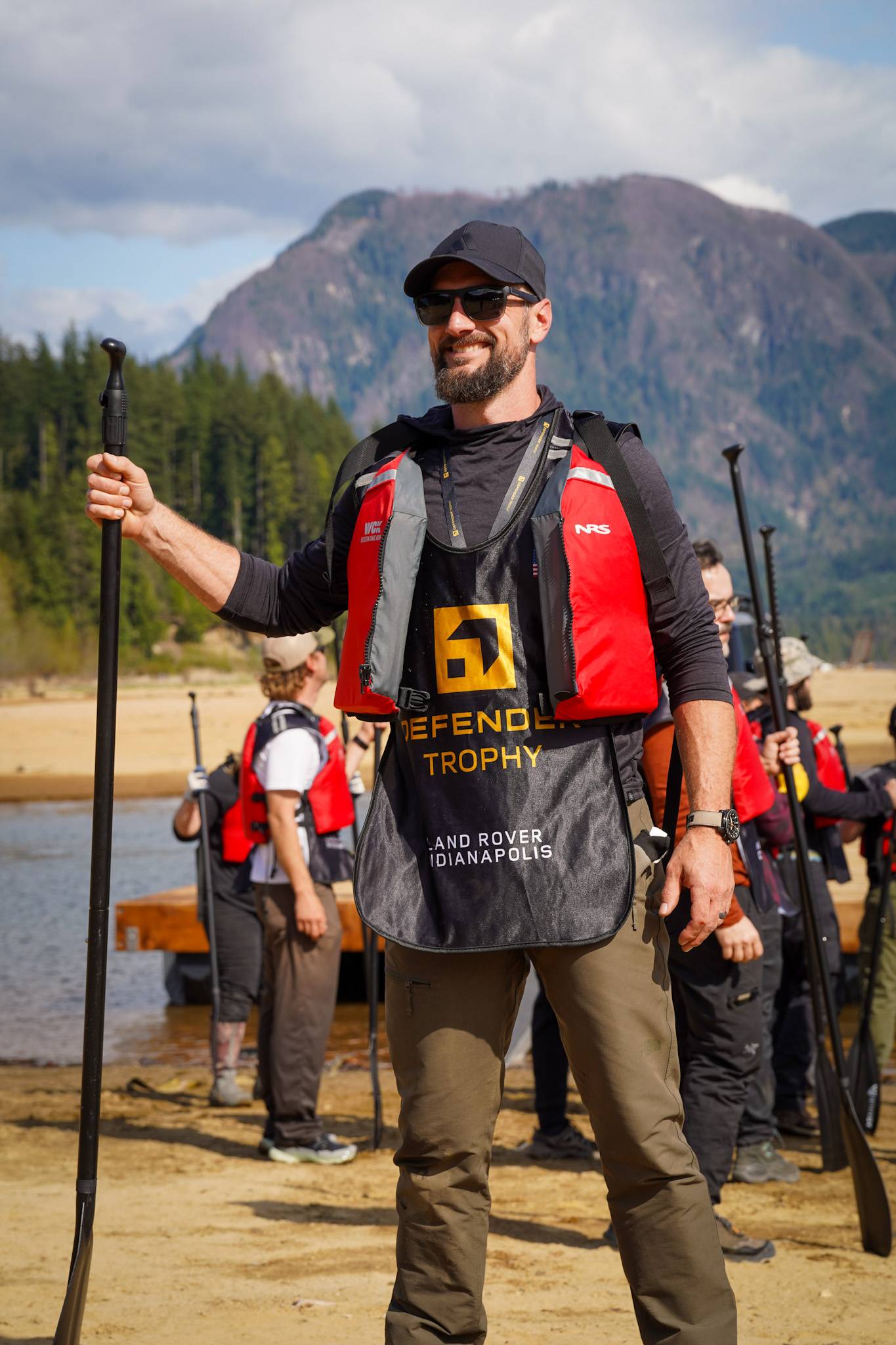
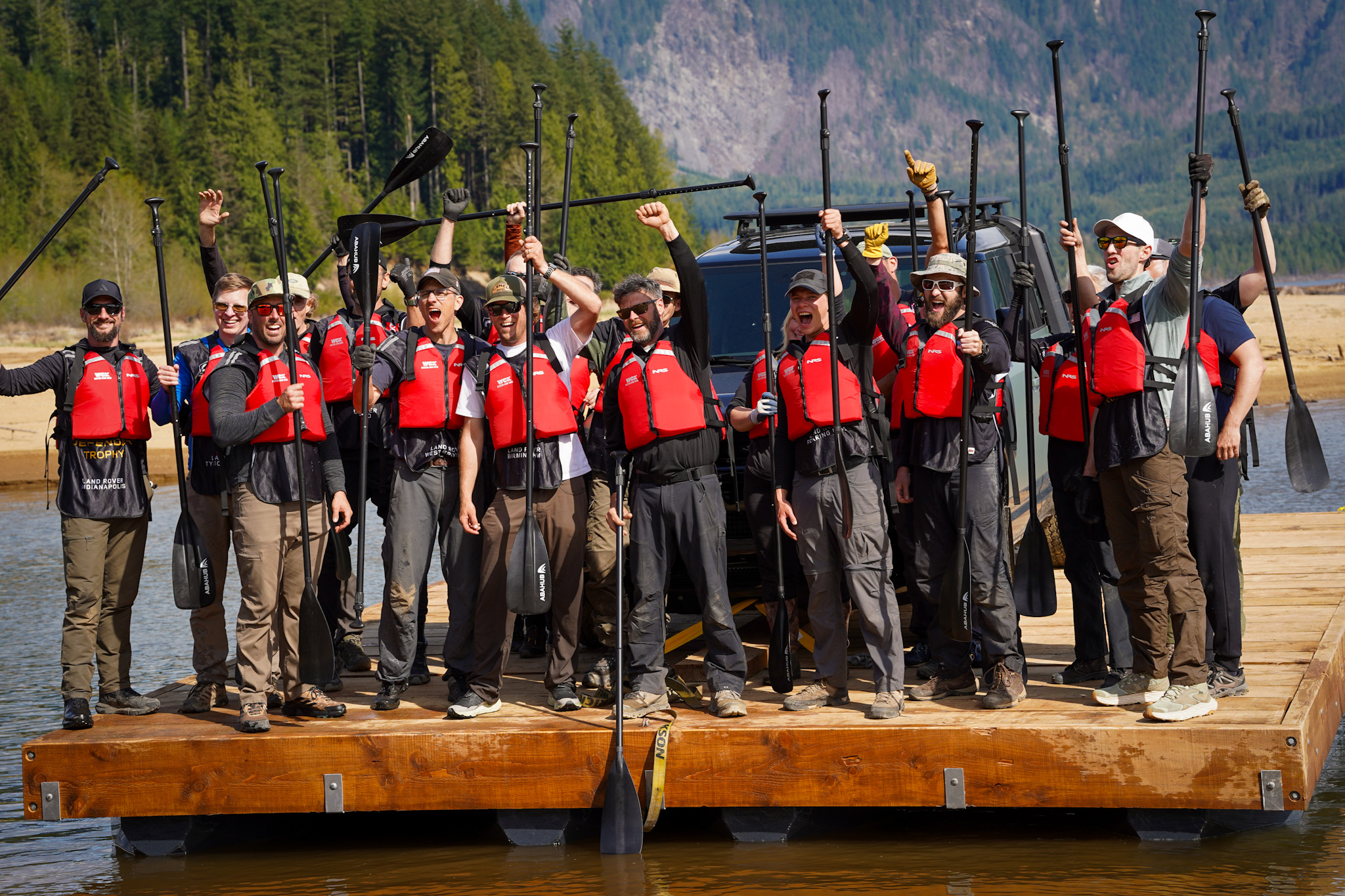
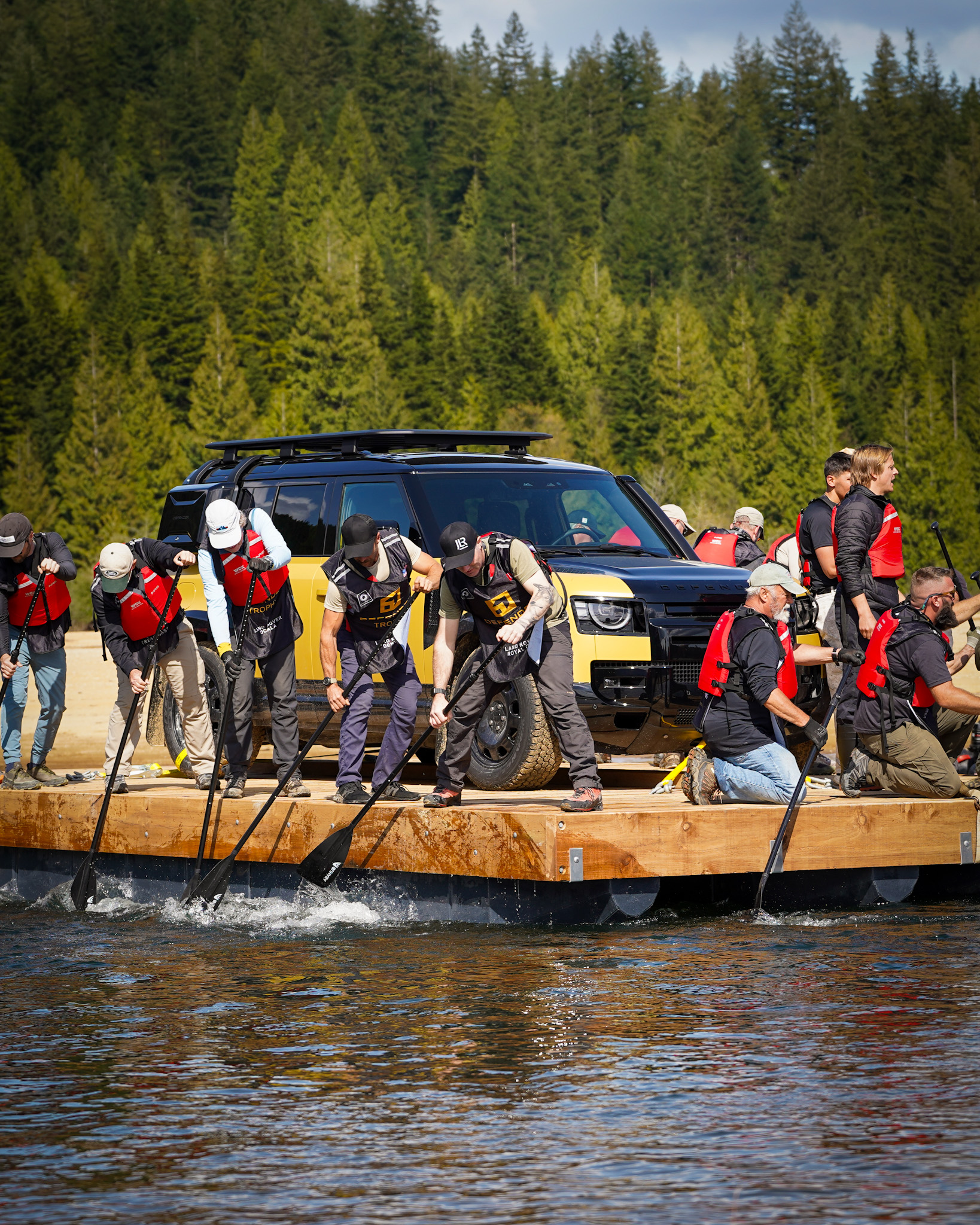
Two Defender 110 Trophy Edition vehicles were strapped to wooden floats at the edge of Stave Lake. Forty competitors pulled on red life vests and picked up paddles. Two teams competing head-to-head: paddle the Defenders across the lake to a buoy and back, demonstrating teamwork, communication, and determination.
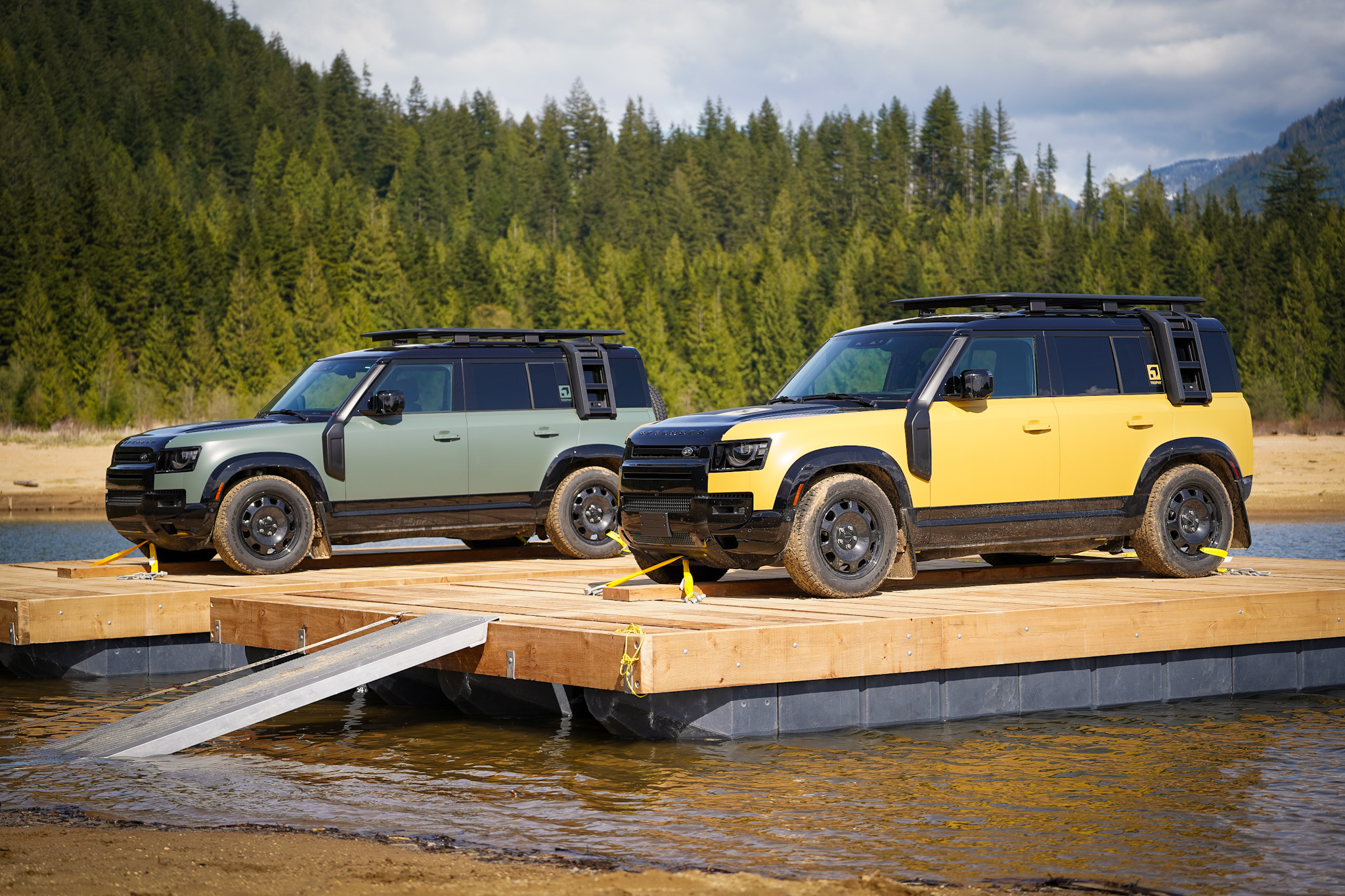
For anyone familiar with the legendary Camel Trophy photographs (iconic yellow Land Rovers being rafted across rivers, images that defined adventure for a generation and still circulate on social media today), standing on the shore watching those floats push off into the water felt like a modern-day reflection of those famed photographs.

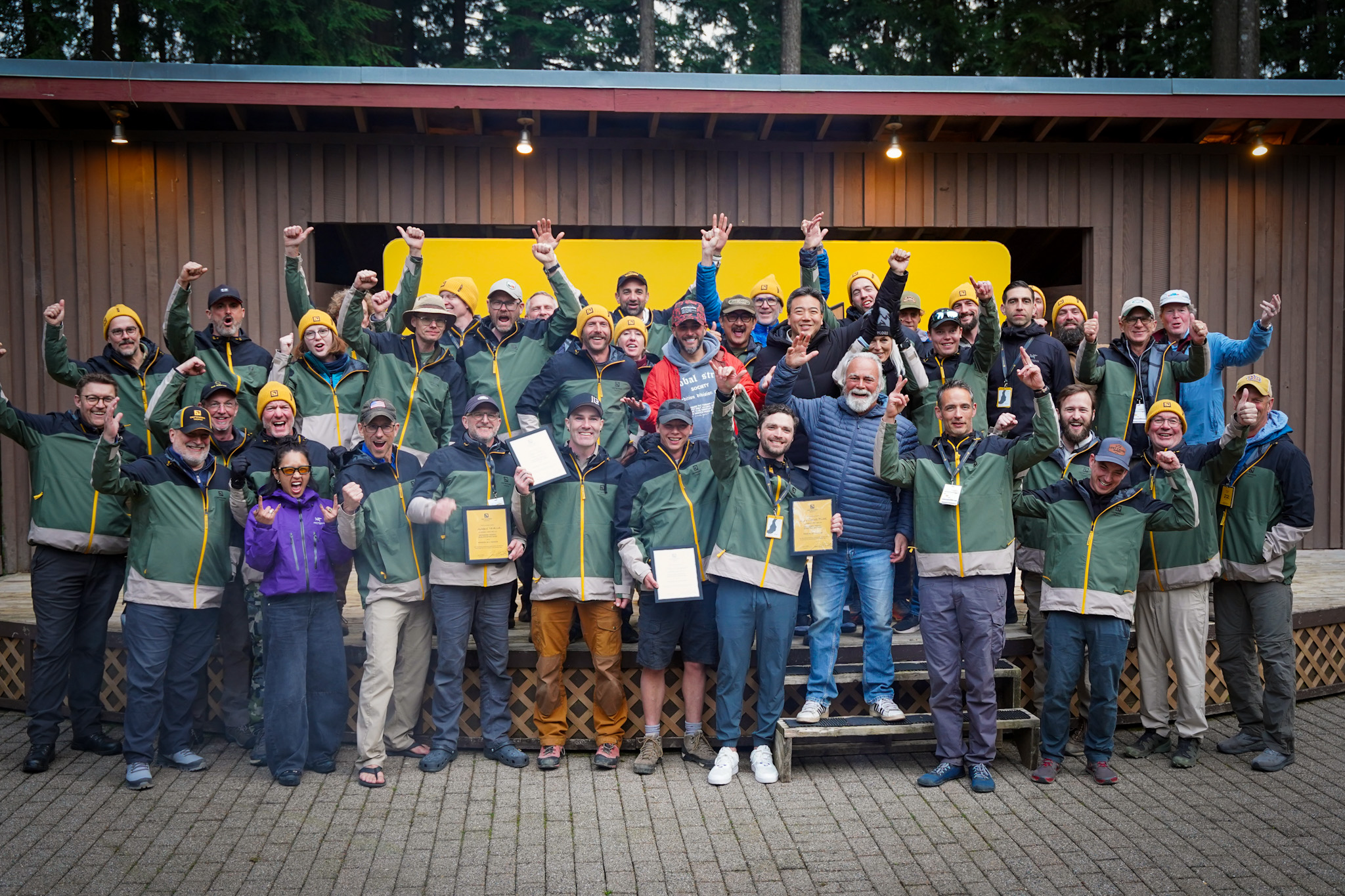
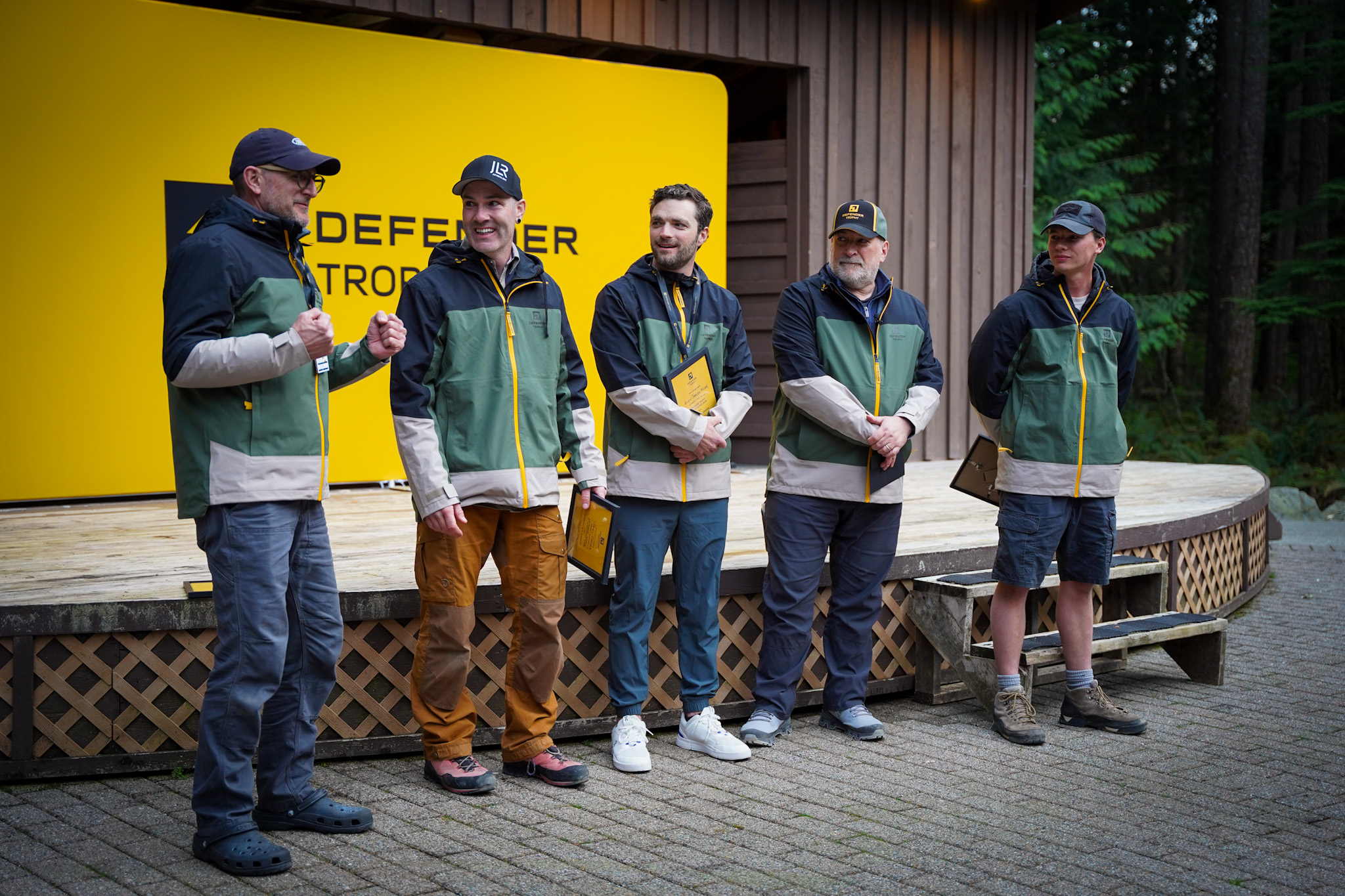
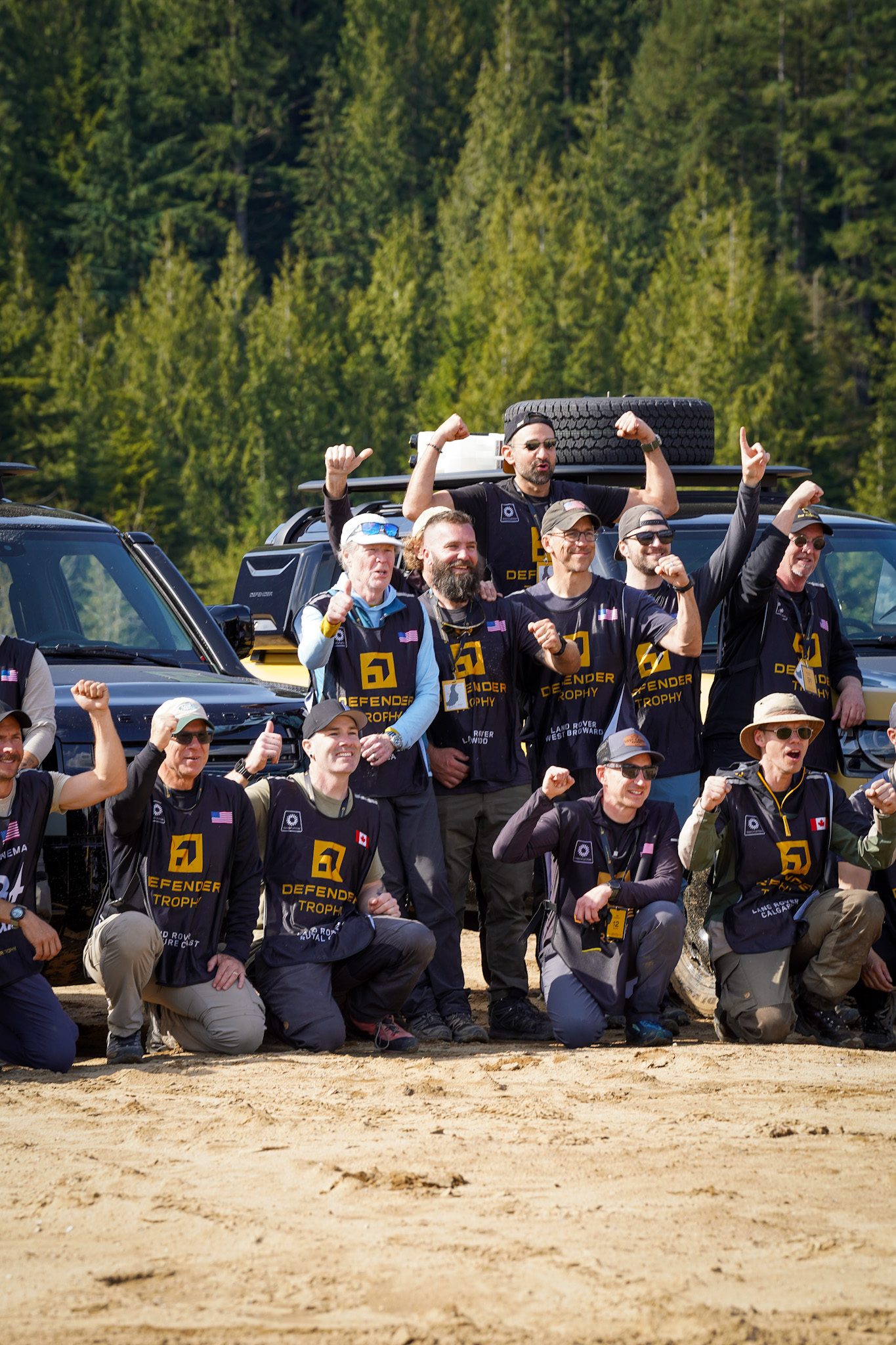
At the closing ceremony, Joe Eberhardt, President and CEO of Jaguar Land Rover North America (pictured below, second on the right), addressed the competitors by saying:
“Each of you individually put your soul and your heart into everything you did. What was really most remarkable — you did it together. There were so many moments when I thought a true competitor would just keep running, but you actually supported and helped each other. And that is what makes Defender special. It is a very inclusive brand. Defender was always in the service of the community.”
Don’t Judge a Book by Its Cover
As I’ve learned in life, the most interesting, unexpected stories rarely come from the cover. They come from within.
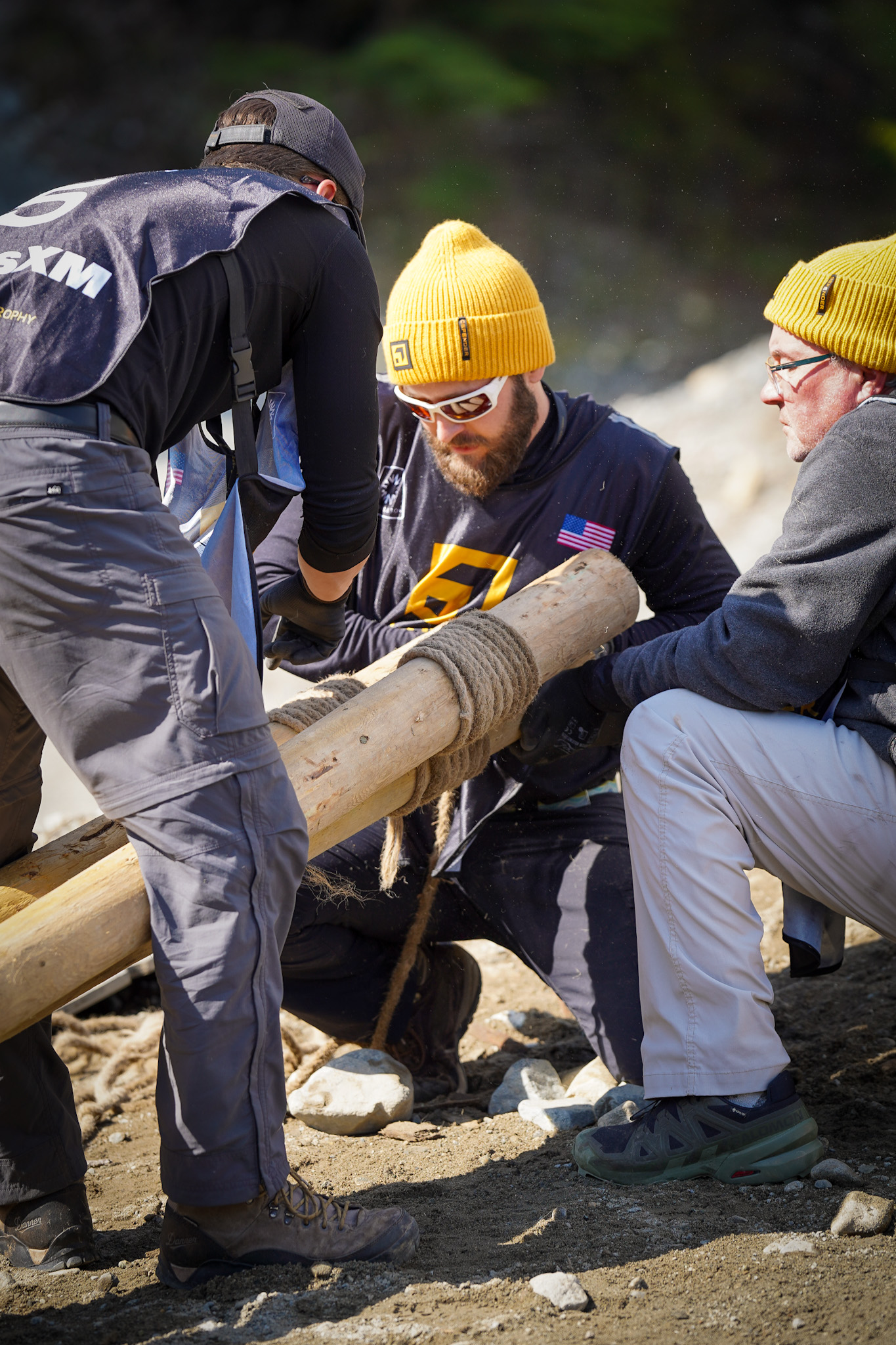
The competitors who showed up at Stave Lake that April morning weren’t who they appeared to be at first glance. While each of them arrived in a numbered vest, tackling the same terrain in the same vehicle, they all had a different story to tell.
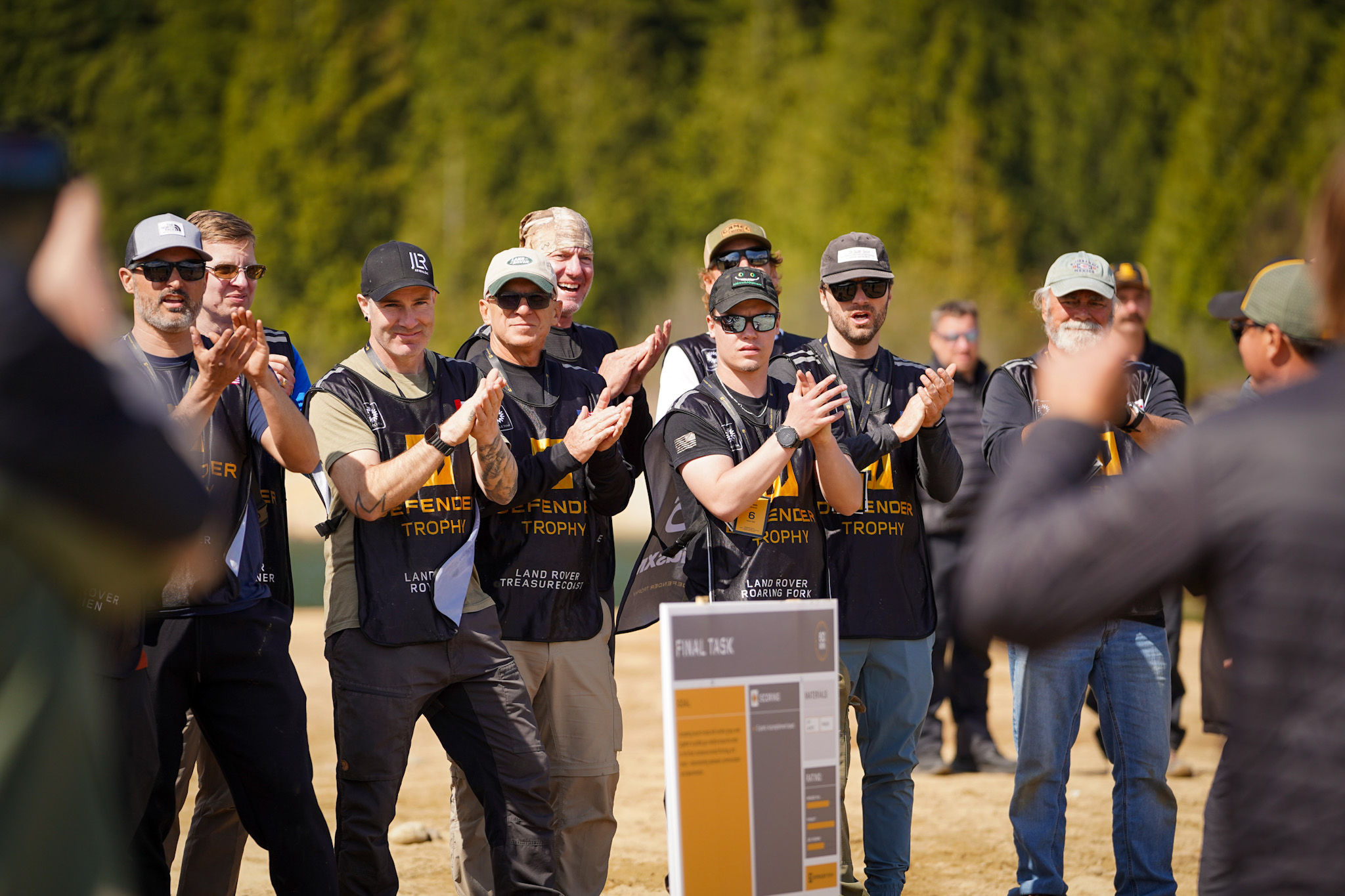
Staley Weidman III, CEO of The Catamaran Company and Certified Professional Yacht Broker (pictured above, middle), arrived at Stave Lake just one week after returning from a 12-day paramotor expedition across Namibia, sleeping in rooftop tents, flying over remote desert terrain, and living entirely off the grid, which he claims helped mentally prepare him for this adventure. He’s the type of guy who epitomizes the mantra “work hard, play hard”.
When asked which task was the most daunting, his reply was, “I pulled a hamstring last week in Africa, taking off on a paramotor. The running part was excruciating. We ran three kilometers — what is that, like a mile and a half? And we had to carry two and a half gallons of water with us while we were running. So after finishing the navigation through the woods for a couple of hours, hiking through all sorts of slippery stuff and fallen trees, they’re like, all right, come here — and we had to run with 20 pounds of water. Having a pulled hamstring, it was so painful. But everyone was pushing through something.”

As one of the few female contestants in the North American Qualifier, auto journalist Lyn Woodward (pictured above) proved that women can be just as fierce and formidable in competitive environments. Eager to drive as a teen, she learned to shift her mom’s 1977 Toyota Corolla SR5 liftback from the passenger seat at age 14. In recent years, she has been restoring a 1967 Porsche 912 herself. Beyond that, her automotive journalism has appeared in the New York Times, MotorTrend, Automobile Magazine, Hagerty Driver’s Club, and The Drive, among others.
She said, “As a seasoned off-roader, I wasn’t worried about my driving capabilities for the Defender Trophy selection competition. But I knew I wasn’t going to be the physically strongest, and that meant I needed to double down on my mental toughness. I dug deep, made up for my limitations with creative problem-solving, and feel so proud of what I accomplished out there. What an extraordinary contest with an incredible group of humans. I am honored to have been invited to play in that sandbox with that group of competitors.”
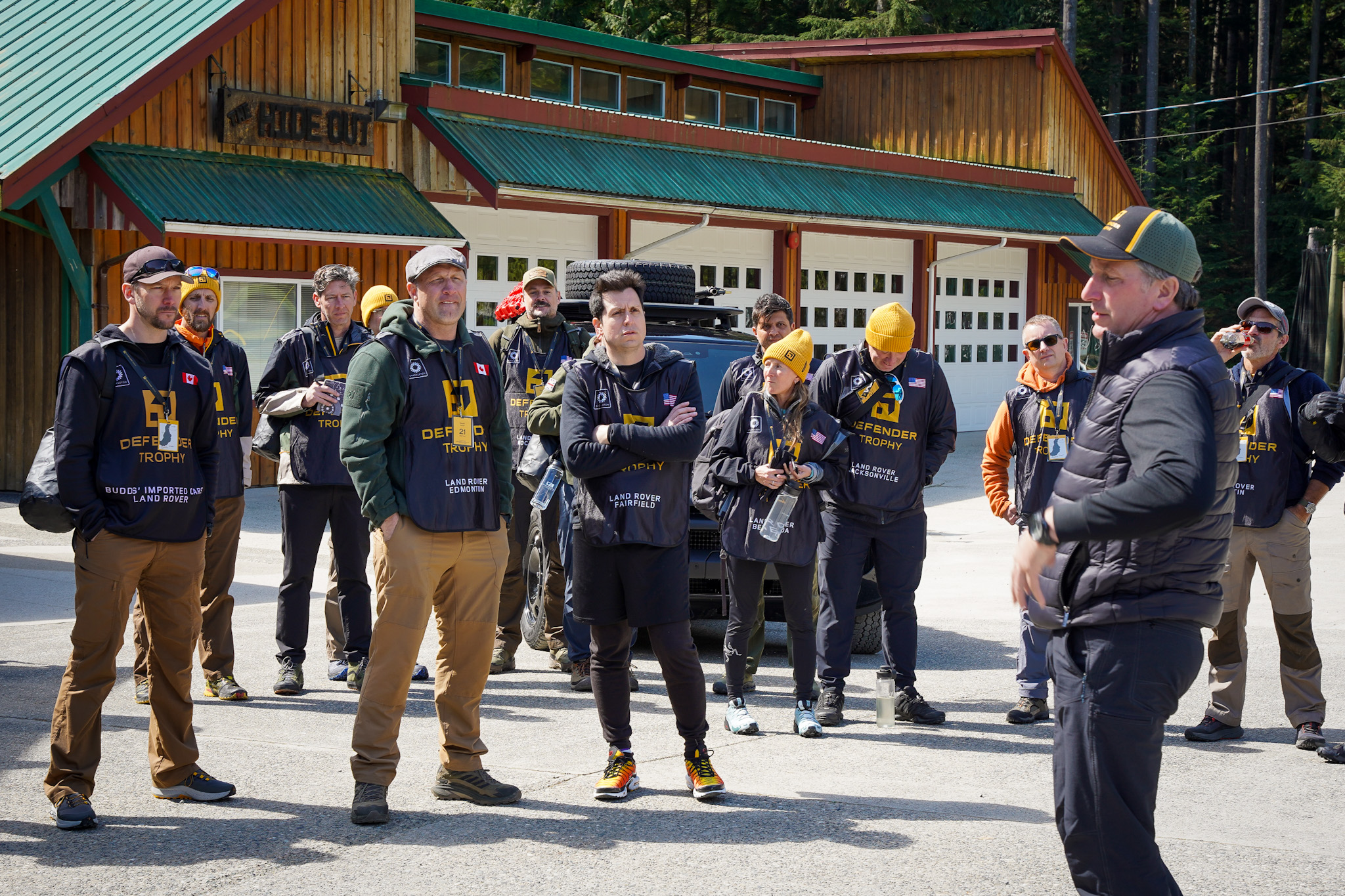
The final contestant I spoke with was Andres Delgado (pictured above, middle), whose diverse career includes being a diplomat who served on the United Nations Security Council, working with world leaders on achieving global security, a serial entrepreneur who built and sold a company in partnership with Microsoft, and a lecturer at New York University on business innovation. To top it off, he’s a long-time Land Rover owner with Ecuadorian roots and a passion for conservation.
When asked how he maintains a winner’s mindset when deep in the grueling, stressful parts of competition, he exclaimed, “I believe in the saying, ‘If you don’t take a risk, you don’t get to drink champagne.’ Achieving greatness comes from pushing yourself beyond what you think is possible.”
And when asked how he finds the inner tenacity to keep momentum forward when challenges push him to his limit (whether in the business world, the political arena, or the Defender Trophy), his answer spoke to something far bigger than any single competition:
“To get through adversity, you need to have passion and a strong team to push you through when you want to quit. Whether it’s starting a business or trying to achieve world peace, I depend on colleagues who all share a passion to push through the obstacles that arise. As Dr. Robert Schuller famously said, ‘Tough times don’t last, but tough people do’ — and that’s because we share a passion to achieve greatness together.”
Epic Adventure. Greater Purpose.
While you might assume that the Defender Trophy Competition was designed for overlanders, off-road enthusiasts, or seasoned adventurers, that’s not the case. It was created to inspire anyone with an unstoppable spirit, who’s willing to show up, push past comfort, and transcend their own perceived limits to learn what they’re truly made of.
The Global Final takes place in October 2026, where the top qualifiers from around the world will compete alongside Tusk in a real-world conservation mission designed to leave a lasting legacy on the people and places the Defender Trophy touches.
As Joe Eberhardt noted: “Defender is doing good all around the world, whether it’s conservation, whether it’s other causes.” Through the Defender Service Award program alone, 30 Defender vehicles have been given away, and $1.5 million donated to organizations doing good in their communities.
If this journey taught me anything, it’s this: Life doesn’t give you a GPS or even a roadmap. You often have to trek through dense forests, navigate murky waters, and push past landslides, boulders, and quicksand just to get through to the other side. And just when you think you’ve cleared the path, it’s like Whac-a-Mole — another challenge pops up the moment you knock one down.
But throughout it all, you have to find your North Star, trust your inner compass, and develop the skills, strength, and fortitude that help you succeed in accomplishing your mission. That’s what it takes to become successful, whether you’re building a career, forging through life’s challenges, or competing to win the Defender Trophy.
[Disclosure: Travel and accommodations provided by JLR. All opinions are my own. Image credits: Christina-Lauren Pollack for Inspirations & Celebrations.]