
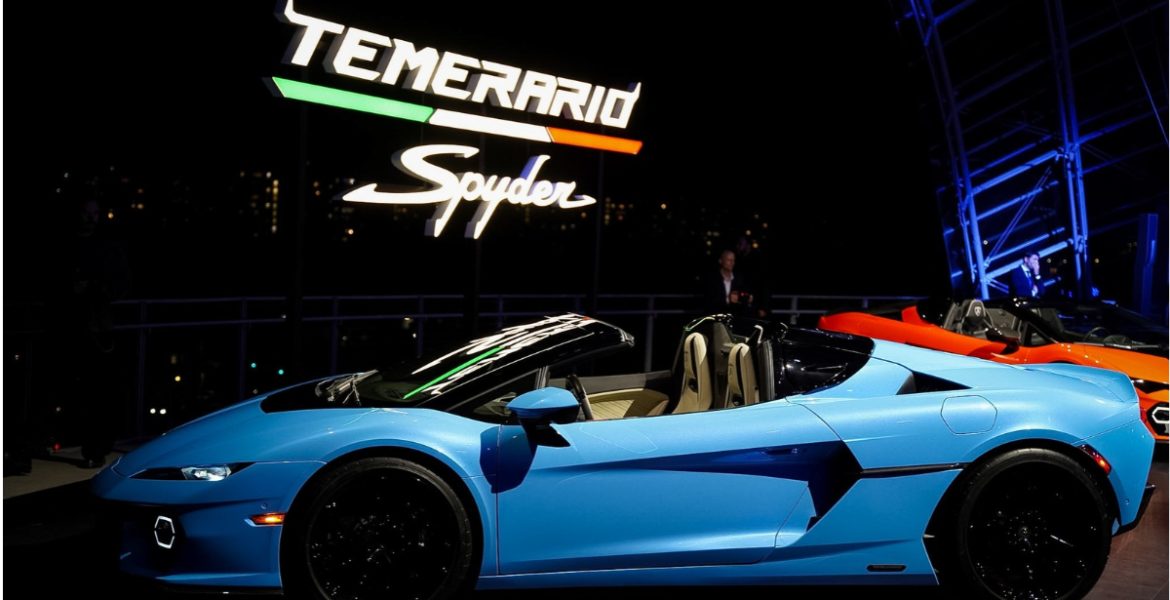
As the influential Italian novelist Cesare Pavese famously said, “We do not remember days, we remember moments.” Reflecting that quote, a week ago, Lamborghini delivered plenty of spectacular moments for VIPs and valued customers in an unparalleled setting.
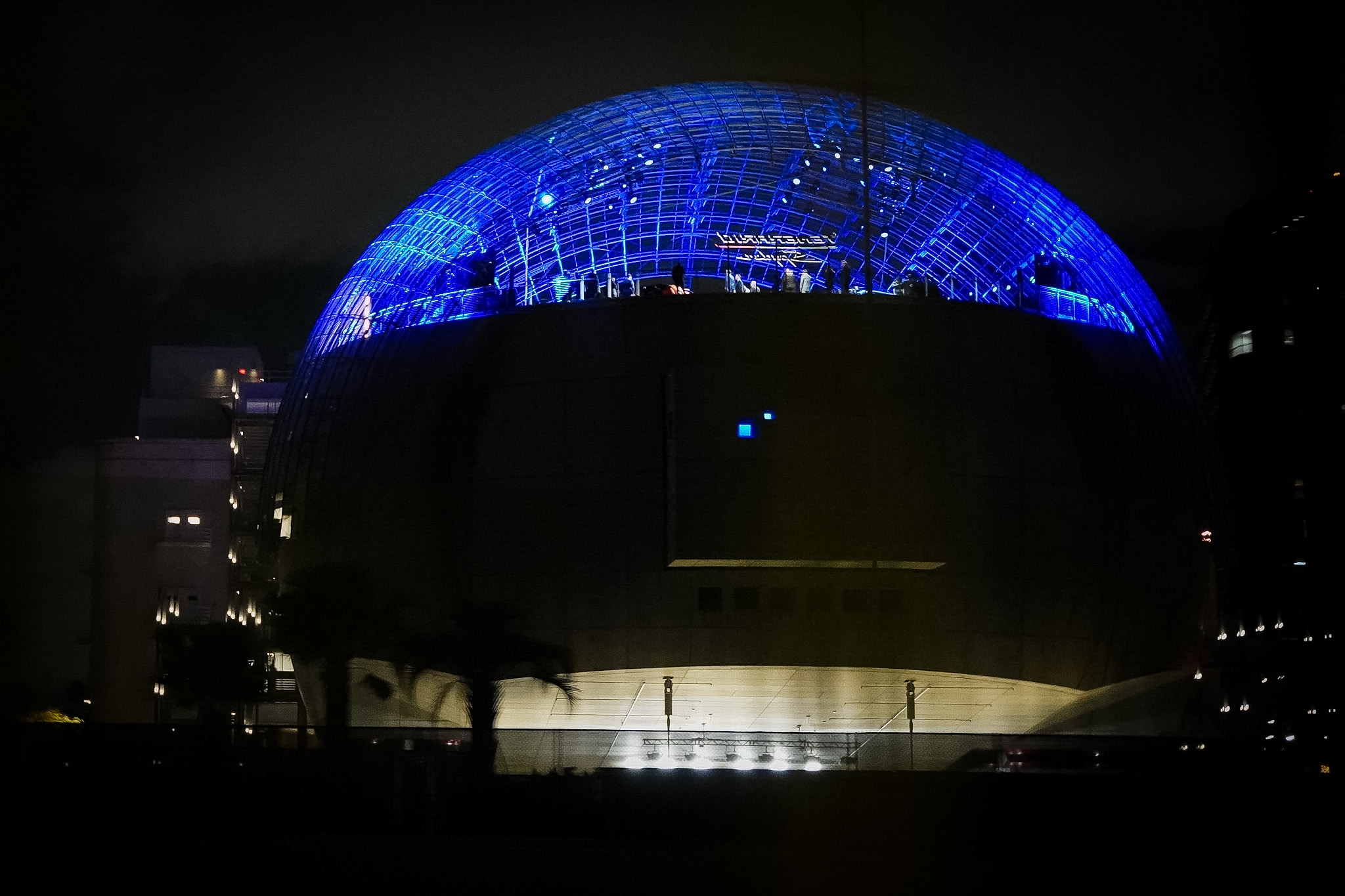
On the evening of November 18, 2026, with the iconic Hollywood sign glowing in the distance over the Hollywood Hills, Automobili Lamborghini unveiled the all-new Temerario Spyder to the world from the Dolby Terrace, perched atop the glass-domed sphere of the Academy Museum of Motion Pictures in Los Angeles.
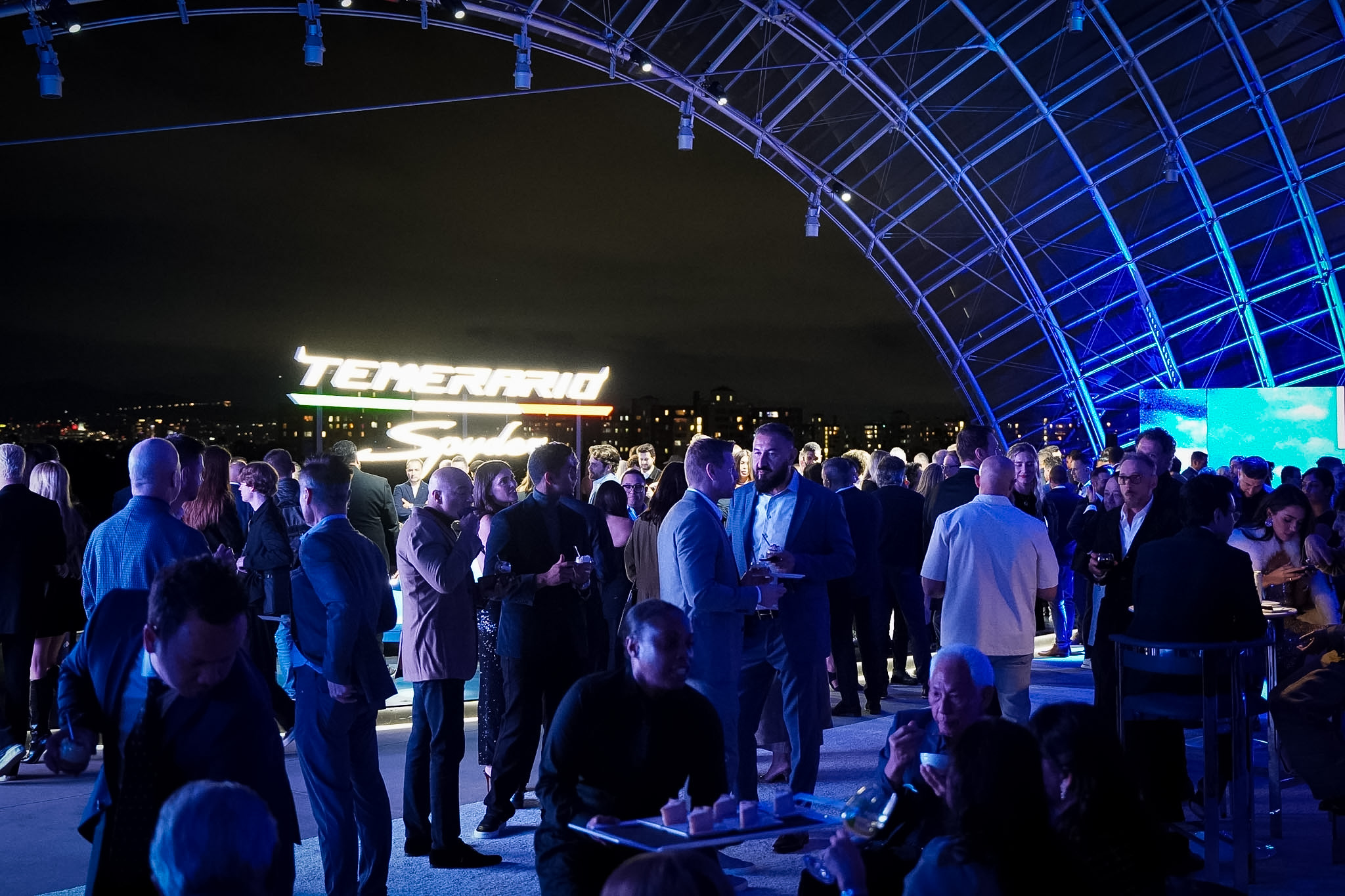
Designed by Italian architect Renzo Piano, the awe-inspiring venue was a fitting stage for a car built around drama, design and emotion. As Lamborghini Chief Marketing and Sales Officer Federico Foschini told me during an exclusive media preview at the venue earlier that day, “The location itself is a statement, and when you put this kind of product on the stage, it automatically becomes a cool event.”
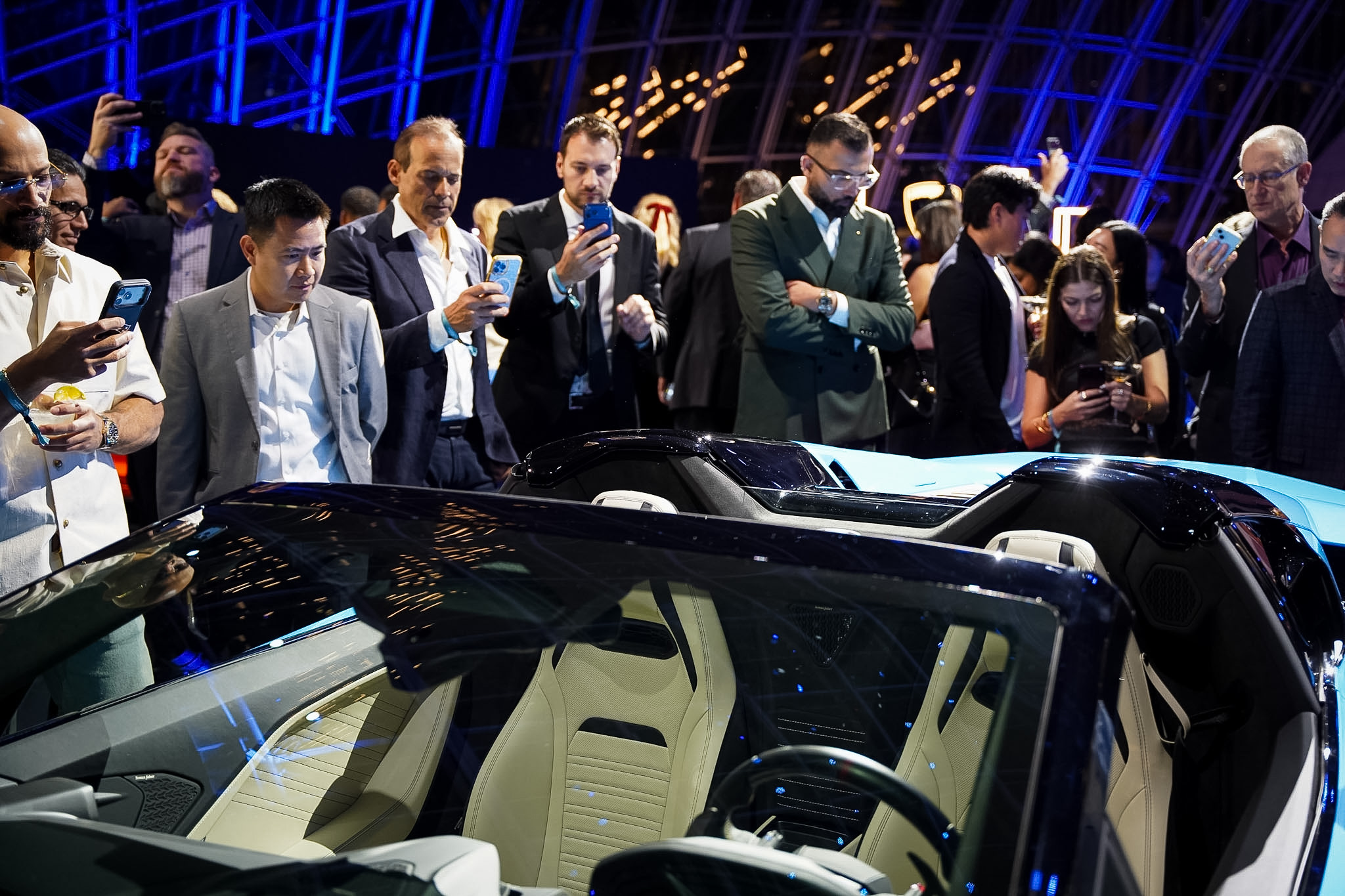
The Temerario Spyder is the first Lamborghini Spyder ever fitted with a retractable hardtop, and it arrives exactly 50 years after the 1976 Silhouette began the brand’s open-top story. Lamborghini describes it with a simple philosophy: “two souls, one Fuoriclasse” (Italian for “in a class of its own”), meaning one car offering two distinctly different experiences, roof up or roof down.
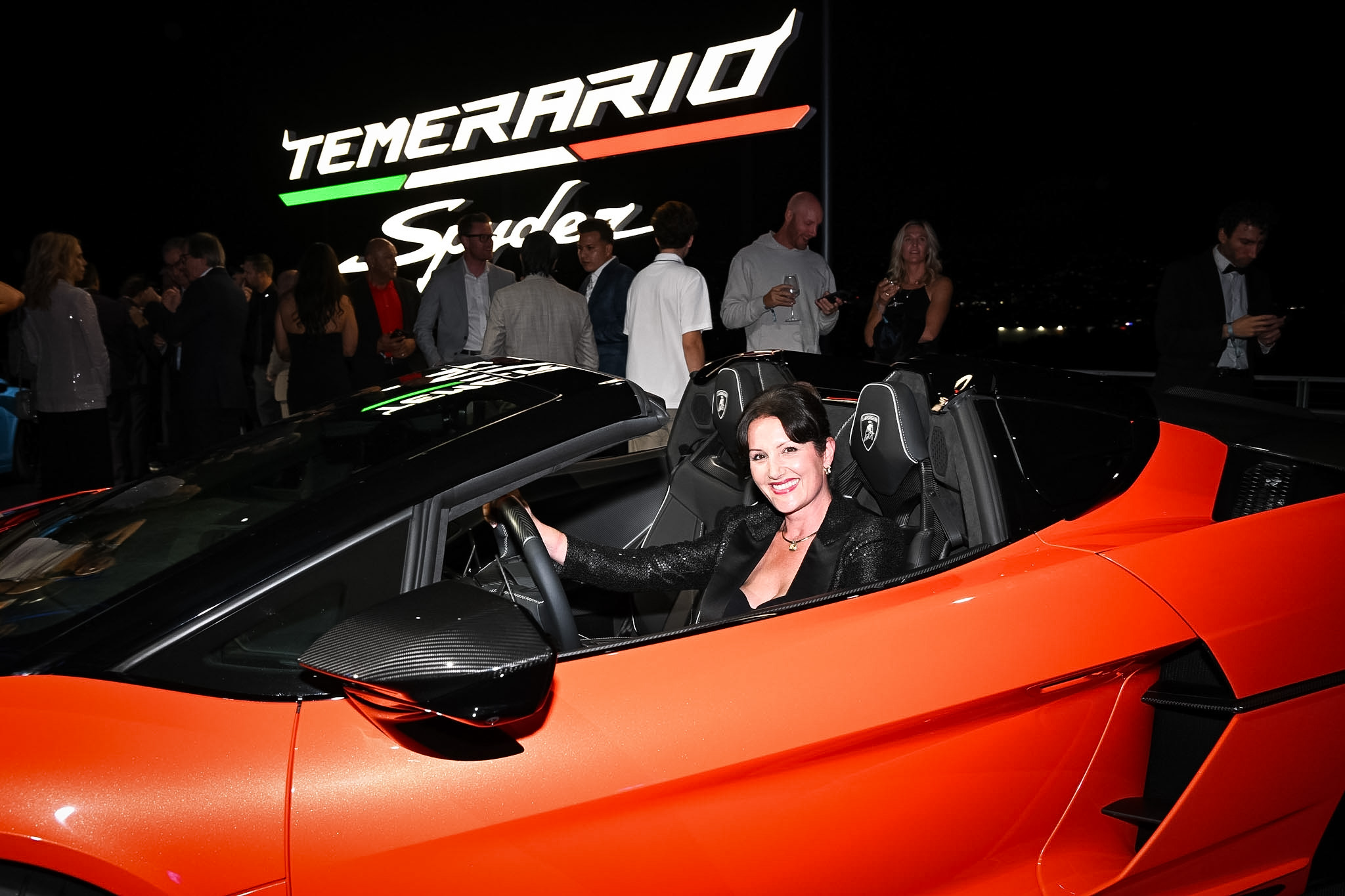
To understand what makes this car (and the culture around it) so compelling, I spoke with three people who see Lamborghini from very different angles: the designer who shaped it, a self-made collector whose life was changed by it, and the marketing executive who brings the brand to the world.

Two Souls, One Fuoriclasse: Designing the Temerario Spyder
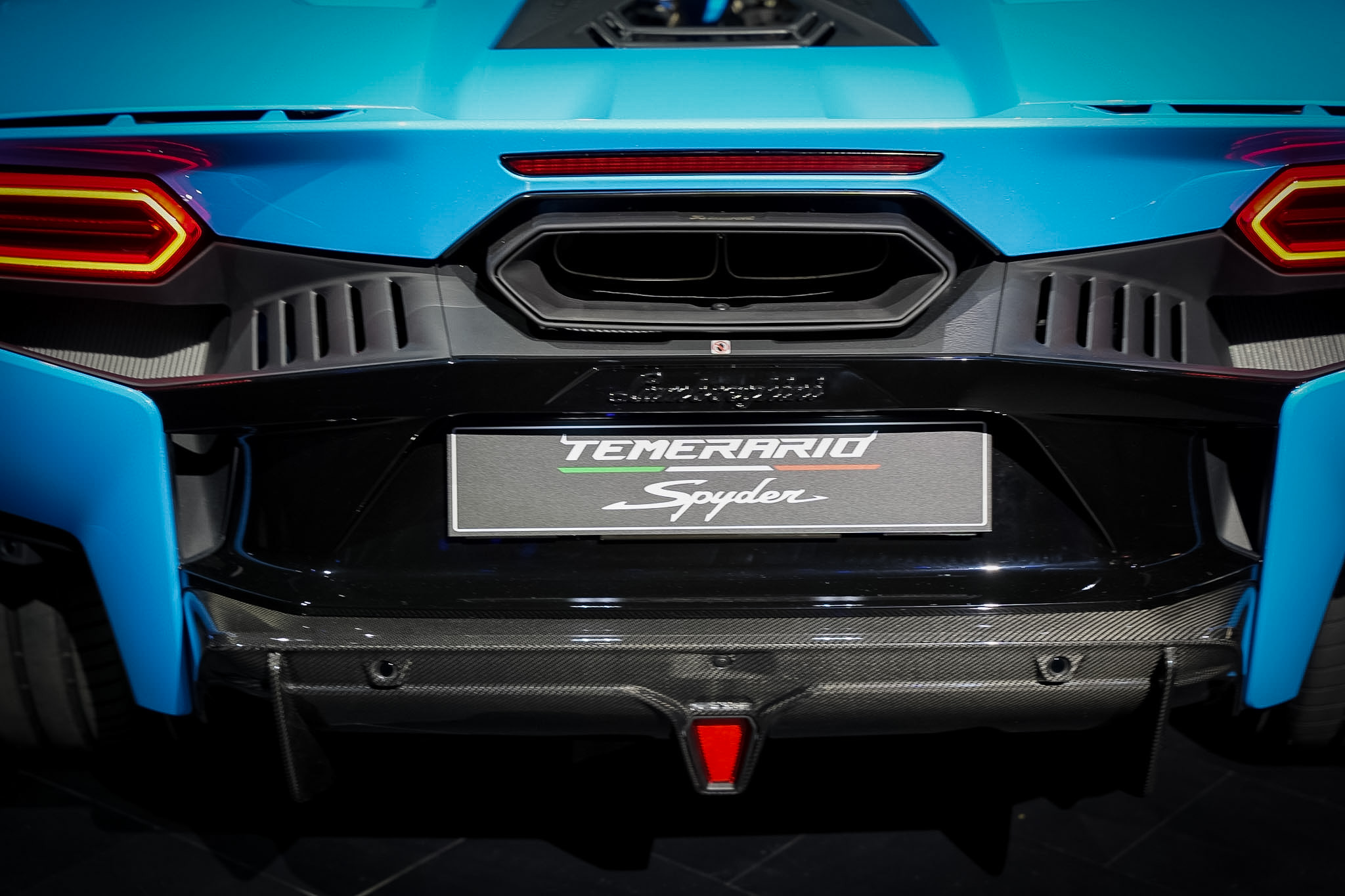
The Temerario Spyder’s retractable hard top folds vertically behind the seats using a patented, fully electric system powered by ten electric actuators. Stowed low and close to the car’s center of gravity, the roof keeps the Spyder balanced, so it handles with the same precision whether the top is up or down. An adjustable rear window lets occupants decide how much wind, and how much of the V8’s voice, enters the cabin.
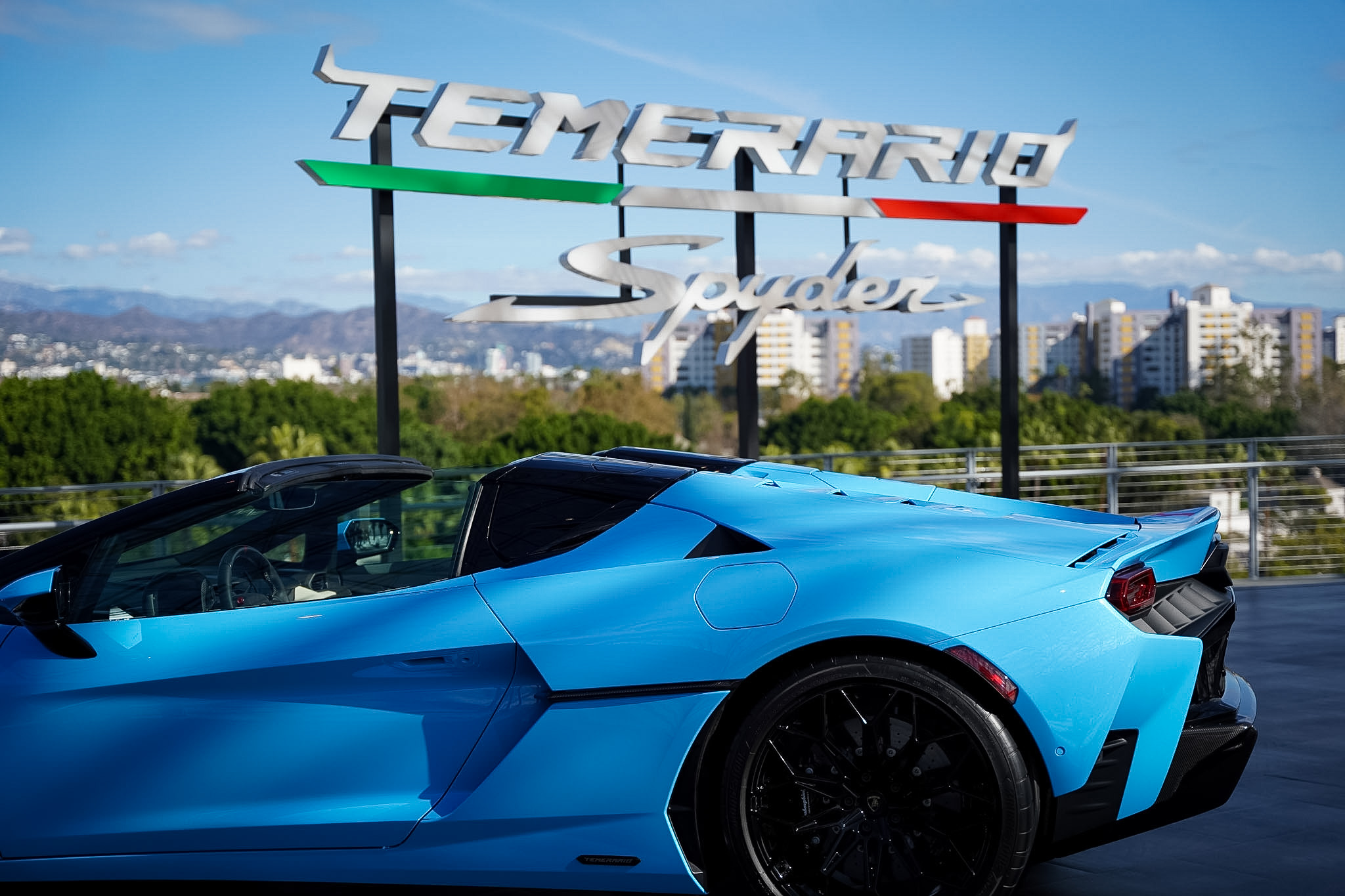
Under the new engine cover is a 4.0-liter twin-turbo V8 paired with three electric motors, delivering a combined 920 CV (907 hp). The engine revs to 10,000 rpm, or 10,250 rpm with Launch Control engaged, which Lamborghini notes is the highest engine speed of any series-production open-top super sports car with a turbocharged engine. The Spyder sprints from 0 to 62 mph in 2.8 seconds and reaches a top speed of 213 mph (343 km/h).
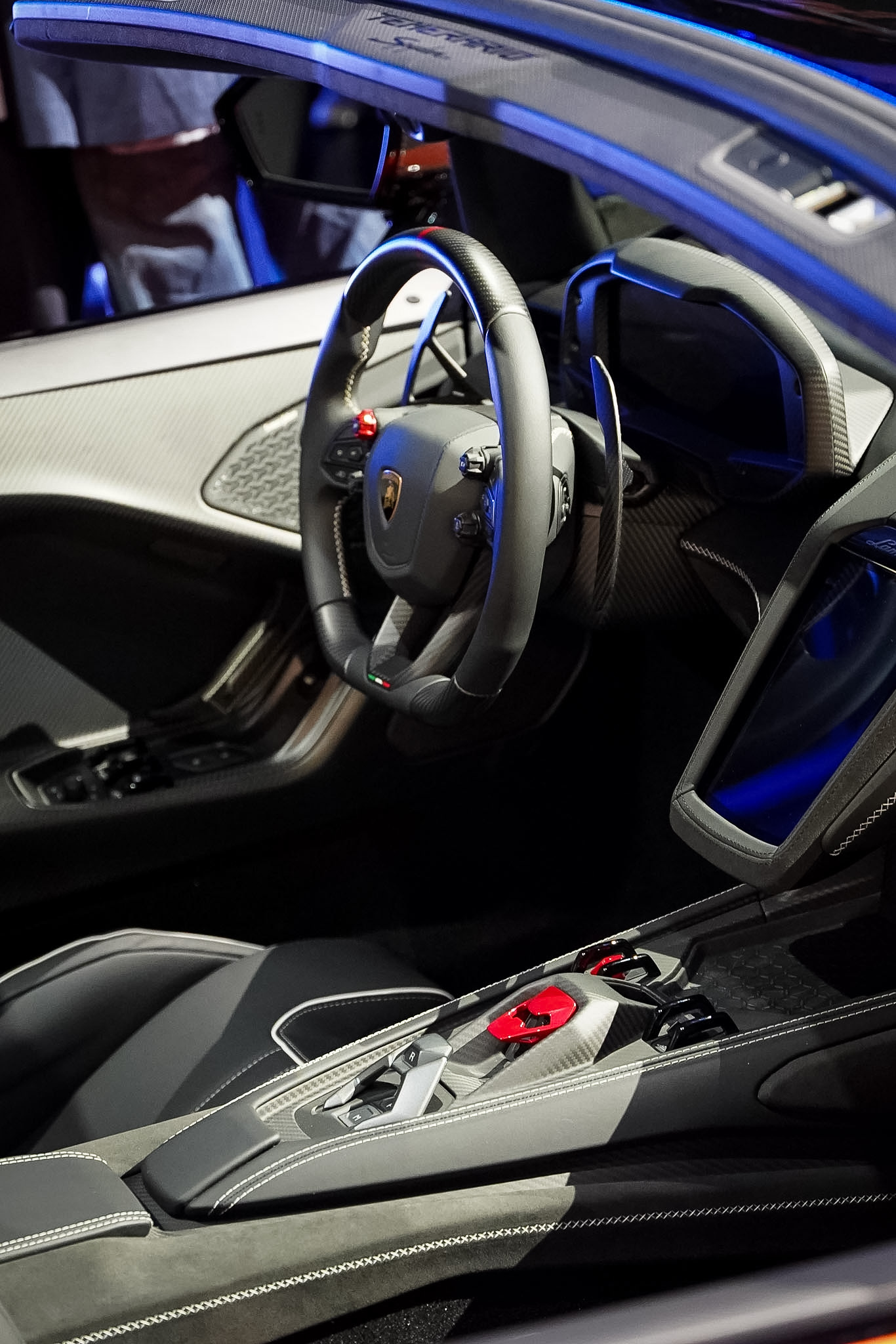
As Lamborghini describes it, the experience of the V8 is “not only acoustic but also physical,” with vibrations rising through the seat as the revs climb toward the redline. With the roof down, that sound blends with the surroundings, turning every drive into something felt as much as heard. Having driven a Lamborghini during a SheDrives a Lambo trip, I can attest to the fact that it’s a visceral experience, due to the heightened sensations you feel as you hear the engine roar. So I can only imagine how much greater the auditory experience is in an open-air version.
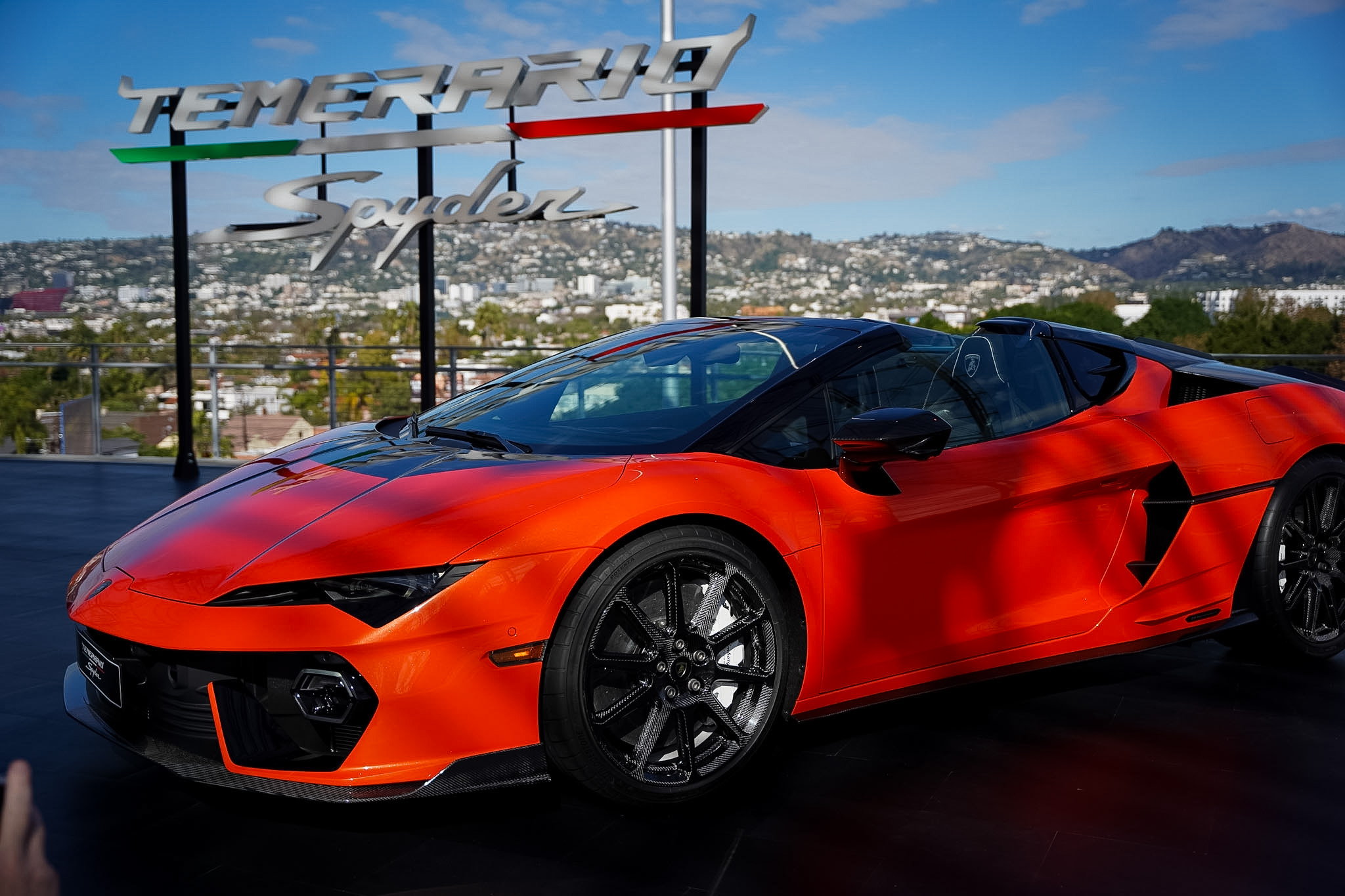
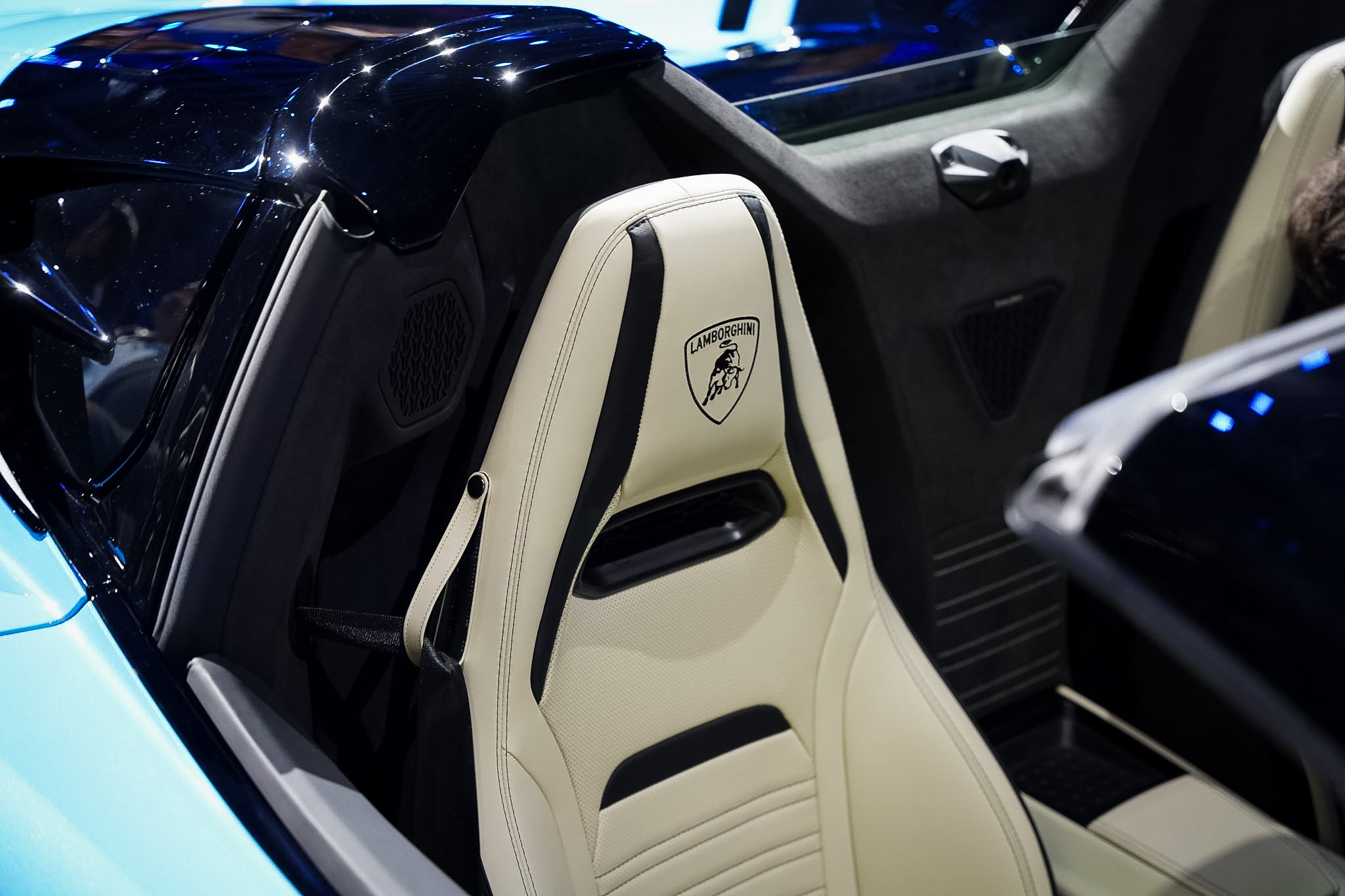
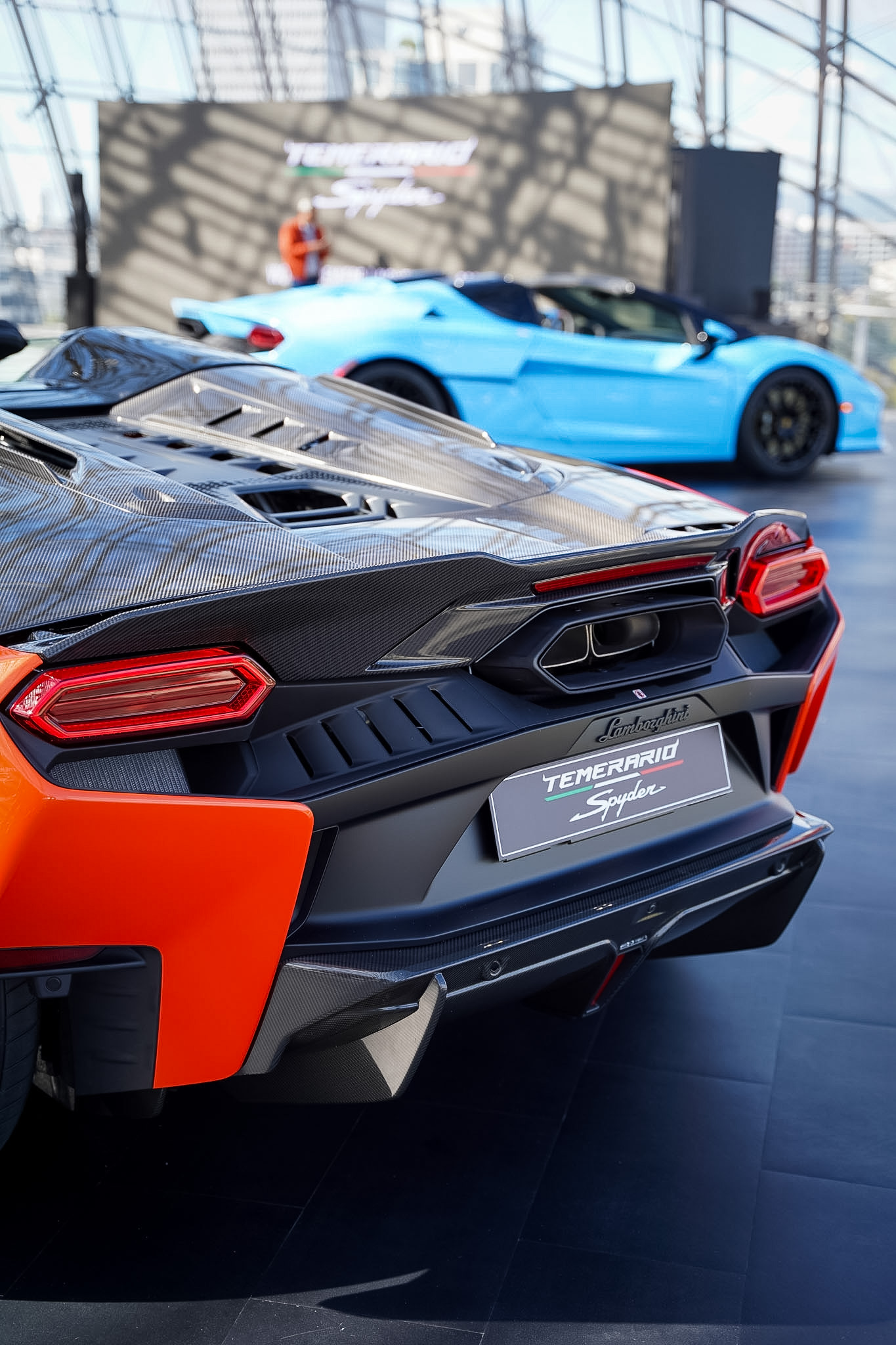
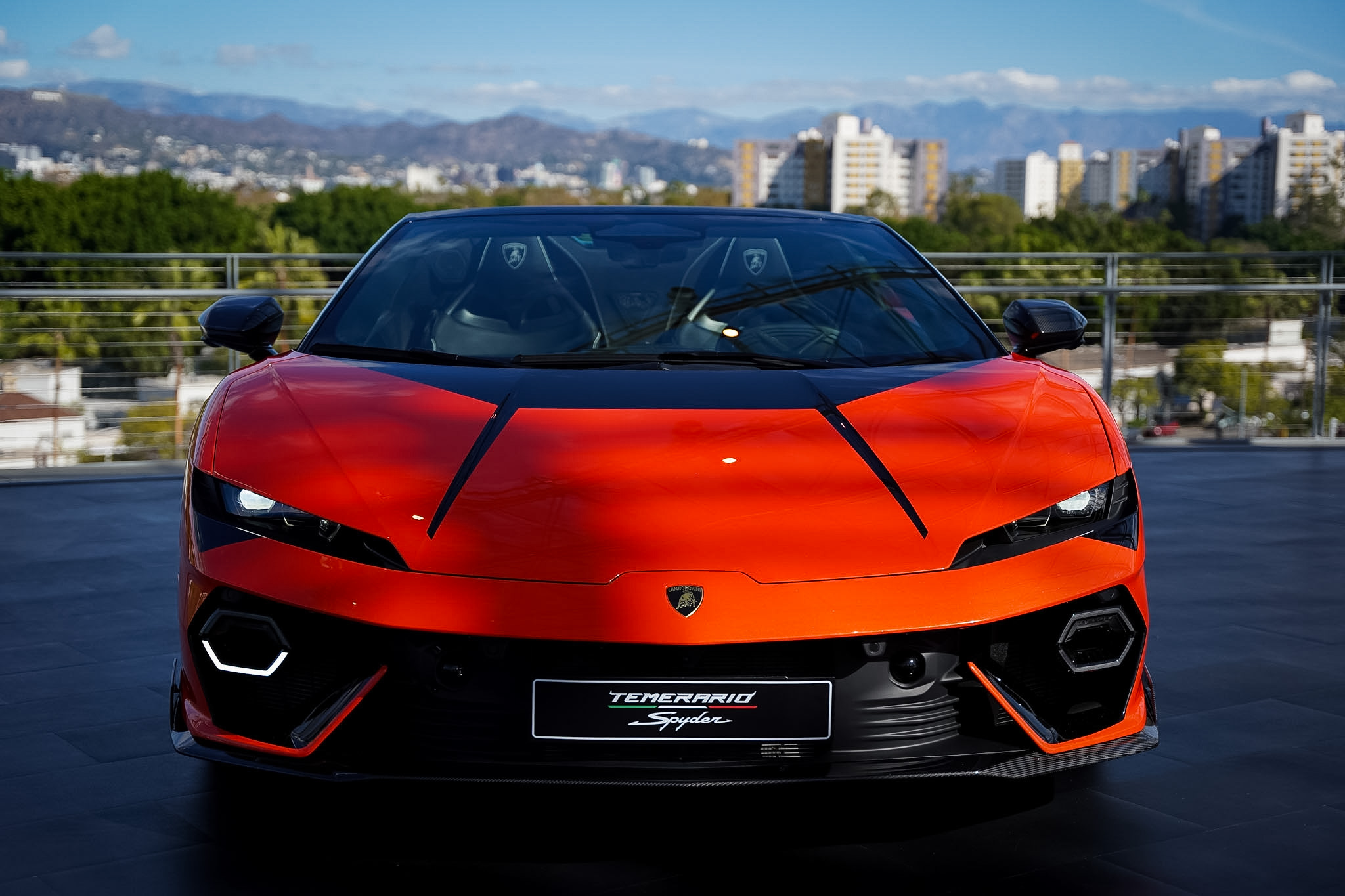
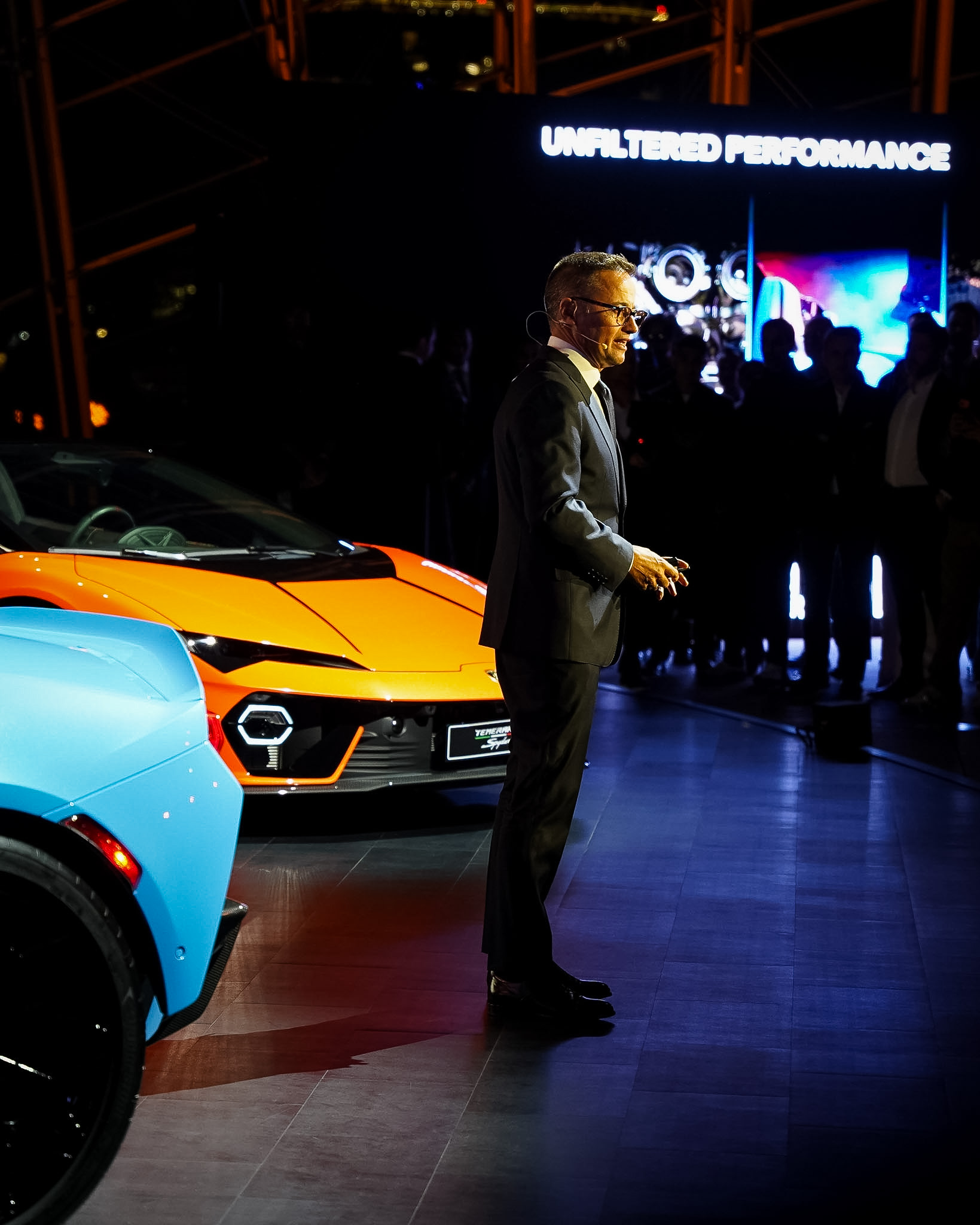
At the debut, the Spyder was shown in two personalities. The launch car’s bright Bianco Polar cabin underlines the Spyder’s refined character, while the Alleggerita package, presented in vivid Arancio Egon with a carbon-fiber roof, saves weight through extensive use of carbon fiber for drivers who want a more performance-focused experience.
For Design Director Mitja Borkert, the challenge wasn’t simply removing the roof. “With Temerario Spyder we did not simply want to take the roof off the coupé, but to reinterpret our essential and iconic design language through a true open-air architecture,” he says in the official release. The most distinctive result is a pair of streamlined, racing-inspired cowls behind the seats, drawn with Lamborghini’s signature hexagonal geometry, and a new engine cover that keeps the V8 on display. “For us,” Borkert adds, “mechanics are part of the aesthetic experience of a Lamborghini.”
Having interviewed Borkert several times over the years, I spoke with him again during the media preview to understand the human side of creating a car like this, from knowing when a design is finished to the feeling he hopes every driver experiences.
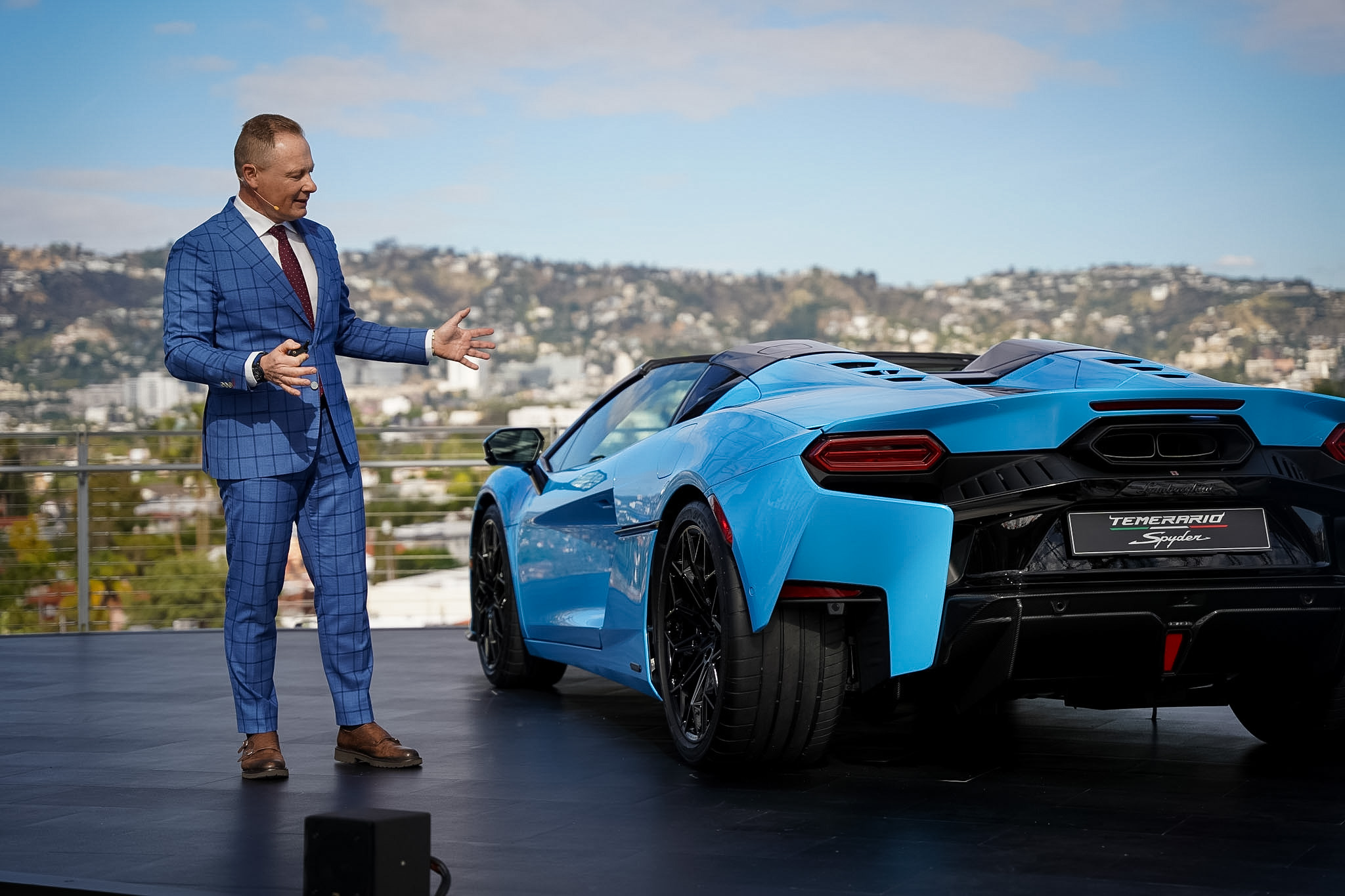
Q&A with Mitja Borkert, Design Director of Automobili Lamborghini
CLP: When you’re designing something, how do you get to the point where you say, “I’m finished”? In art, you can keep creating with shapes, color, and light. At what point do you say it’s ready for production?
MB: “Christina, I’ll tell you honestly, because I’m an honest person: we are never really finished. A designer is always seeing something. Of course, we aim for perfection. Developing a car is very professional, and with the engineers, we have very strict milestones. In the beginning, we have a lot of time for creativity, but then the timing shrinks toward the delivery moment. We have a super team, and we do everything with passion. Over the years, with all the different cars I have contributed to, it hurts me the most if something is not perfect. If I see a car and I see a line that isn’t right, it bothers me. I want to make myself happy, so I’m always pushing it to the limit.”
CLP: You came from the other side of the Berlin Wall, were inspired to become a designer, and achieved your dream. For so many people, a Lamborghini is a dream car. How do you hope this new car will inspire future generations who aspire to one day become Lamborghini customers?
MB: “We always try to do something unexpected and something fresh. We are a brand that doesn’t want to look backwards; Lamborghini needs to look ahead. I have a son who is 12 years old, so I’m always testing a little bit whether we are fresh enough in our design, because we want to be relevant. At this point in our industry, it is very important that we create something that activates that feeling of ‘I want to have that car.’ That’s exactly what we tried to show with the Temerario Spyder, and that’s why we show the different souls of the car. The blue car is a bit more elegant, for people who love the elegance of a Miura. The orange car is maybe a little more for the younger guys, a little more colorful. For me, it’s important that everyone finds his dream Lamborghini.”
CLP: What was one of the greatest challenges you had to overcome in designing this car?
MB: “For sure, the packaging of the car. When we started the Temerario, it was clear from the beginning that we would do an open version. So when we designed the coupé, I made sure the cabin architecture and the proportion of the rear shoulders anticipated it. But fitting the retractable hardtop behind the seats was a challenge. I think we solved it really well, because the car looks very modern. You have the comfort of a coupé, but when you drive Highway 1 in Malibu, you can perfectly enjoy the sound of the engine and the whole ambience.”
CLP: Having driven a Lamborghini myself, I’ve realized you have to experience it to understand it. The sound of the engine becomes a core memory. Would you agree that it becomes a truly active driving experience?
MB: “I totally agree. Whatever car company I’ve worked for, and of course now at Lamborghini, I always imagine someone entering the car for the first time. There is always that first drive in a car like this, and I really, deeply, from my heart want whoever jumps in to have a big memory, an impression, goosebumps, and to feel the adrenaline that such a car can give.”

CLP: I spoke with one of your customers here who owns eight of your cars, and he describes it as nearly addictive. It feels like your team’s passion translates into the whole customer experience and culture.
MB: “That’s exactly what we are aiming for. No one needs a Lamborghini, but I hope everyone wants one. That’s why we develop and design these cars with full pleasure and full heart. At the end of the day, you want to create a smile and a positive, optimistic feeling. I’m convinced Lamborghini customers have this optimism in their heart, and this is reflected in the design that we create.”
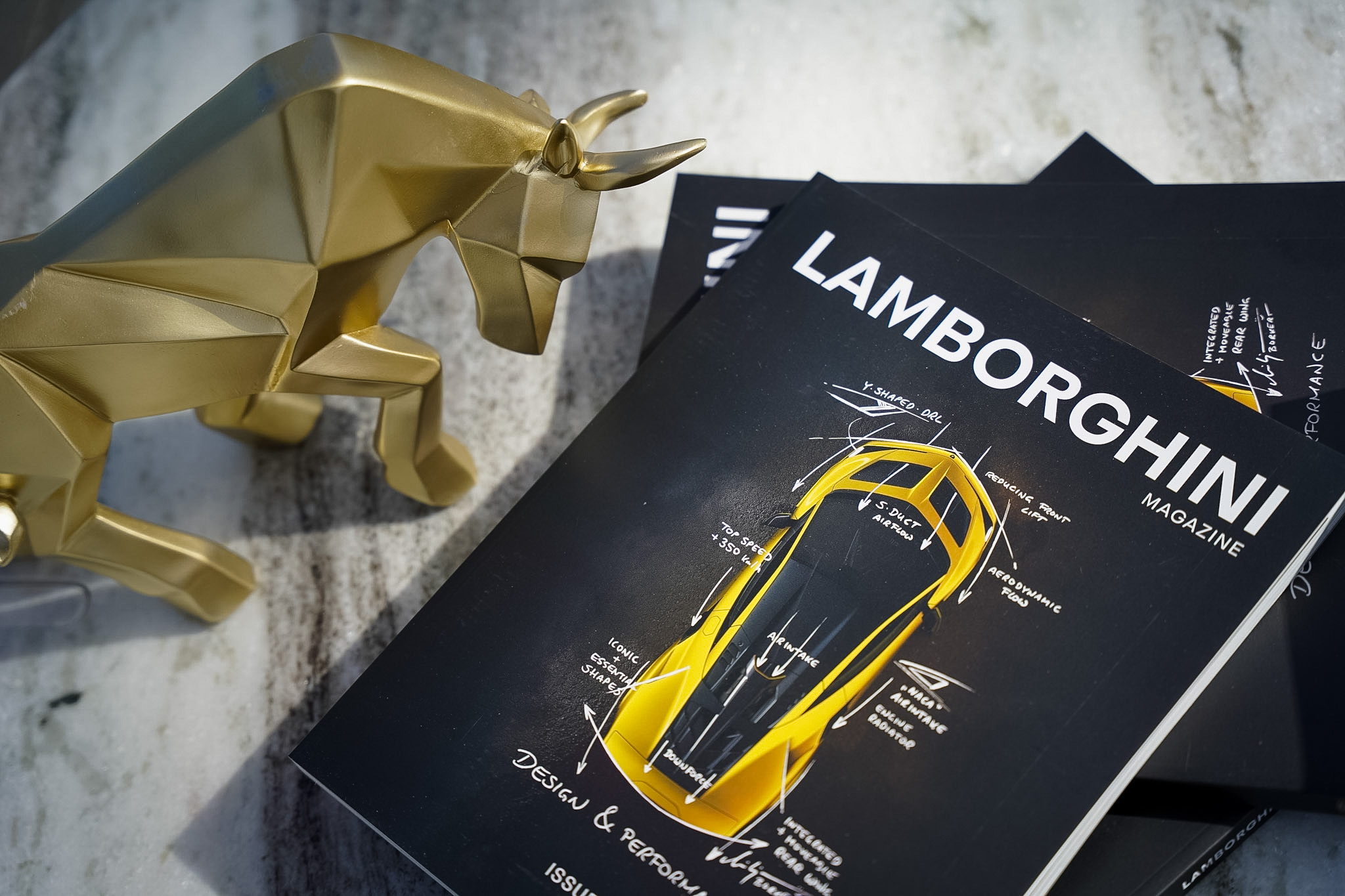
From Car Spotter to Collector: The Heart and Soul of Lamborghini Culture
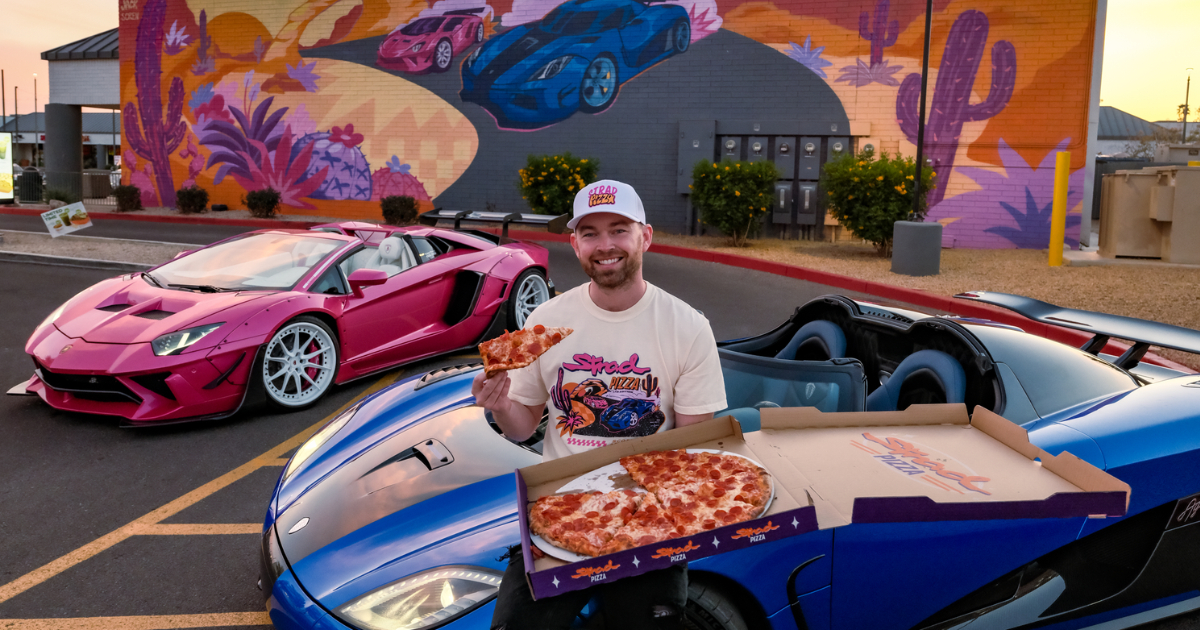
The night before the debut, Lamborghini hosted an intimate media dinner for about 15 guests, including journalists, automotive creators, and Lamborghini executives, in a private dining room at Spago. Before we sat down, I joked with Lamborghini’s PR director (Jory Wood Syed) that I assumed no accountants own a Lambo. Then I took my seat next to James Condon, better known to his more than 4.5 million YouTube subscribers as TheStradman, who, ironically, has a degree in accounting and finance. Today, he owns eight Lamborghinis, including the recent additions of a Revuelto and a Temerario.

His story embodies so much of what makes Lamborghini’s community unique: a self-made entrepreneur with humble beginnings, a fun-loving personality, and a dream that started in childhood.
“I have loved cars my entire life,” he told me. “I’ve been a car spotter my whole life, and I still am.” Growing up in a small town in Oregon, Lamborghinis were nearly impossible to find. “I can name the three Lamborghinis I saw all the way through high school, because they left such an impact on me,” he recalled. “I can tell you the street where it was, the color. I have photos of it. It was a core memory.”

From then on, nearly every decision he made was guided by one goal. “My degree is in accounting and finance because I felt it would be a good foundation to open a business,” he explained. Browsing Lamborghini owner forums as a teenager, he noticed a pattern. “You’d go to their bio, and every single one of them was an entrepreneur. So from a very early age, I realized I had to figure out how to start a business. That’s how you own these cars.”
What he never imagined was that his passion itself would become the business. He shared his car-spotting photos and videos online purely for fun. “There wasn’t any monetary gain to be had. It was purely passion. It was the most pure thing ever,” he said. By his own account, he even spent nearly two months living in his Audi TT while filming supercars, editing videos on free Wi-Fi.
The turning point came at Monterey Car Week, where he filmed Lamborghini’s Veneno arriving for its North American debut at The Quail. Within weeks, the video jumped from a few hundred views to a million, and YouTube invited him into its Partner Program. “I still remember the first day I made money. I made two cents,” he laughed. I replied, “It was proof that you could actually make money doing this.” That video has since been viewed roughly five million times, and it launched a career that has kept him closely connected to the brand ever since.
His loyalty to Lamborghini runs deeper than the cars. As a 12-year-old, he once walked into a Lamborghini dealership. “The sales guy knew a 12-year-old wasn’t going to buy a car, but he still treated me with the same respect,” he recalled. “And now, fast forward, here I am, and I am a customer.” That alone speaks volumes.
For many supercar customers, the inspiration for their growing desire begins in childhood. Even Borkert’s own dream to become a car designer started as a kid. That’s why, from a marketing perspective, it’s as important for marques to not only be inspirational (for their existing customer base), but also to be aspirational (to plant the seed for future generations who might one day become customers).
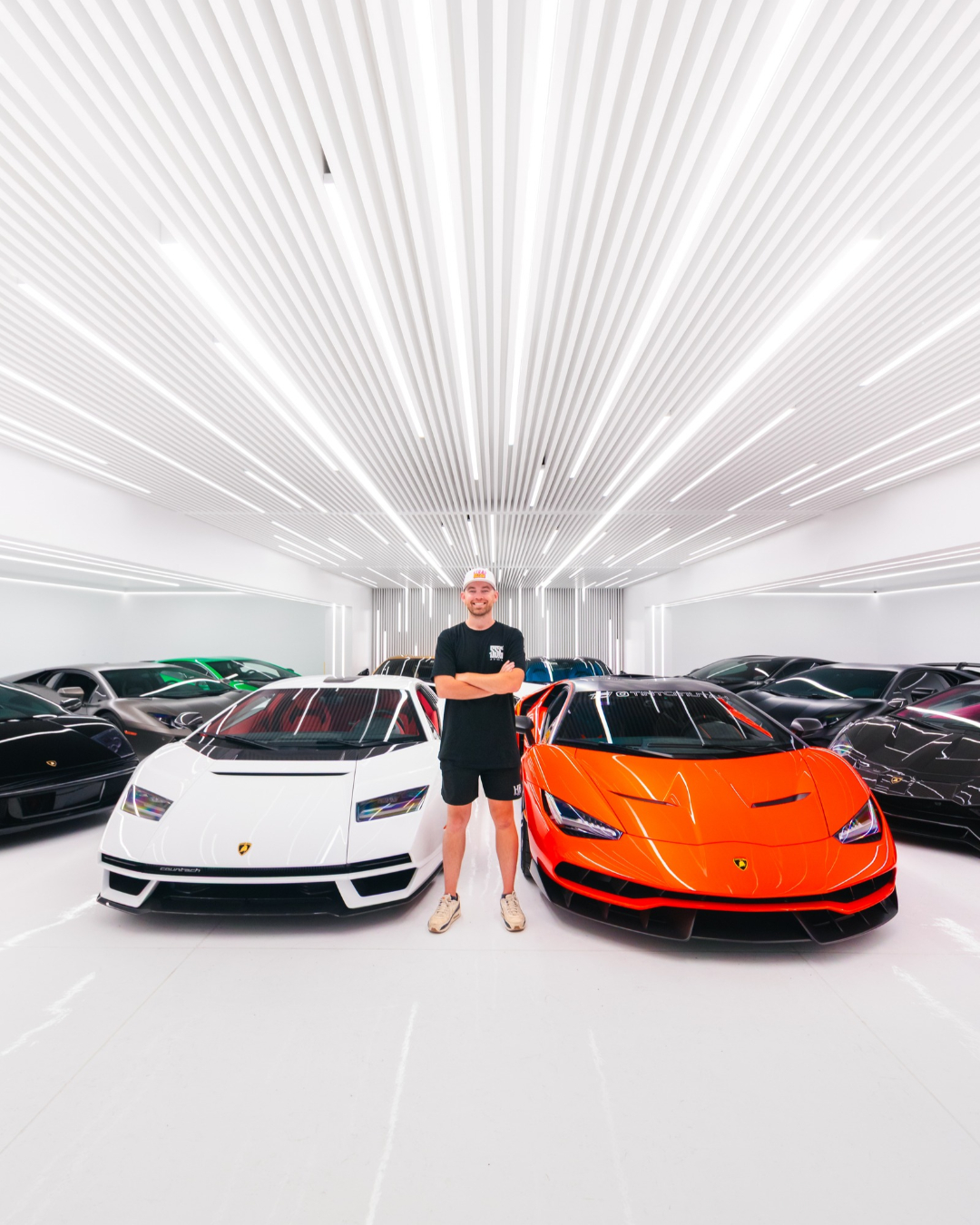
His first Lamborghini, purchased in 2015, was an orange 2006 Gallardo with a gated manual transmission, which he still owns today. Since then, he estimates he has owned around a dozen, from the Countach and Espada to the Aventador and Murciélago. “I have a one-track mind, and it’s Lamborghini, Lamborghini, Lamborghini,” he said with a grin. “What I love about the cars is that they each have a different personality. There’s a similar ethos and design language, but the brand has evolved over the years while maintaining that foundation.” I joked that he obviously now has one for every day of the week.
True to the brand’s spirit, his collection is anything but subdued. “I have a bright pink Lamborghini with a white interior,” he said. “It’s not about getting attention. It’s just fun. You feel like a little kid again.”
Perhaps most inspiring is how he uses his platform to give back. “One of the things I love about my channel is helping inspire future generations,” he said. “If I find an opportunity for a younger kid to sit in my Lamborghini or ride in the car, I can do what so many people did for me when I was a kid, kind of passing the torch.” In Utah, where he lives, he works closely with Utah Foster Care and joins Halloween giveback events like trunk-or-treats, and he recently took part in the Lamborghini leadership team’s Movember charity effort.
For him, the people are what make the brand. “At the end of the day, it’s metal, aluminum and carbon fiber,” he reflected. “But then you meet the owners, hear their stories and their passion, and there’s this bond we all have. Pretty much every single Lamborghini owner I know did not get raised in a rich family.”
It’s a sentiment that echoes the brand’s own origin story: Ferruccio Lamborghini, a tractor manufacturer, famously set out to build a better sports car after being dismissed by a rival. Like the founder, many of today’s owners are rebels who refused to let anyone else define their limits. They reflect the heart and soul of the brand’s DNA.
As for the Temerario Spyder, Condon was especially excited about the new roof. “Noise is a big part of Lamborghini,” he said. “All of a sudden, you don’t have a roof, and you’re going to hear the engine a whole lot more.” Compared with the fabric soft tops of older open-top models, which he jokingly likened to “a silly toupee,” the new hard top is a practical leap forward. “If it starts raining, you just push a button, and it pops right back up.”
A Dream for Many, Reality for Few: Inside Lamborghini’s Brand Strategy
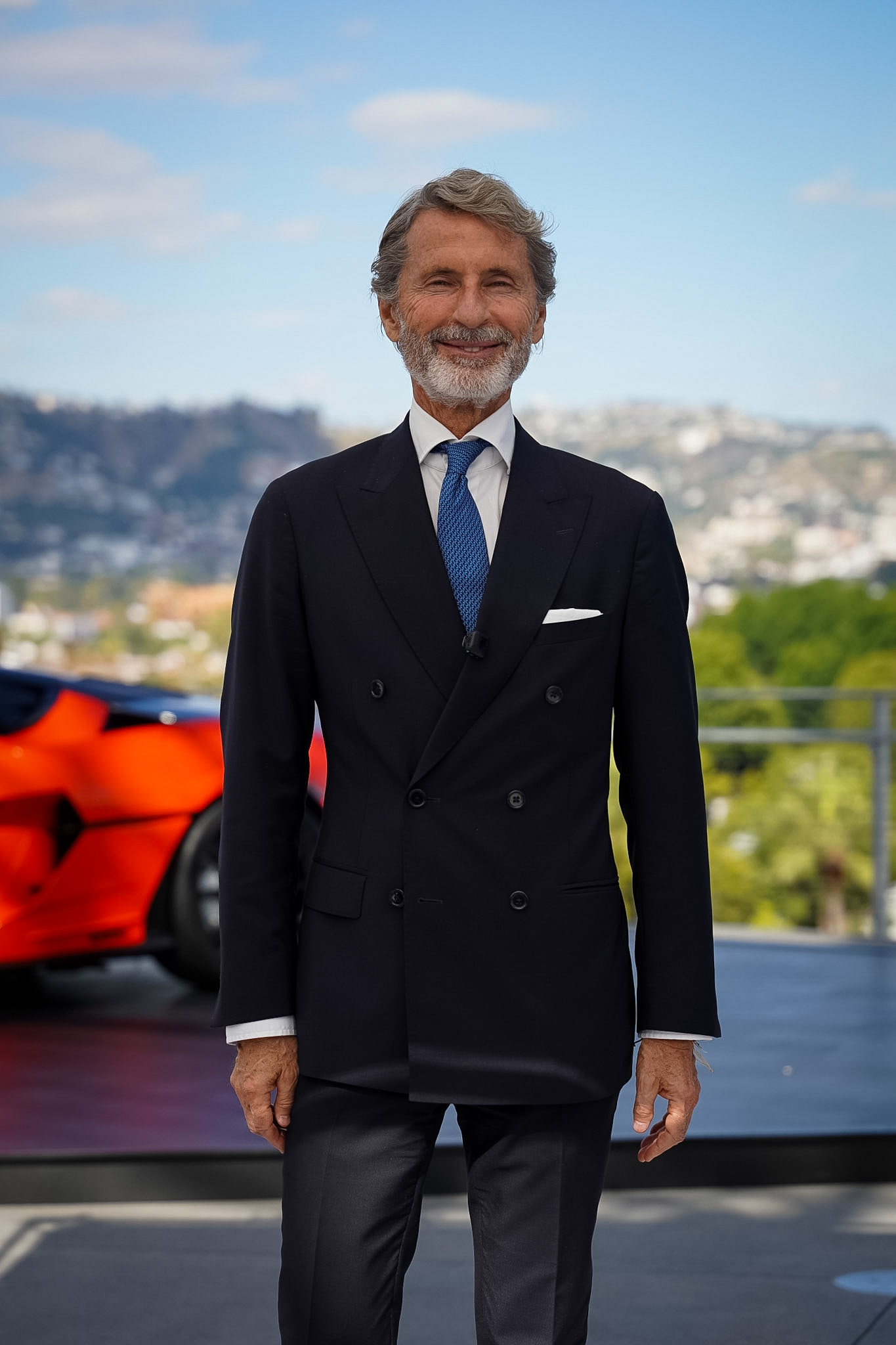
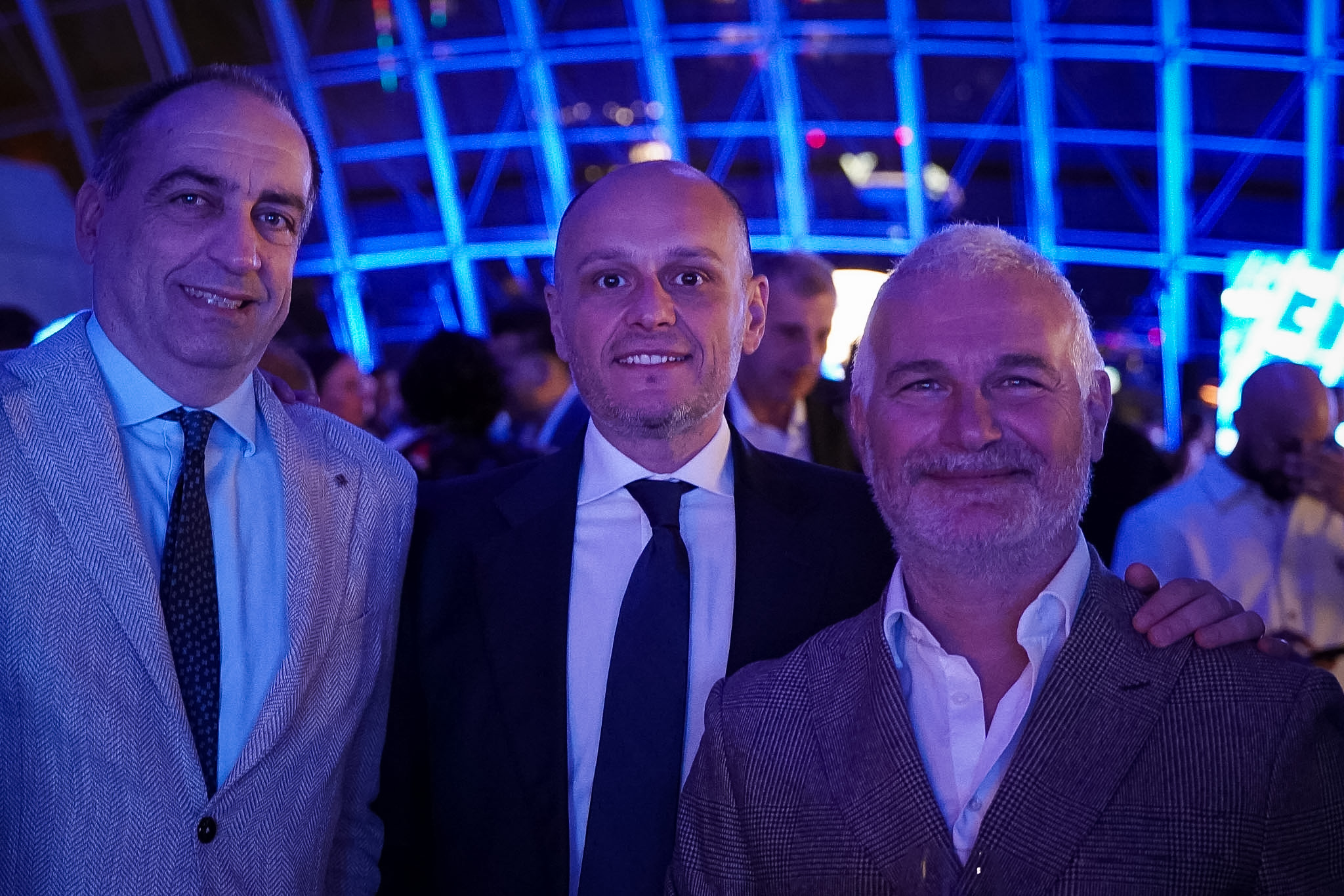
Federico Foschini began his Lamborghini career as an intern in 1999 and today leads the brand’s global marketing and sales as Chief Marketing and Sales Officer. When we last spoke at Monterey Car Week, the Temerario coupé was just being introduced. This time, during the media preview on the day of the debut, our conversation explored the experiences, partnerships, and community that turn customers into lifelong loyalists.
Q&A with Federico Foschini, Chief Marketing and Sales Officer of Automobili Lamborghini
CLP: You chose Los Angeles to unveil the Temerario Spyder, 50 years after the Silhouette began Lamborghini’s open-top story. What makes Los Angeles the right stage for this car?
FF: “Look at the picture we are taking today: the Temerario with the Hollywood sign behind it. The open version is something that must be presented in the U.S., especially in markets driven by this kind of weather, like California or Florida. At this time of year, we wanted to come back to Los Angeles, to an iconic place like this, because we think this is the market for this car. Yesterday we were here during the sunset, and it was outstanding, seeing the colors change while always looking at the Hollywood sign over there. It’s iconic.”
CLP: With a neck warmer for cooler evenings and room for two carry-on suitcases, the Spyder seems made for road trips, which is exactly what Esperienza Lamborghini offers owners, from Zion’s canyons to frozen lakes in Mongolia. When you’re dreaming up a new destination, what makes a place feel right for Lamborghini?
FF: “I think it’s the journey that makes the destination cool. With this car, you can have a lot of experiences. You can have a very fast drive, a very emotional drive, maybe even a scary drive. But you can also take your two pieces of luggage and drive very comfortably in Strada mode. You can close the roof and have the same smoothness you have in the coupé. Of course, the destination should hopefully always be sunny, but even if it’s raining, you can use this car as a coupé. That’s why we use the claim ‘two souls, one Fuoriclasse.’ We are adding a new field of opportunity without diluting the performance or the driving fun, because the performance is almost the same. By keeping the center of gravity very low with this new roof concept, you have the best handling and the best control of the car. So you can go anywhere, because you are ready to do everything with this car.”
CLP: When we last spoke, I hadn’t yet experienced SHEdrives a Lambo. Since then, I joined the program in Palm Springs, and I watched people who started as strangers become friends by the final dinner. It felt more like joining a club than attending an event. What have you learned about what women want from a Lamborghini experience?
FF: “I think what women want is what men want, so there is no big difference when you approach a car like this. Maybe there are different tastes, but that depends on the individual, not on gender. When we created this event, it wasn’t to differentiate, but to give a little more space in this world, which is mainly male, to women who share the same passion. The fact that they become friends by the dinner, as also happens at our other events, is because these people are connected by the same passion for Lamborghini, for sports cars, for the beauty of design, and for driving emotion. But they also share many other passions, like travel, watches, and real estate, because they are peers. We create one common experience that brings them together, but at the end of the day, it’s not just about the car. There is the brand, and there are their own lives, which often overlap in the things they love to do and talk about.”
CLP: As a woman, I was incredibly intimidated before driving the Revuelto. But within 10 minutes with one of your Squadra Corse driving instructors, I went from nervous to feeling at ease, and by the time we reached the track, I wanted to push the limits. I went from feeling timid to feeling brave, which made me think of your brand values: authentic, unexpected, and brave.
FF: “But the fact that you were intimidated by the Revuelto has nothing to do with gender. Everybody is intimidated if they’re not used to driving a car like this. You see a monster with 12 cylinders and more than 1,000 horsepower, a lot of buttons, and doors that open like a spaceship. Then you sit inside, choose the mode, get a feel for it, and you see how easy it is to go fast, how stable and how safe it is, and how you can go past the limit you thought you had without fear or danger. That’s important, because it’s not just a feeling; it’s reality. Thanks to the hybrid powertrain we use on both the Temerario and the Revuelto, these cars are far safer than previous generations. So it’s really not a matter of gender, but sometimes we need to create something to give women the right space. We just give them the opportunity.”
CLP: I’ve always believed culture flows from the top down. When executives share a clear set of values, it carries through the entire team and the customer experience. Lamborghini events feel welcoming, almost like family. How do you maintain that consistency?
FF: “Some of us have been with the brand for ages. I’ve been here since 1999, so we experienced the growth, and we feel what it’s about. The most important thing for us is to cascade that down through the network, to the regions and to all our dealers, because we are a global brand. That’s even more difficult, because there are many dealers and they are entrepreneurs, so you always need to bring them on your side through training. It’s very important that the brand is consistent at each and every touchpoint. It starts from the top, but the most difficult part is cascading it down, because new people are always coming in. Still, we have a clear idea in mind, and when an event or experience is defined at headquarters, it’s very consistent, as you can see here in every detail.”
CLP: Beyond driving experiences, the Lamborghini world reaches deep into fashion. Balenciaga launched a collaboration with you in May 2025 and returned this fall with a capsule inspired by the Fenomeno, which is rare for a fashion collaboration. What made that partnership strong enough to return to?
FF: “The strength of the partnership was the coherence of values, especially toward the customer. Balenciaga is very connected, especially in Asia but also in Europe, with Lamborghini’s customer base, particularly the young customer base, because it speaks mainly to the younger generation. When you choose this kind of partnership, besides wanting partners at the level of Lamborghini, you also need common values to share. We cannot partner with a brand that speaks to a completely different audience. What worked was the coherence between the two brands in the partnership itself.”
CLP: Your fashion partners span an incredible range, from Supreme to Tod’s, and years ago, even Versace. I often describe Lamborghini as a lifestyle ecosystem: what someone wears, the music they listen to, where they live and travel, and what they drive. When a fashion house reinterprets the bull in its own language, how do you balance creative freedom with protecting what makes Lamborghini unmistakable?
FF: “That’s the point. We are also going to do a new partnership in the future with another brand. It’s always important that the values are coherent and that the brand is always respected, whatever the interpretation. Even when we do capsule collections, in cars or in apparel, we’re always careful that the audience and the vision are shared. The brand must not be diluted by anybody. For us, beyond awareness or promotion, the most important point of any partnership is protecting the brand, because the brand is above all.”
CLP: The Lamborghini world now extends into homes, too. When the Dubai Hills villas sold out, you described them as echoing Lamborghini’s principles of design, quality and exclusivity. What do you want someone to feel the moment they walk through the front door?
FF: “It should be like coming to any Lamborghini touchpoint. Starting next year, we are introducing a new corporate identity and design for our dealerships, and you will see a completely different perception. Here on Rodeo Drive, the Los Angeles dealer just opened its new showroom, which already interprets the main principles of the new design. When someone comes to something branded Lamborghini, including real estate, they should feel the design elements and the inspiration. They should recognize, unmistakably and without any logo, that it’s the Lamborghini world. With our design, we are very polarizing, but we are very recognizable. You recognize a Lamborghini even without seeing the logo, especially our super sports cars, but also the Urus. We transfer the same thing to the yacht, the real estate, and the accessories. That very sharp-angled, cutting-edge design tells you immediately it’s a Lamborghini, and it should be present at every touchpoint.”
CLP: People who love high-adrenaline sports like surfing, downhill skiing, or motorsports often describe chasing that feeling again and again, and driving a Lamborghini gave me that same rush. I’ve noticed many owners become lifelong loyalists, adding another model to their collection or moving into a new Lamborghini when a lease ends. What do you think keeps drawing people back beyond the car itself?
FF: “If you look at the reasons people buy the Urus, which is our highest-volume model, the first two are the usual ones: design and performance. The third is brand loyalty. The more you enter the brand, the more you feel part of a community, a family, driven by the product but also by what the dealers and we are doing. We are always recognized as very down-to-earth, and our executives are always close to each and every person. We grew up in this world, and we feel part of it.
I started as an intern, so for me, it was a dream, and now I’m working for this dream. I never lost that passion, and we share it with our customers. We are always consistent, and that gives a lot of credibility, not only to the quality and reliability of the product but to the world our customers are part of. We lived through the bad times and the good times. At the end of the day, we share the same feelings as the people who buy our cars. The only difference is that they are on the side choosing us.”

CLP: You have a very clear point of view, which will naturally be polarizing. Some brands try to appeal to everyone and end up all over the place.
FF: “To be everything, everywhere, in every way is impossible. You need to take a direction, and it must be clear to people. Otherwise, you are everything and nothing, and you cannot win with that strategy. It seems the easiest one, to get everyone. Everyone is welcome, but we have clear principles. We need to be Lamborghini.”
CLP: Lamborghini seems to speak to two audiences at once: dreamers who may be years away from owning a car, and owners who already live the life. How do you engage both?
FF: “We say that we are ‘a dream for many, reality for few.’ This is our internal claim. On one side, we stay close to our customers through the product, events, and dealers. On the other side, we are very present on social media, in gaming, and through partnerships, to be close to the people who cannot afford a Lamborghini today, and maybe never will, but who can be inspired and can touch what Lamborghini is about, perhaps through something other than the car.
We are very successful in video games and racing platforms, and partnerships with big brands like LEGO are very successful with the young generation and kids. This is very important to us, because some of them, lucky them, may become Lamborghini customers one day. Others will simply be inspired and live the Lamborghini dream. Maybe they can even work at Lamborghini, as happened to me.”
CLP: The founder’s story sets the tone for all of it. Ferruccio Lamborghini refused to let anyone put him in a box. My own father was a self-made man who became a serial entrepreneur, and I’ve learned it’s not where you start, but where you decide to go.
FF: “As we always say, Lamborghini was born out of a dream and a challenge by someone who didn’t have a racing team like Ferrari or Aston Martin. He started because he wanted to challenge the status quo. He was a rebel, and he created iconic cars, even in very small numbers, bringing together young engineers who later became the most famous in the automotive world, like Dallara, Stanzani, and Bizzarrini, and Gandini as a designer. They were very young, very rebellious, and very brave, and they created masterpieces. We must never forget that or change that attitude.
Today we are a company of more than 3,000 people, building more than 10,000 cars, but that should not change the DNA of the company: to be innovative, to be unexpected, to be brave, and to be different from what you can find in normal life. Along the way, there will be many challenges and deviations, but you always need to keep in mind where you are and where you want to go, and then adapt, because nothing turns out exactly as you expect, especially in the long run. The ability to be consistent and coherent, even in difficult moments, is what gives you the possibility to succeed.”

Inside the Invite-Only Debut Party
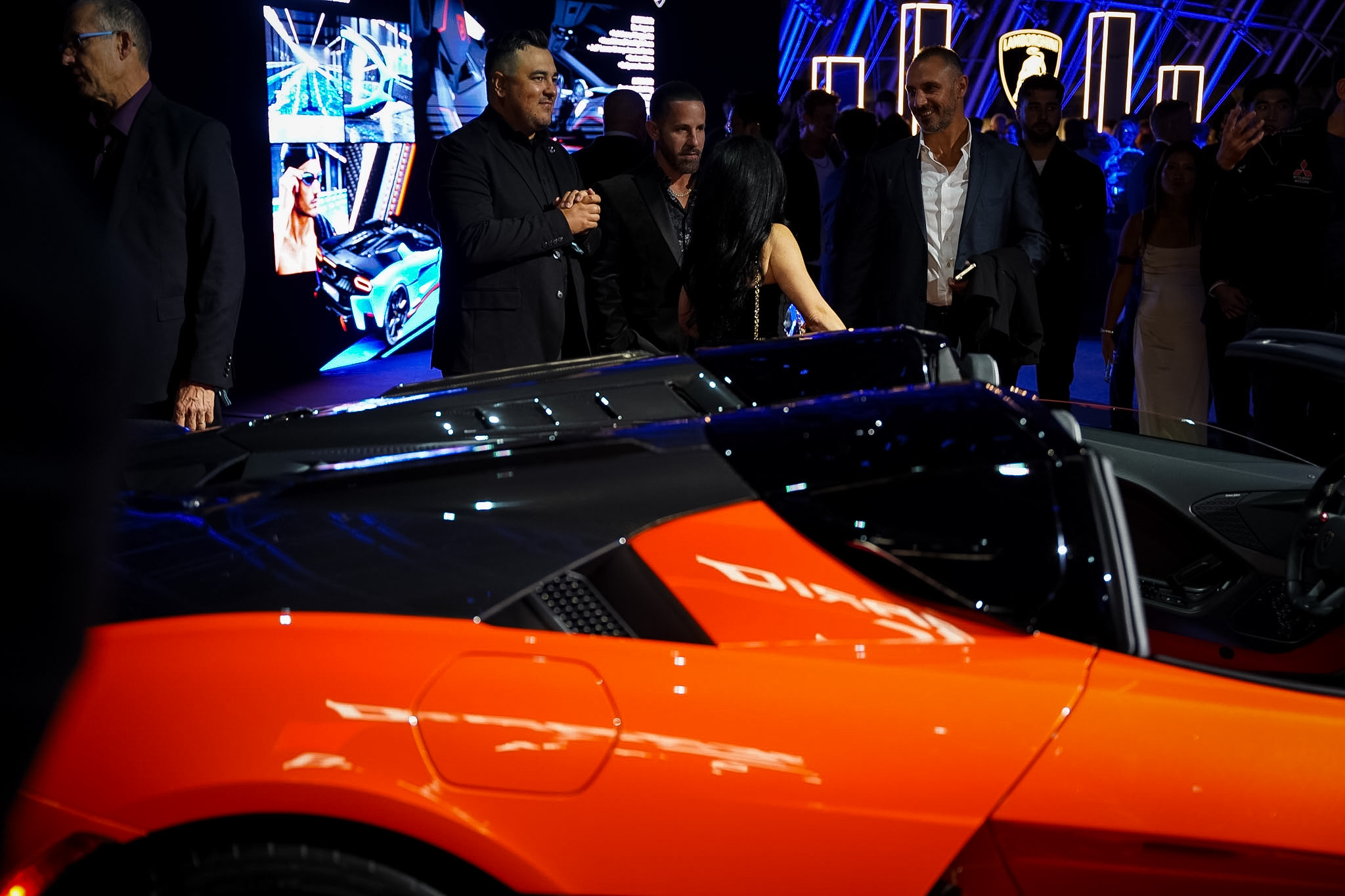
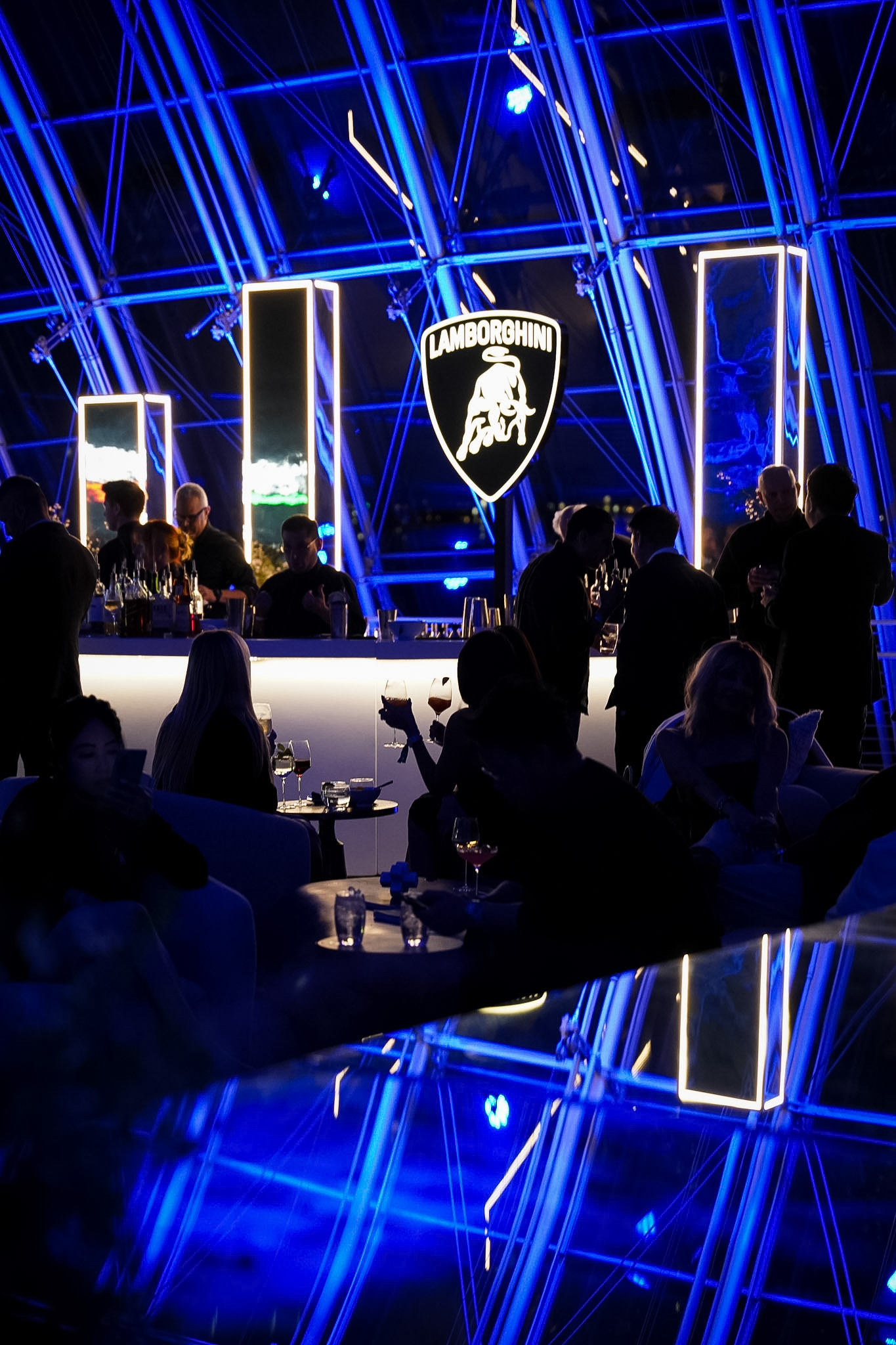
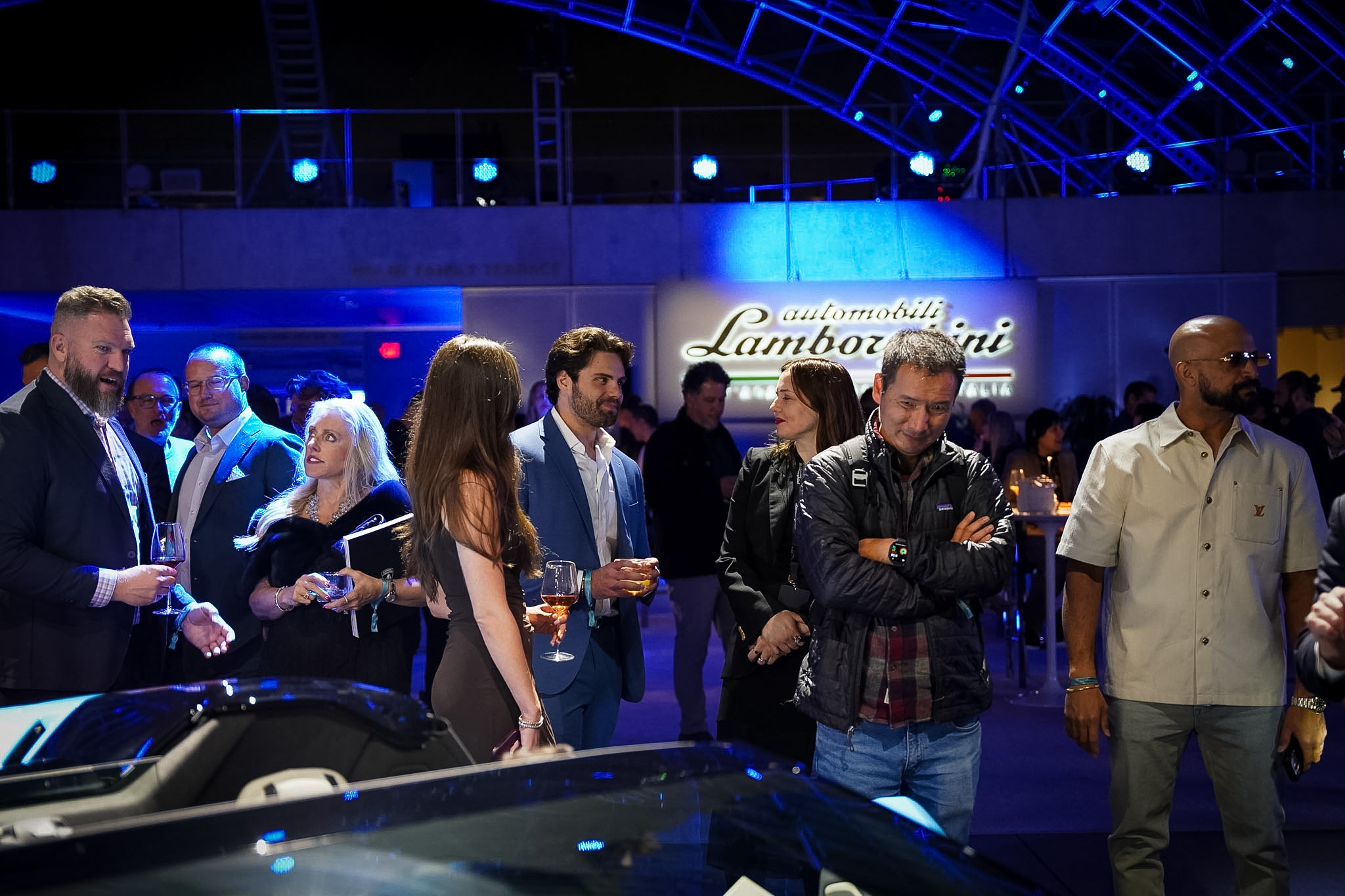
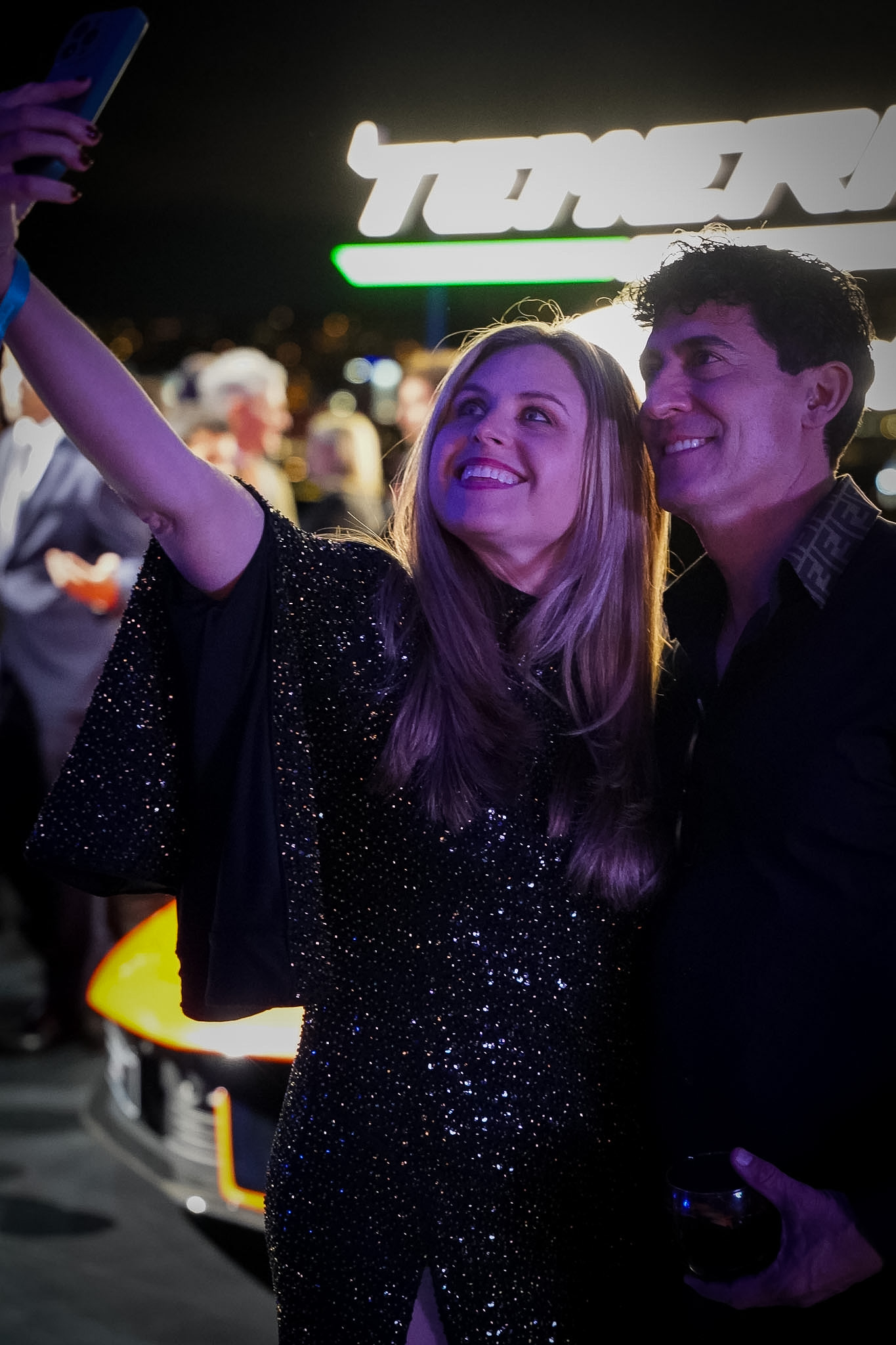
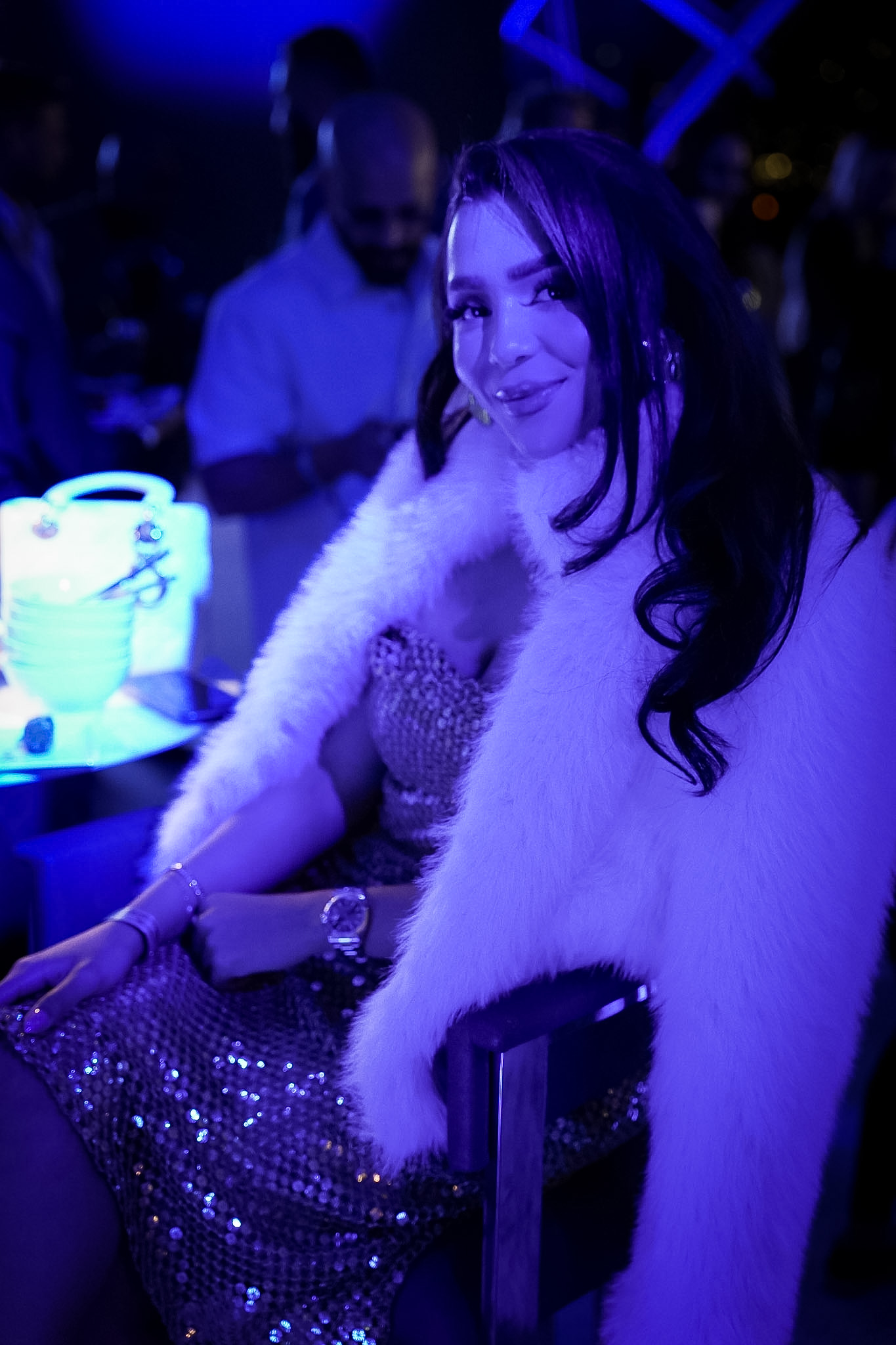
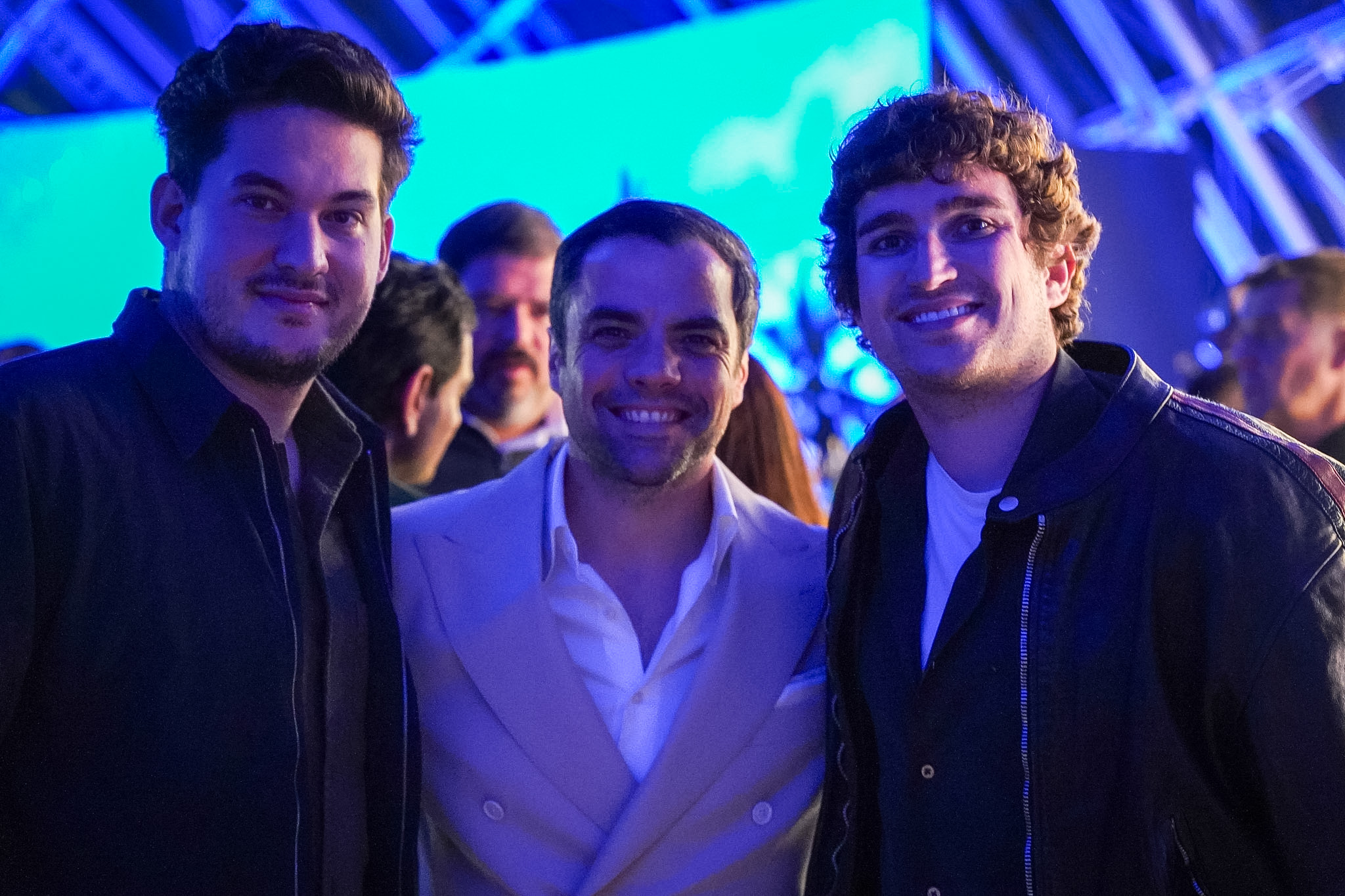
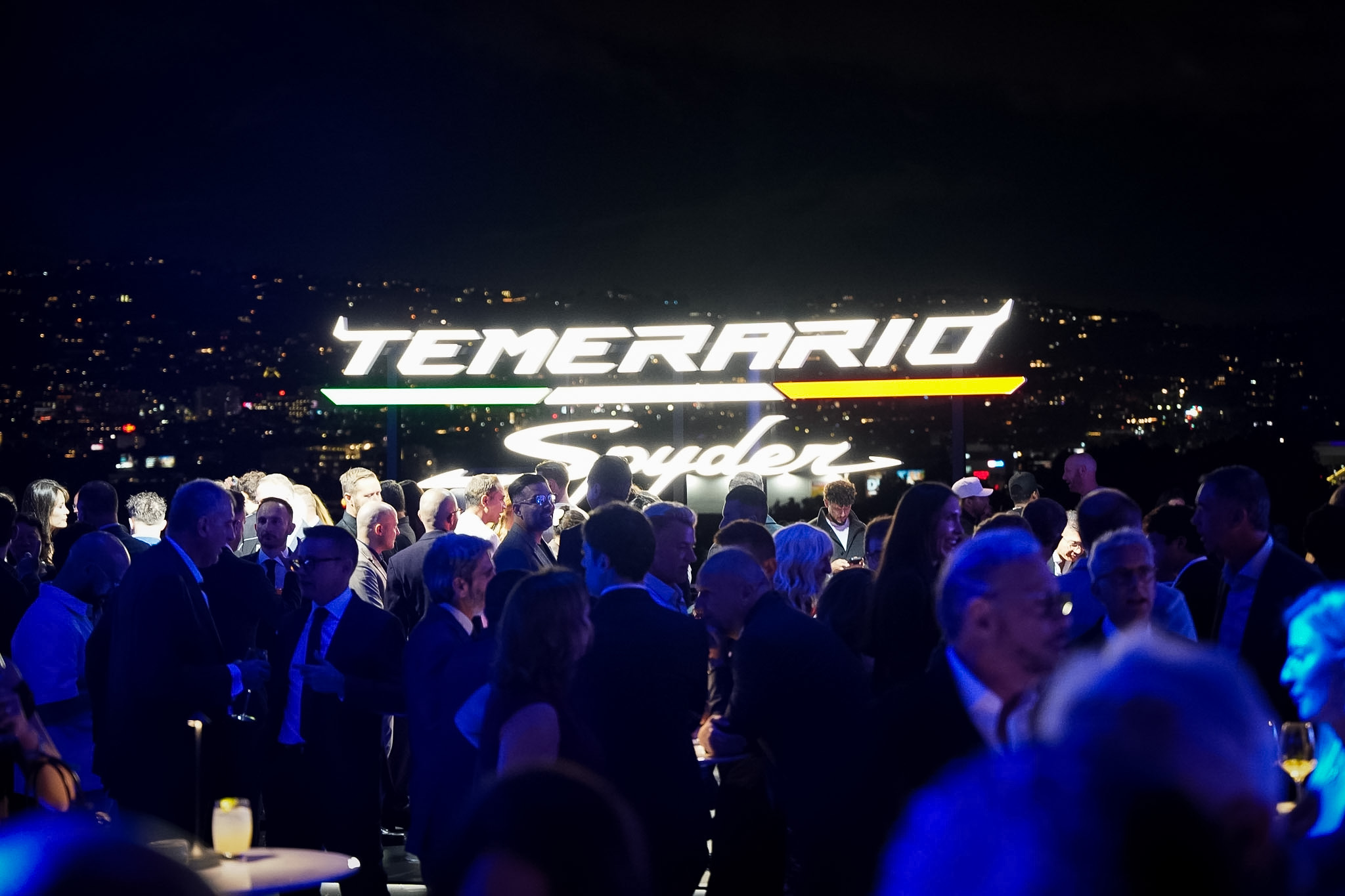
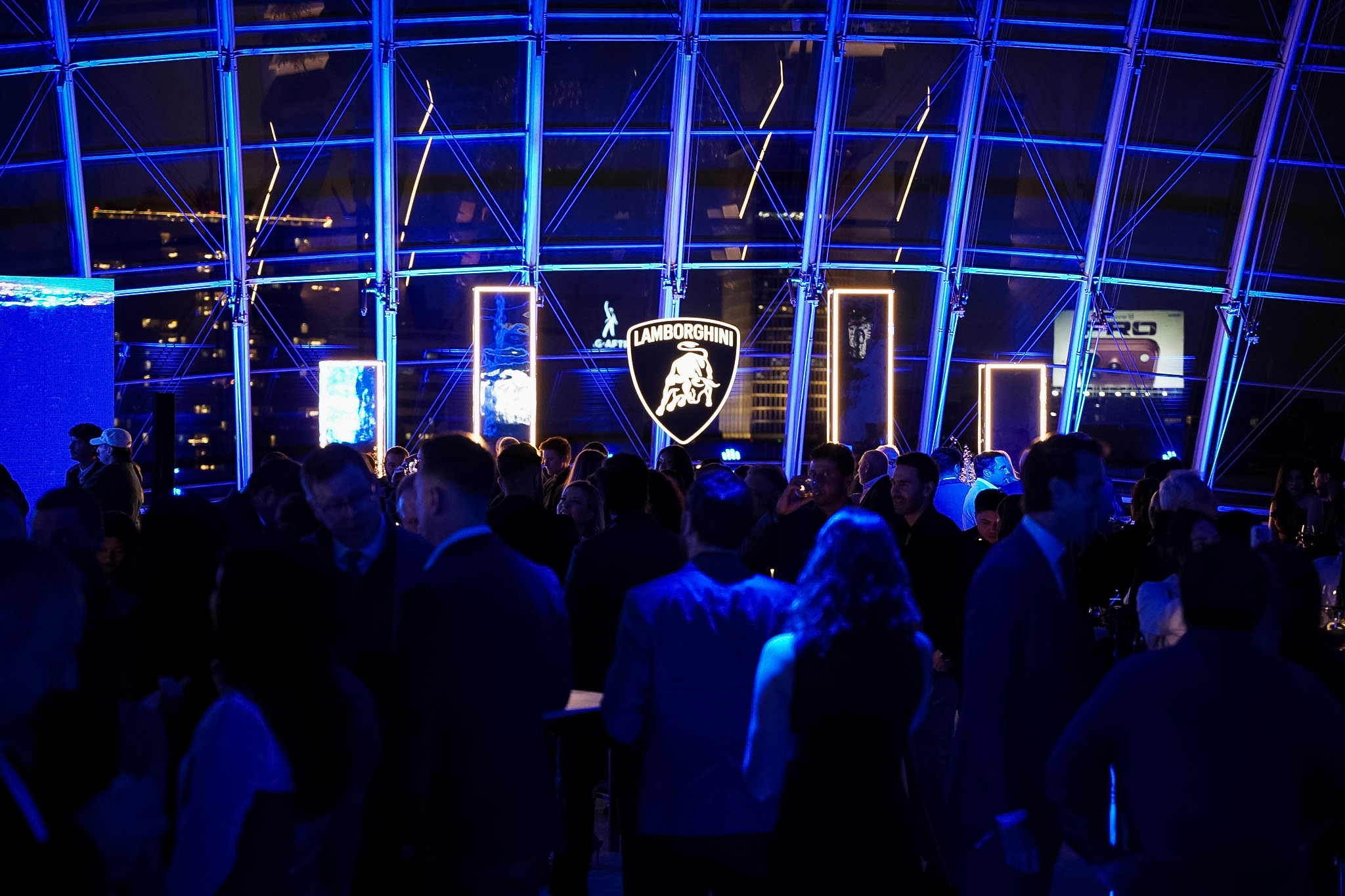
As night fell over Los Angeles, the glass dome atop the Academy Museum glowed electric blue, visible across the city like a beacon. Inside, Lamborghini customers, VIPs, popular automotive creators and top international media gathered beneath a towering illuminated Temerario Spyder sign, its green, white and red stripe a nod to the brand’s Italian roots.
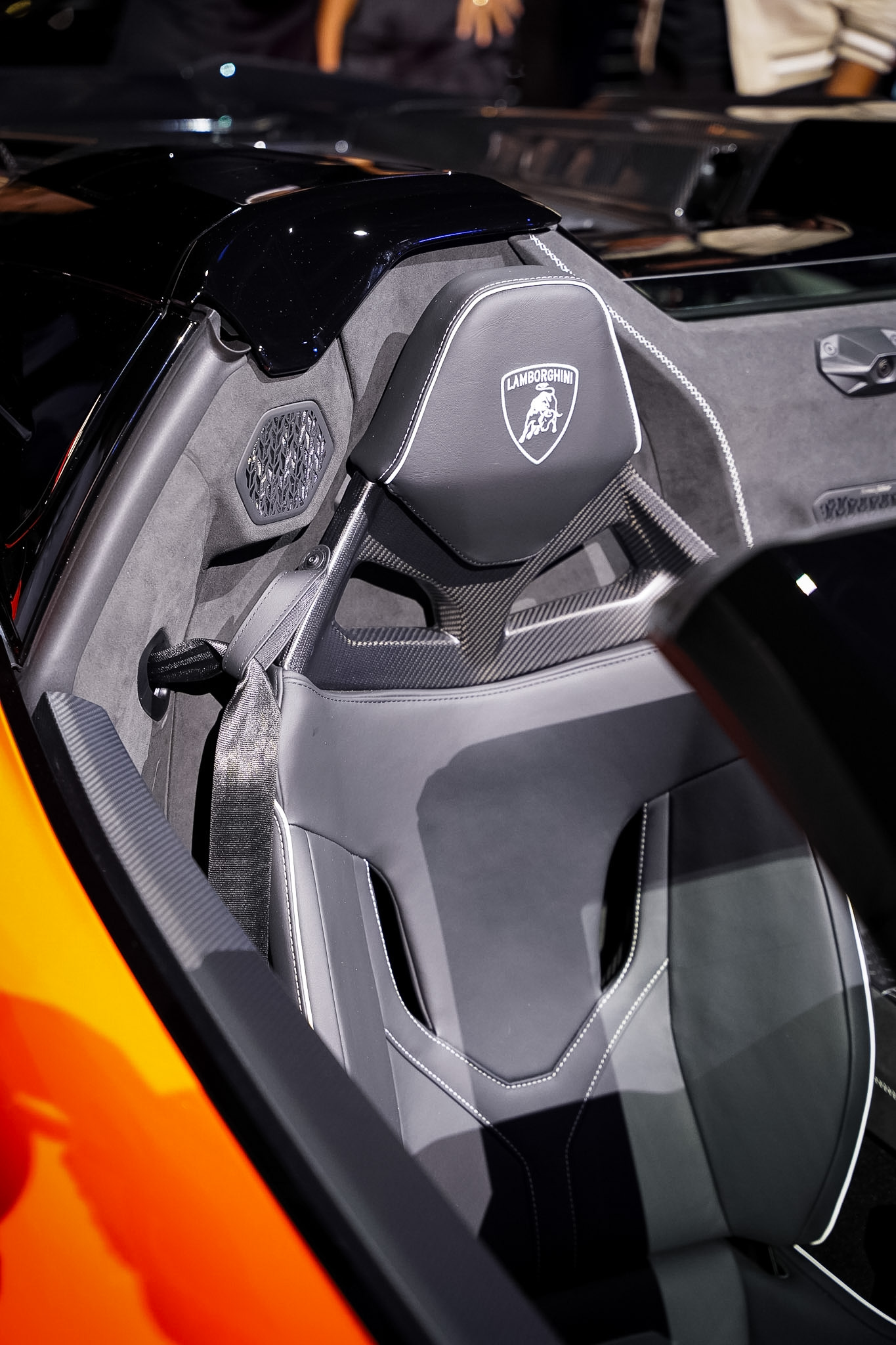
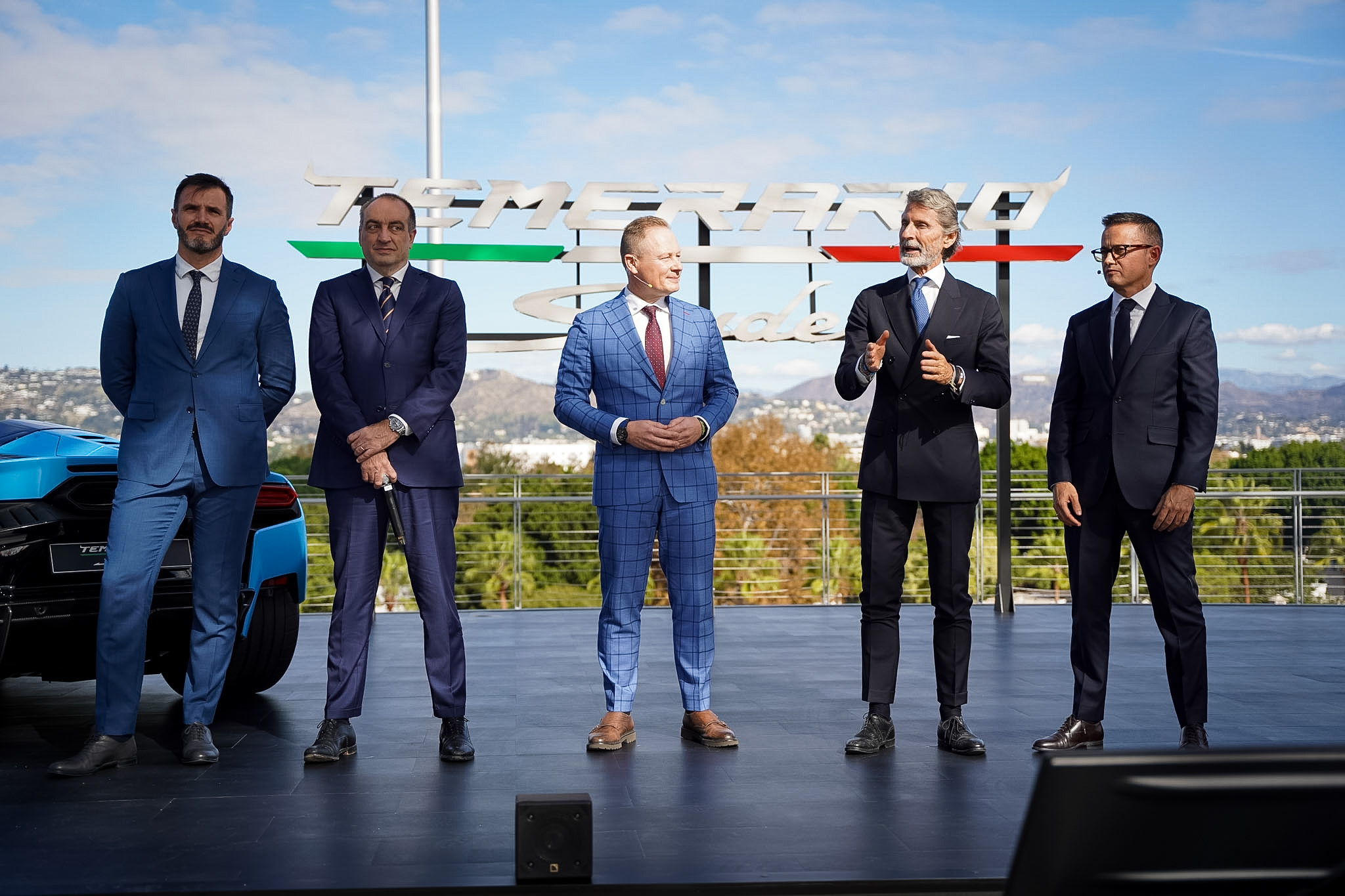
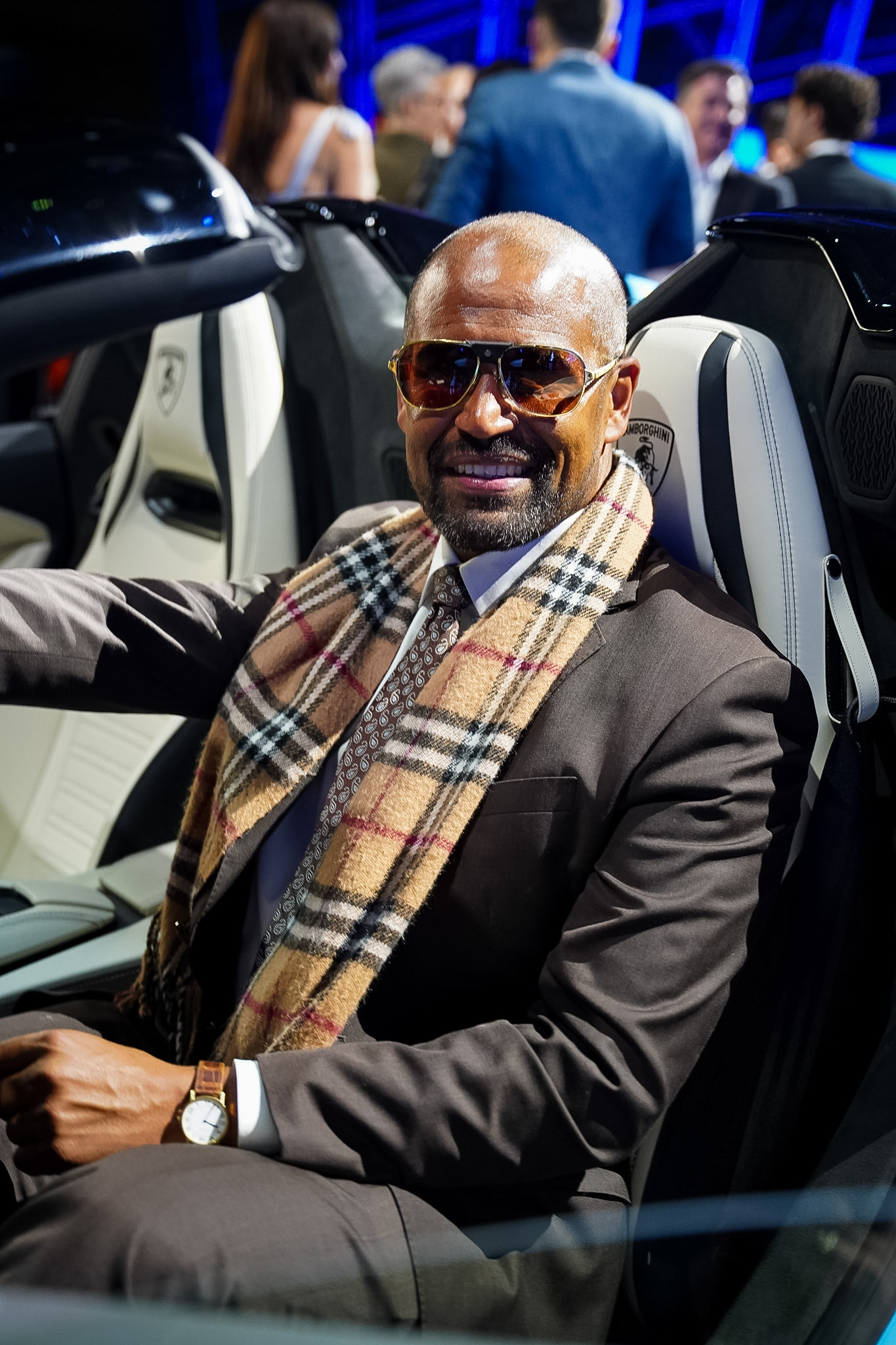
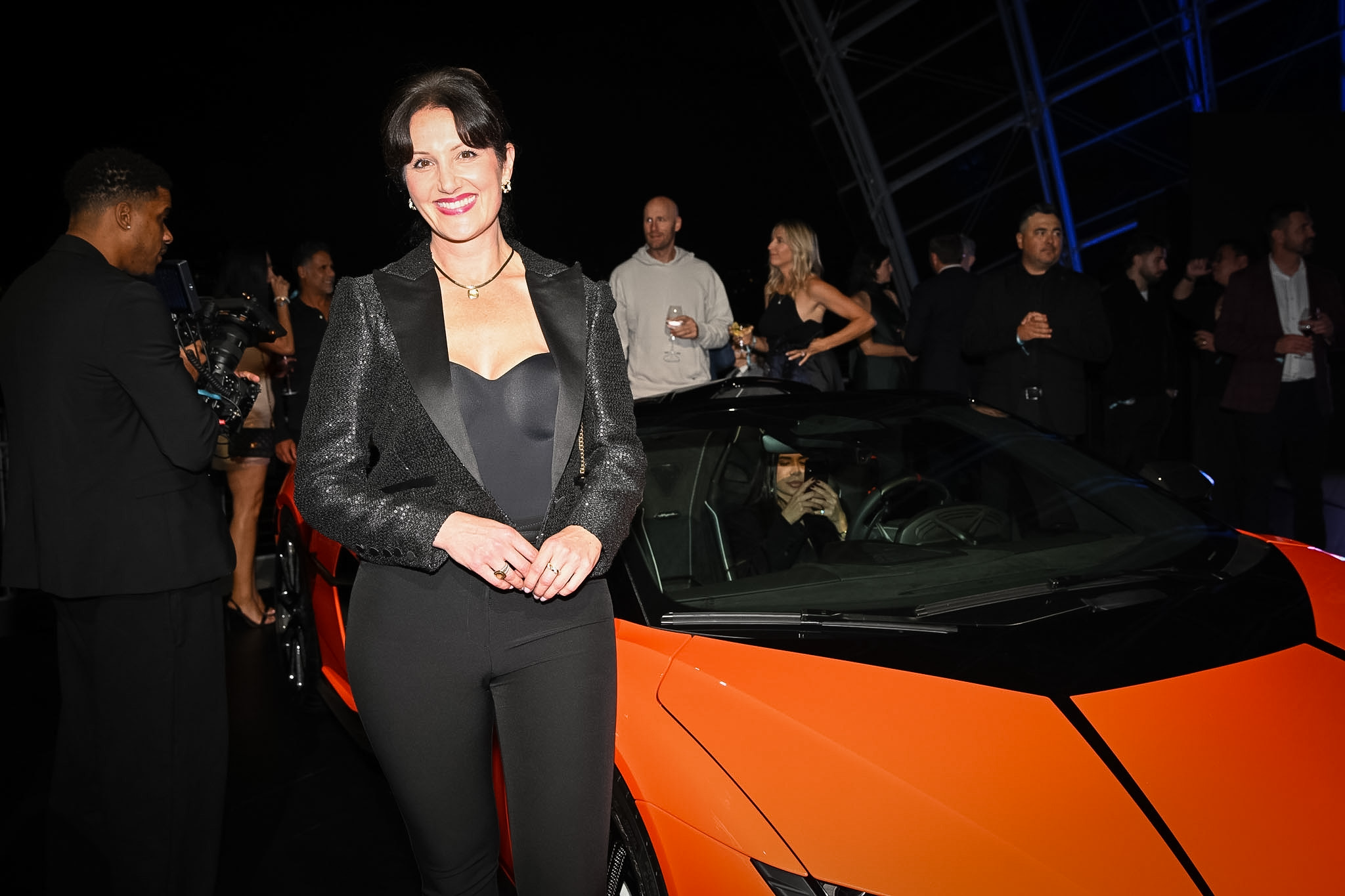
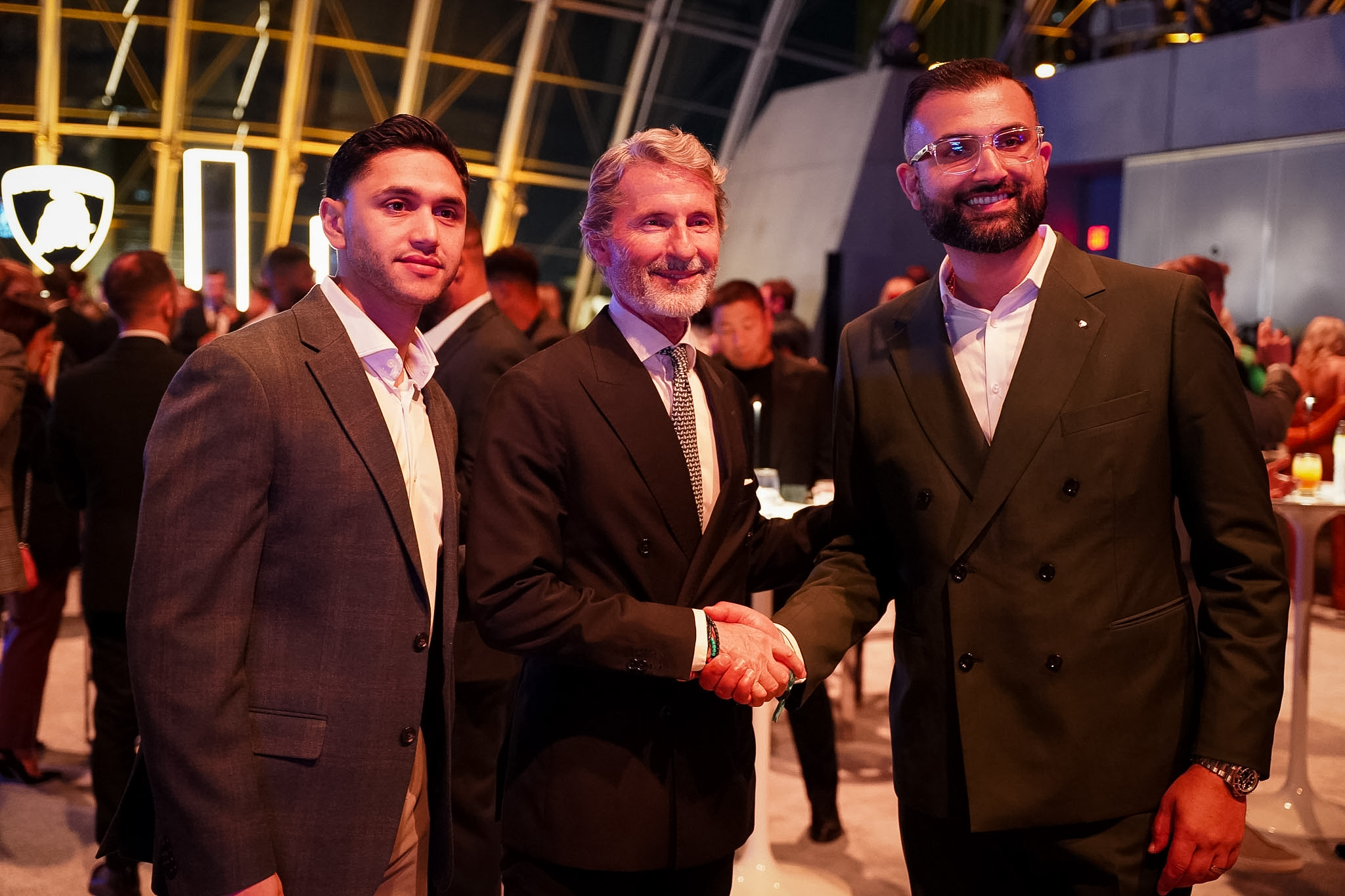
The Spyders took center stage, roofs down, as guests circled the cars, slipped into the driver’s seats and lingered over details like the bright white cabin, the hexagonal cowls behind the seats, and the V8 showcased beneath the new engine cover. Chairman and CEO Stephan Winkelmann moved through the crowd greeting guests, while Design Director Mitja Borkert and Chief Technical Officer Fermín Soneira were on hand to celebrate the car’s arrival with the people who had helped bring it to life.
With cocktails in hand and city lights stretching to the Hollywood Hills, the evening felt like a reunion of a global family, exactly the kind of community Foschini described as the heart of the brand.

Fifty years after the Silhouette first opened the roof on Lamborghini’s story, the brand has quite literally raised the roof with this open-air iteration, carrying that spirit into a new, emotionally elevated era. But as I learned from the designer who shaped it, the executive who markets it, and the collector who once spotted Lamborghinis on the streets of a small Oregon town, the magic of Lamborghini has never been just about the car. It’s about an inexplicable feeling, one that’s inspired by an unforgettable moment.
As Borkert put it, “No one needs a Lamborghini, but I hope everyone wants one.”
[Disclosure: Hosted travel, accommodations, and event access provided by Automobili Lamborghini. Image credits: Christina-Lauren Pollack for Inspirations & Celebrations, Carly Stone/BFA.com c/o Automobili Lamborghini, James “The Stradman” Condon, and Automobili Lamborghini. All opinions are my own.]