
Every great adventure begins with a little inspiration, and in the case of Formula E (the exhilarating motorsports competition that brings electric racing to life), this story started 15 years ago – with nothing more than an idea and a napkin.
On the evening of March 3, 2011, FIA President Jean Todt and Formula E Chairman Alejandro Agag sat down together at a Paris restaurant and sketched out, in just a few words, what would become the world’s first all-electric international single-seater racing championship. The founding vision was as audacious as it was simple: race through the streets of the world’s most iconic cities, put the best drivers and teams on the grid, and prove to a global audience what sustainable mobility was actually capable of.
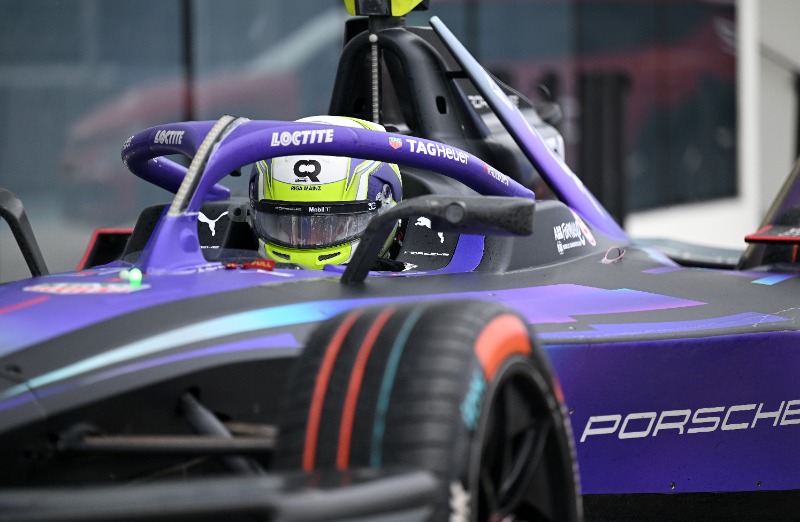
Fifteen years later, that napkin has become a full-blown championship. Since its debut at Beijing’s Olympic Park in 2014, Formula E has grown into a global entertainment brand with motorsport at its heart. Today, 12 teams and 24 drivers compete across a season that reads like a luxury travel itinerary: Monaco, Tokyo, London, Shanghai. Teams include Porsche, Jaguar TCS Racing, Andretti Formula E, DS Penske, and Nissan Formula E Team, among others. If Formula 1 is the sport that fashion influencers have spent the last few years discovering, Formula E is the championship that engineers, innovators, and the next generation of performance-culture devotees are paying close attention to now.
And four of the people most responsible for shaping what it’s becoming are worth knowing by name.
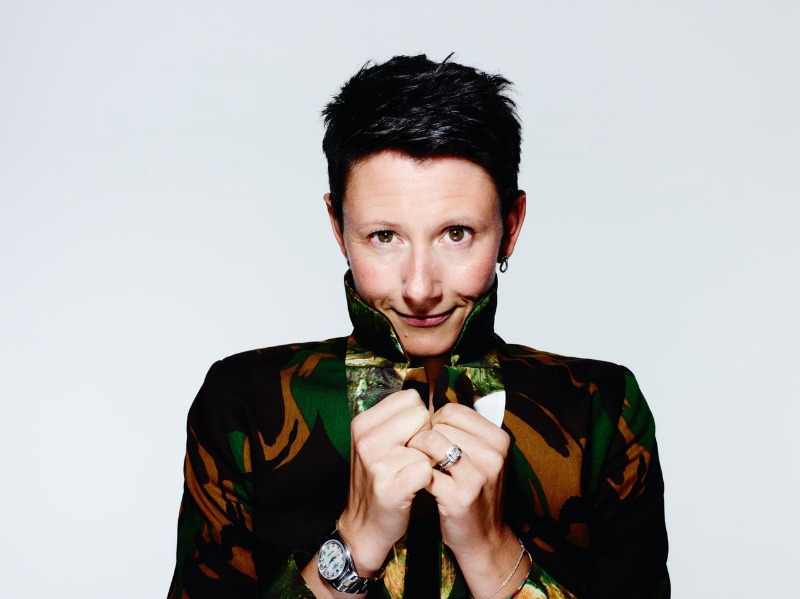
Ellie Norman, Chief Marketing Officer, Formula E
Before joining Formula E, Ellie Norman spent five years as Chief Marketing and Communications Officer at Formula 1, helping grow the sport’s fan base and brand value during one of its most transformative periods — watching the share price climb from $28 in 2017 to $65 in 2021. Before that, she was Chief Communications Officer at Manchester United, and earlier held senior executive roles at Virgin Media and Honda. She brings to Formula E a rare combination of global sports brand experience and an appetite for building something genuinely new.
At Formula E, Norman oversees brand, marketing, PR, communications, digital and social media, and fan engagement. Her approach focuses on designing a modern sports brand around the expectations of a next-generation audience — one that is younger, more gender-balanced, and more globally connected than traditional motorsport has historically attracted.
Norman says, “Formula E offers something truly unique at the centre of performance, innovation, and purpose. For premium automotive brands like Porsche and Jaguar, it’s about demonstrating leadership in the technologies that will define the future of mobility, not just the racing. The Championship provides a highly competitive environment where manufacturers can push the limits of electric performance in real time while also engaging a global audience that values sustainability and cutting-edge innovation. It provides an opportunity to showcase how brand storytelling goes beyond heritage and into future-facing relevance.”
CLP: Prior to joining Formula E, you held a senior marketing and communications leadership role at Formula One. How has that experience shaped your perspective on building Formula E’s brand and global fan engagement?
EN: “My time at both Manchester United and Formula One gave me a deep understanding of what it takes to build a truly global sports and entertainment brand, placing an emphasis on how to create emotional connection, scale audiences, and deliver world-class experiences with an emphasis on an audience-first approach.
At Formula E, I’ve applied those learnings through a slightly different lens as we’re building a movement in tandem with the sport, centered around innovation and sustainability. This requires a whole new approach to storytelling and fan engagement that connects audiences through not only the thrill of racing but as well as its shared values and vision for the future.
Formula E attracts a notably younger audience and a more diverse fanbase, with more of a balanced gender split than traditional motorsport. That fundamentally shapes how we think about engagement. Our fans are digitally native, globally minded, and highly attuned to issues regarding innovation and sustainability. Our approach has been to meet them where they are, in terms of platforms and storytelling.
That means prioritising accessible, always-on content, leaning into creator and social ecosystems, and building experiences that feel culturally relevant beyond race day. It’s less about adapting a legacy model and more about designing a modern sports brand around the expectations of a next-generation audience.”
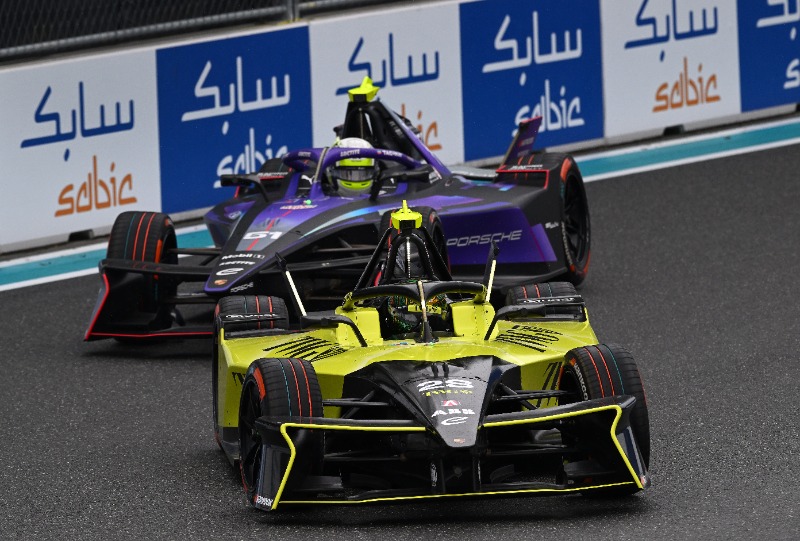
Racing in the heart of cities rather than on their outskirts is part of that strategy. So is a content initiative called EVO Sessions, which reaches audiences who may not have grown up watching motorsport but are deeply embedded in technology and culture.
Norman says, “As we’ve evolved, incorporating a mix of city circuits and permanent venues allows us to enhance the sporting spectacle while maintaining that connection to urban environments. Striking the right balance involves retaining the intimacy and cultural relevance of city racing, while also leveraging the scale and infrastructure of established circuits to elevate the competition and fan experience. Racing in the heart of iconic cities has always been core to Formula E’s DNA, and it brings the sport directly to fans, creating a unique sense of accessibility and energy.
From the start, Formula E has proven to be more than just a motorsport, as it seamlessly merges the worlds of sport, technology and culture. We’ve leaned into that by embracing innovation both on and off the track, whether that is through our racing formats, partnerships, or the cities we race in. As a Championship, we’re tapping into our younger audiences who are also our future leaders, innovators, and creatives. We’re diversifying and showing up in spaces that go beyond traditional motorsport.
One example is how we’ve built our race calendar around some of the world’s most iconic cities. Racing in places like Monaco and Tokyo allows us to connect with fans in the heart of global cultural hubs, rather than on the outskirts. It creates a very different kind of energy and accessibility, and positions the Championship within a broader lifestyle and cultural context.
Another is our focus on storytelling and talent. We choose to work with creators and talent who can translate the sport for new audiences, people who may not have grown up with motorsport but are deeply engaged in culture, tech, and innovation. One of the ways we’ve been able to do that is through EVO Sessions, which has helped us reach a younger, more diverse fanbase in a way that feels authentic rather than traditional.
At Formula E, we’re building cultural relevance, which isn’t about a single moment but rather about consistently showing up in ways that reflect where the world is going, not where motorsport has historically been.”

Julia Pallé, VP of Sustainability, Formula E
Julia Pallé arrived at Formula E from Michelin Motorsport, where she served as Sustainability Executive. She also serves as Sustainability Advisor for Extreme E, the all-electric SUV series that races in some of the world’s most remote ecosystems to draw attention to the realities of climate change. Her expertise sits at the intersection of elite sport and environmental strategy — and at Formula E, that expertise has produced results that go well beyond the usual corporate sustainability checklist.
Under Pallé’s leadership, Formula E became the first sport in the world to be certified net zero carbon since inception, and the first sport ever to receive B-Corp certification. These are not symbolic distinctions. They represent a fundamental structural commitment built into the Championship from the ground up, rather than added on as an afterthought.
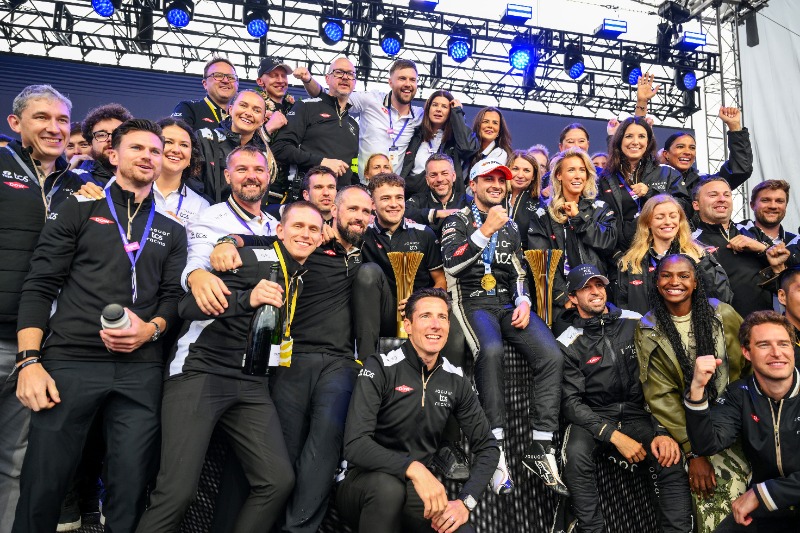
“Part of the founding mission of Formula E was to accelerate the adoption of electric mobility. From day one, the Championship was designed to demonstrate that high-performance sport can coexist with environmental responsibility. Achieving milestones like B-Corp certification and being the first sport certified on the BSI Pathway to Net Zero reflects that long-term commitment and helps set a benchmark not just for motorsport, but for global sport more broadly,” Pallé says.
The GEN3 Evo car, currently on the grid, accelerates from zero to 100 km/h in 1.82 seconds. The next-generation GEN4 car hit 335 km/h at Circuit Paul Ricard. These machines are not making a principled concession to speed for the sake of sustainability. They are redefining what the two words mean together.
The technology developed on the track is already transferring directly to the cars consumers drive. Pallé says, “Formula E continues to be the ultimate proving ground for the next-generation electric vehicle technology. The intensity of racing pushes manufacturers to innovate at a much faster pace, particularly in areas like energy efficiency, battery management, and software development. Those learnings transfer from the track into road cars. What we’re seeing is a direct link between performance innovation in Formula E and advancements in the electric vehicles consumers drive, helping to make EVs more efficient, more powerful, and more accessible over time.”
She continues by stating, “A great example of this is Porsche Cayenne Electric, which integrates technologies developed from Porsche’s Formula E 99X Electric race car. Innovations like direct oil cooling, which enables up to 98% motor efficiency, and advanced energy recuperation systems that can recover up to 97% of braking energy are directly influenced by learnings from racing. Even charging performance has been accelerated, with ultra-fast capabilities inspired by Formula E pit boost technology.
We’ve also seen this impact with the Nissan Leaf. Since Nissan entered Formula E, the Leaf has seen significant advancements in battery capacity and range, making electric vehicles a far more viable option for everyday use, from daily commutes to longer journeys.
Ultimately, Formula E is actively shaping the future of motorsport, helping drive the global transition to more sustainable, high-performance mobility.”
Her broader argument is one that the luxury world has been slow to fully internalize: “For a long time, the traditional concept of ‘luxury mobility’ was synonymous with excess, heavy engines, loud acoustics, and, frankly, a very linear ‘take-make-waste’ philosophy. At Formula E, we’ve turned that on its head, showing the world that modern luxury isn’t about what you take away from the planet; it’s about the sophistication of the technology you use to protect it.
There does not need to be tension between sustainability and performance; at Formula E, we are showcasing a model where we are maximising performance whilst not compromising on sustainability. We are proving that you can have the adrenaline, the prestige, and the elite performance without the environmental cost. Sustainability is no longer a ‘nice-to-have’; it is the hallmark of a truly modern, luxury brand.”
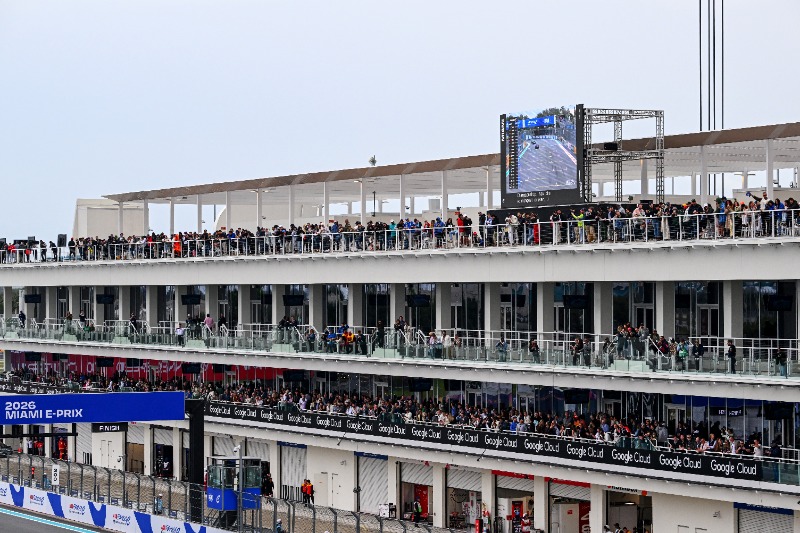
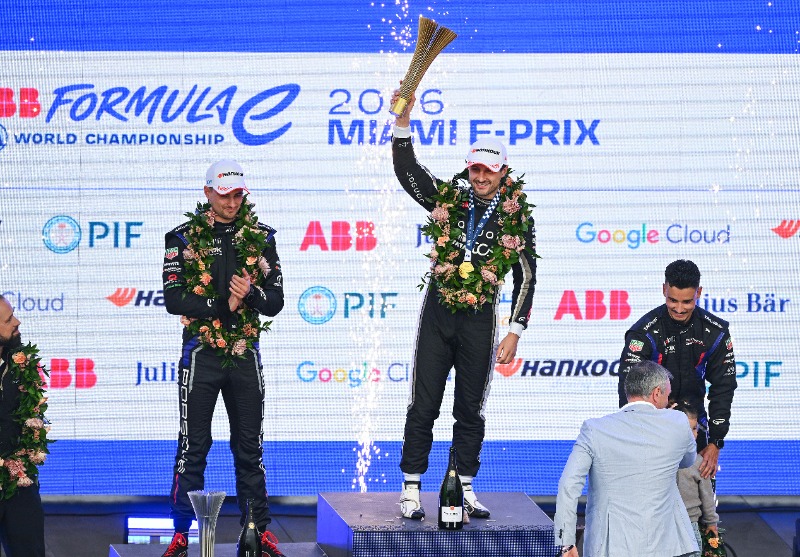
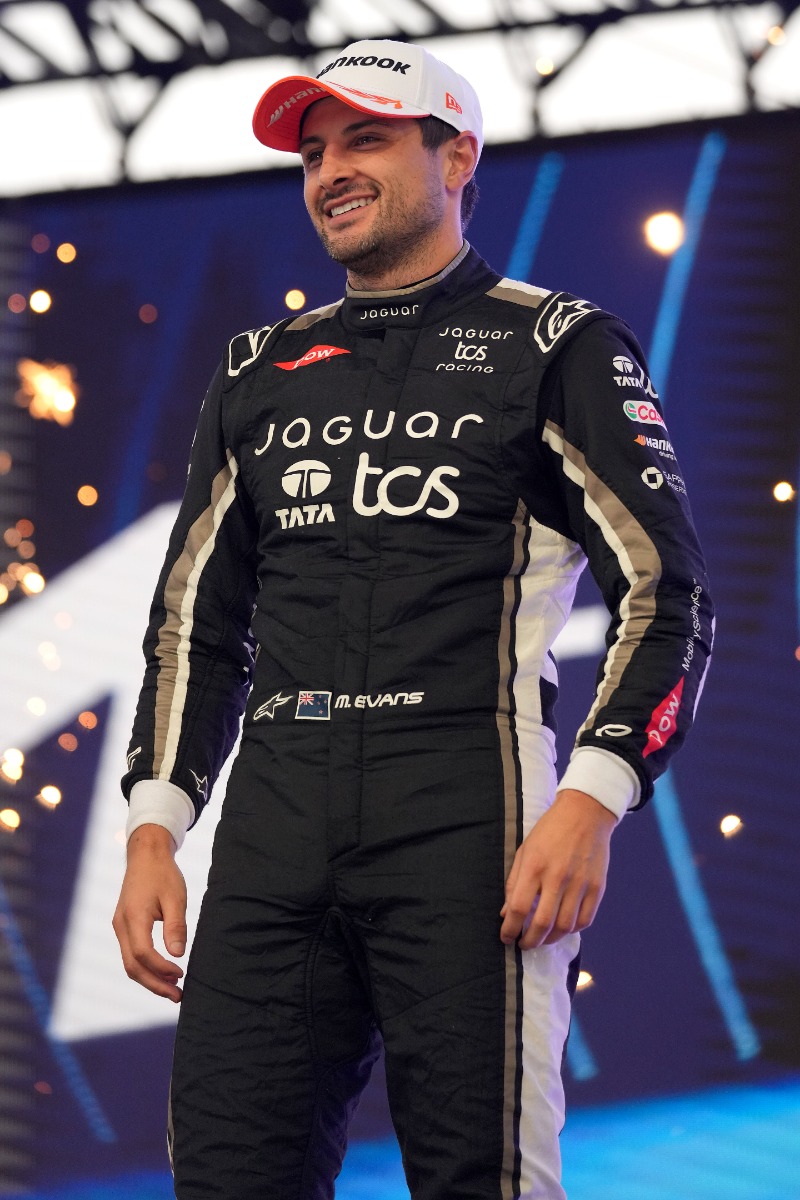
The timing of this story could not be more fitting. Just a few weeks ago, at the 2026 Miami E-Prix held at the Miami International Autodrome, Jaguar TCS Racing driver Mitch Evans claimed victory in wet, demanding conditions — a win that made history as his record-breaking 15th career triumph in Formula E. The rest of the podium belonged to Porsche, with Nico Müller finishing second and Pascal Wehrlein third. It was a statement race from a team that has spent a decade proving exactly what its leadership articulates below.
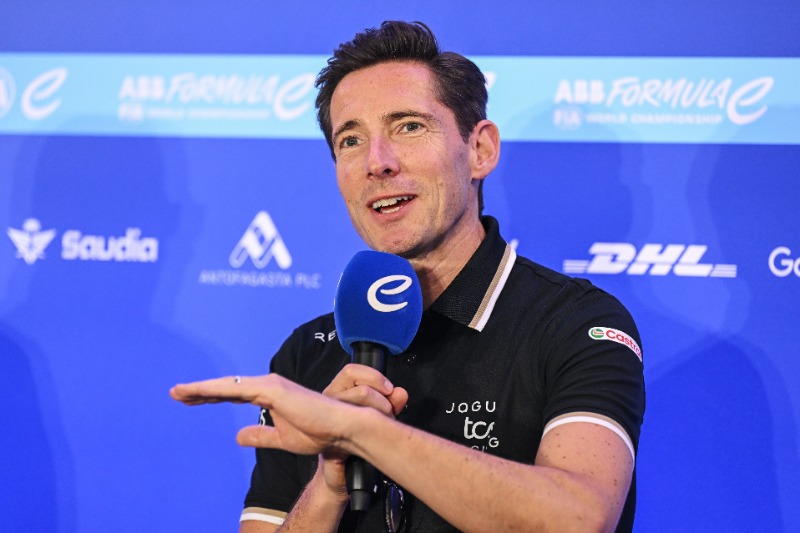
Ian James, Team Principal, Jaguar TCS Racing
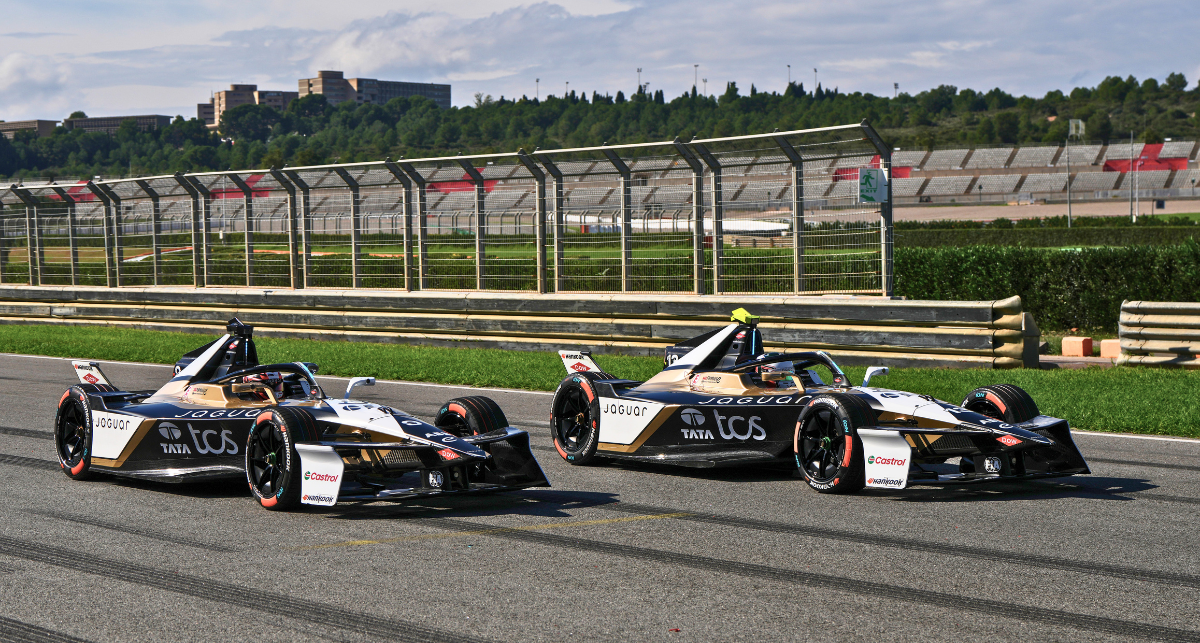
No team in Formula E embodies the race-to-road philosophy more concretely than Jaguar TCS Racing. The British manufacturer became the first luxury automotive brand to enter the all-electric championship when it joined in 2016, and a decade later it is also the reigning Teams’ World Champion. That longevity is not coincidental. Jaguar’s Formula E program has run in direct parallel with one of the most consequential brand decisions in the company’s history: the full transition to an all-electric lineup.
Ian James, appointed Team Principal of Jaguar TCS Racing in October 2025, leads the team as it enters the GEN4 era with a commitment to remain in Formula E through 2030. His background spans McLaren Automotive, Daimler — where he helped develop the hybrid power units behind consecutive Formula 1 World Championships in 2014 and 2015 — and two back-to-back titles as Team Principal of the Mercedes-EQ Formula E Team. He is among the most decorated figures in the history of electric motorsport.
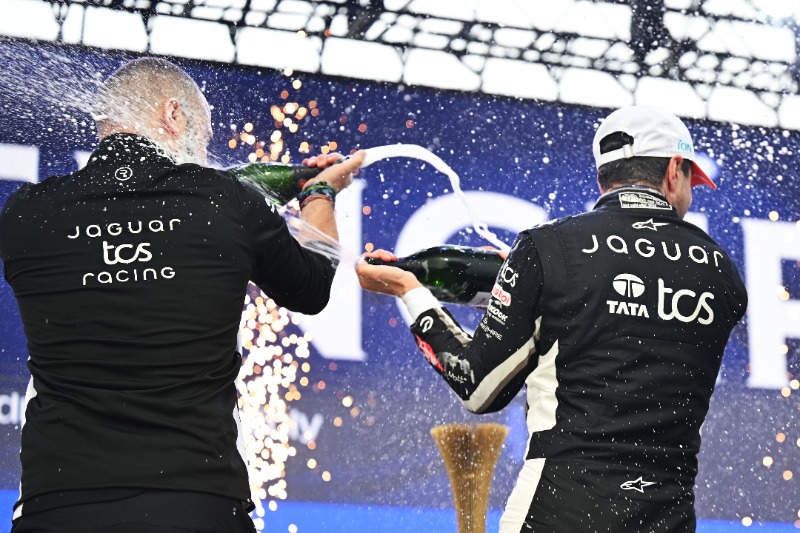
On the direct relationship between the racing program and Jaguar’s broader transformation, James is unequivocal: “Motorsport has played a significant part in Jaguar’s history because it can provide a test bed to develop new technologies and advances in engineering. As Jaguar shifts to become an all-electric luxury brand, Formula E remains incredibly important for the company as we are competing — and winning — in the most demanding electric racing environment in the world.”
“At Jaguar TCS Racing we don’t only compete to win,” he continues. “We are racing to innovate and to drive technical leadership on the track and for the road — to help shape Jaguar’s all-electric future. Knowledge and expertise developed on-track have influenced the engineering development of Jaguar Type 01 — the new luxury four-door GT.”
With the GEN4 car arriving next season — delivering more power, more speed, and more scope for innovation — James sees the momentum only accelerating: “This is our tenth year racing in the ABB FIA Formula E World Championship and next season brings another major milestone with the arrival of the GEN4 race car – with more power, more speed and more scope for innovation. It’s an exciting chapter for the sport and for Jaguar’s electric journey as the progress we make in Formula E will keep shaping the next generation of Jaguar’s all-electric performance”.
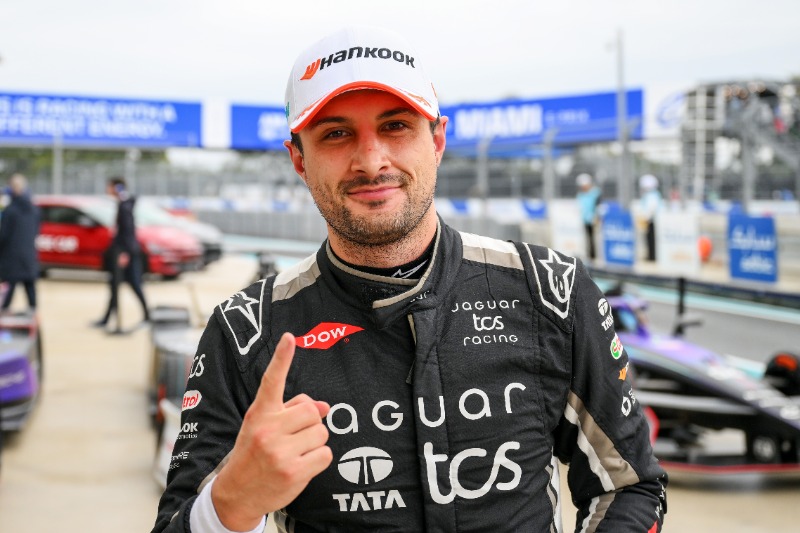
Mitch Evans, Driver #9, Jaguar TCS Racing
Mitch Evans has been with Jaguar TCS Racing since the team’s very first Formula E season in 2016 — a decade-long partnership that stands as the longest driver-team pairing in Formula E history. The New Zealander came up through every rung of the traditional motorsport ladder: karting at age six, the New Zealand Grand Prix at 16, the GP3 title in 2012 under the mentorship of former F1 racer Mark Webber, a GP2 podium at 18 as the youngest in the series’ history, and a second-place finish at Le Mans in 2015. He arrived at Formula E having seen, as he puts it, every type of racing challenge. And then Formula E surprised him anyway.
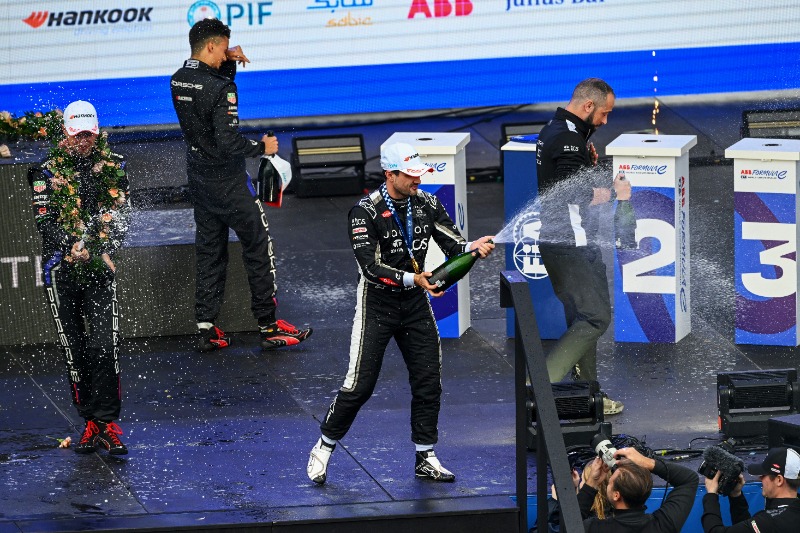
Evans explains, “Coming up through the traditional ladder – GP3, GP2, all the usual steps – you think you’ve seen every type of racing challenge. But Formula E hits you with something completely different. I joined Jaguar TCS Racing 10 years ago, and the first thing that surprised me was just how much the driver is managing at once – energy, strategy, software, tyre life, race craft. You’re making so many decisions every lap, and the margins are tiny. It’s incredibly intense, and that’s what hooked me straight away.”
For a reader encountering Formula E for the first time, Evans has a clear message: set aside whatever assumptions you may have about electric racing.
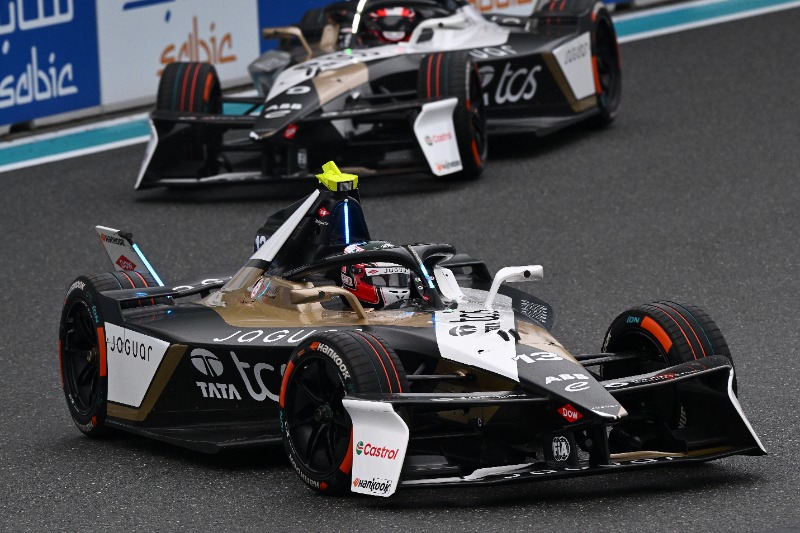
He says, “What I think would surprise a fan experiencing their first Formula E race is just how competitive and aggressive the racing is. People expect electric racing to be quiet or boring, but it’s the opposite – it’s elbows-out, wheel-to-wheel, and some of the closest racing you’ll see anywhere. The tracks are tight, the speeds are high, and the strategy is intense and constantly evolving. Once you see it up close, you realise how much is happening beneath the surface. It’s a completely different kind of challenge, and that’s what makes it so exciting.”
Where to Watch This Summer
For global travelers with an eye for exceptional experiences, Formula E’s upcoming race calendar is worth marking. The Championship heads to Tokyo next, followed by a London finale, bringing electric racing to two of the world’s great cities. For anyone who has been following the electric vehicle conversation from the sidelines, watching it play out at 335 km/h on a city street circuit — in the company of a world-class field, in the heart of a great metropolis — is a rather compelling way to get caught up.
The track, as it turns out, is a very good place to figure out the future of automobiles.
[Images c/o ABB FIA Formula E and Jaguar TCS]