

Over the past month, Bugatti announced three major headlines that reflect a story spanning the marque’s past, present, and future. From an iconic 20-year-old car that has been fully restored to a brand-new one-of-one hypercar that made its global debut during Monterey Car Week, to an entirely new partnership driving Bugatti into ultraluxury Miami real estate, the storied brand continues to honor its past, shape the present, and build the future.

At the core of all three announcements lies a phrase Bugatti has long used to describe its own design philosophy: Art, Forme, Technique. A few weeks ago, I visited the Bugatti Estate in Pebble Beach, where I sat down with Frank Heyl, Bugatti’s Director of Design, and Luigi Galli, Bugatti’s Heritage & Certification Expert, to learn more about the first two of those chapters in person.
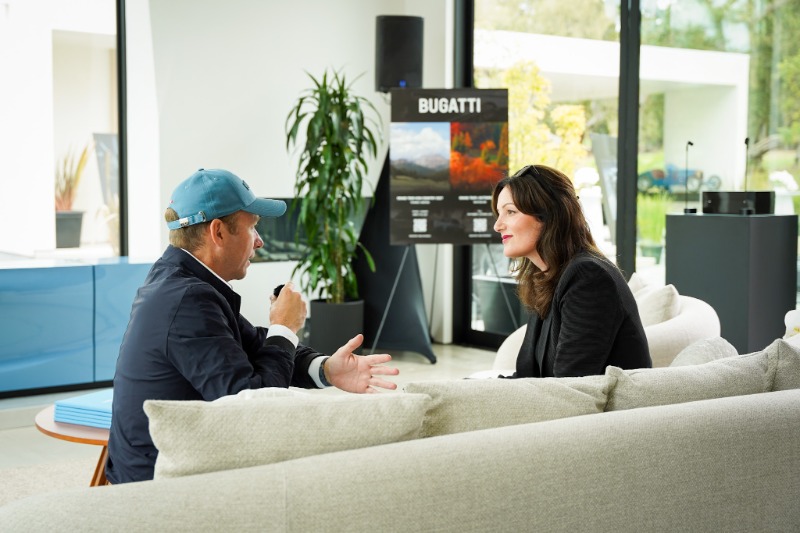
Bugatti’s most exclusive offering isn’t limited to solely choosing a paint color or stitch pattern. Founded on the concept of what Heyl calls “car couture” is the brand’s newest offering: Programme Solitaire, which is an in-house coachbuilding tier reserved for a maximum of two clients a year. Where Sur Mesure lets an owner personalize an existing model, Solitaire starts from nothing: a completely unique body and interior, engineered and designed from the ground up around a single customer and a single story.
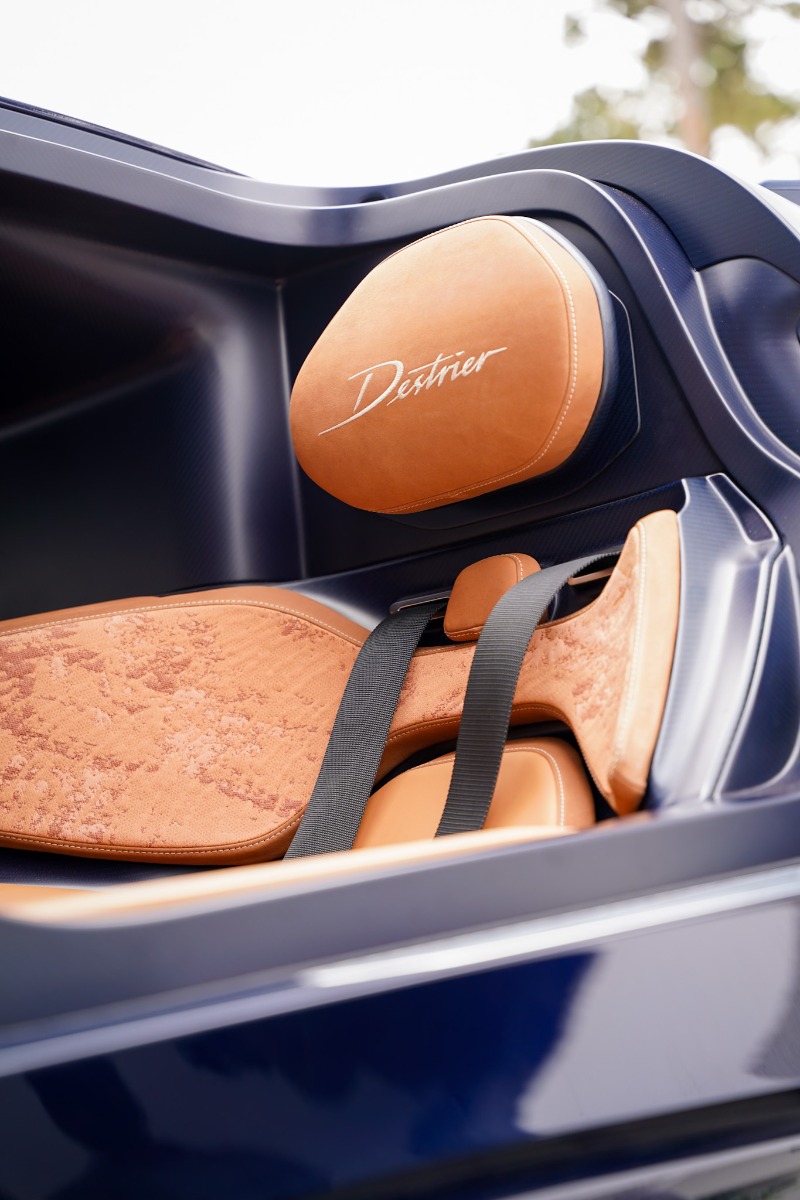
This year’s commission, the Destrier, is only the third car the program has ever produced, following Brouillard, inspired by Ettore Bugatti’s own horse, and F.K.P. Hommage, a tribute to one of the automobile industry’s giants.
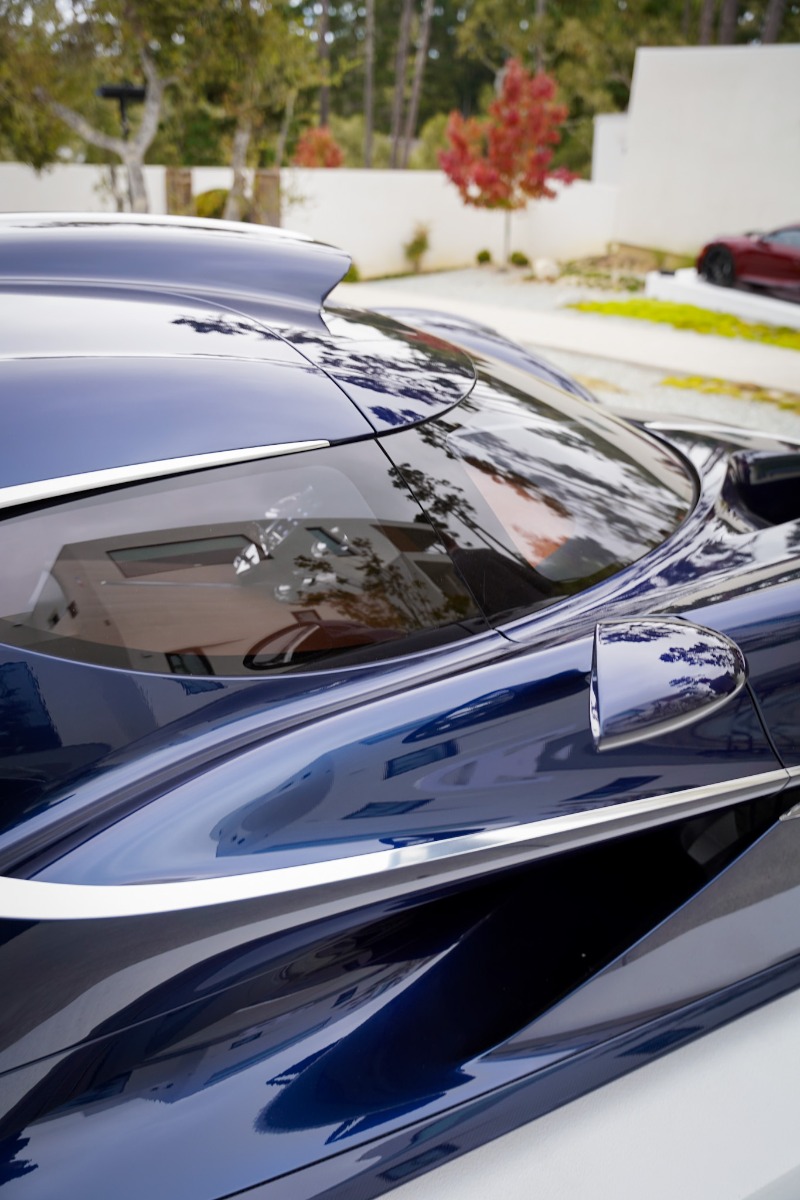
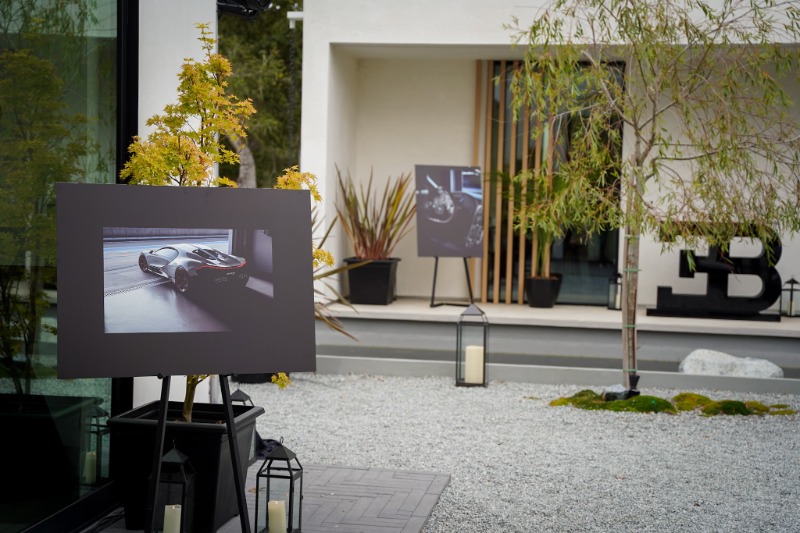
Built on the extreme, track-honed proportions of the Bolide rather than the Chiron platform underlying its predecessors, Destrier takes its name from the legendary warhorse of the Middle Ages — the “Great Horse” that carried knights into battle. It’s finished in a bespoke, diamond-flecked shade called Sapphire Celeste, with hammer-beaten brightwork echoing a knight’s armor, and an interior built around “Ambre Voyageur” leather and a 3D-knitted textile threaded with copper yarn.
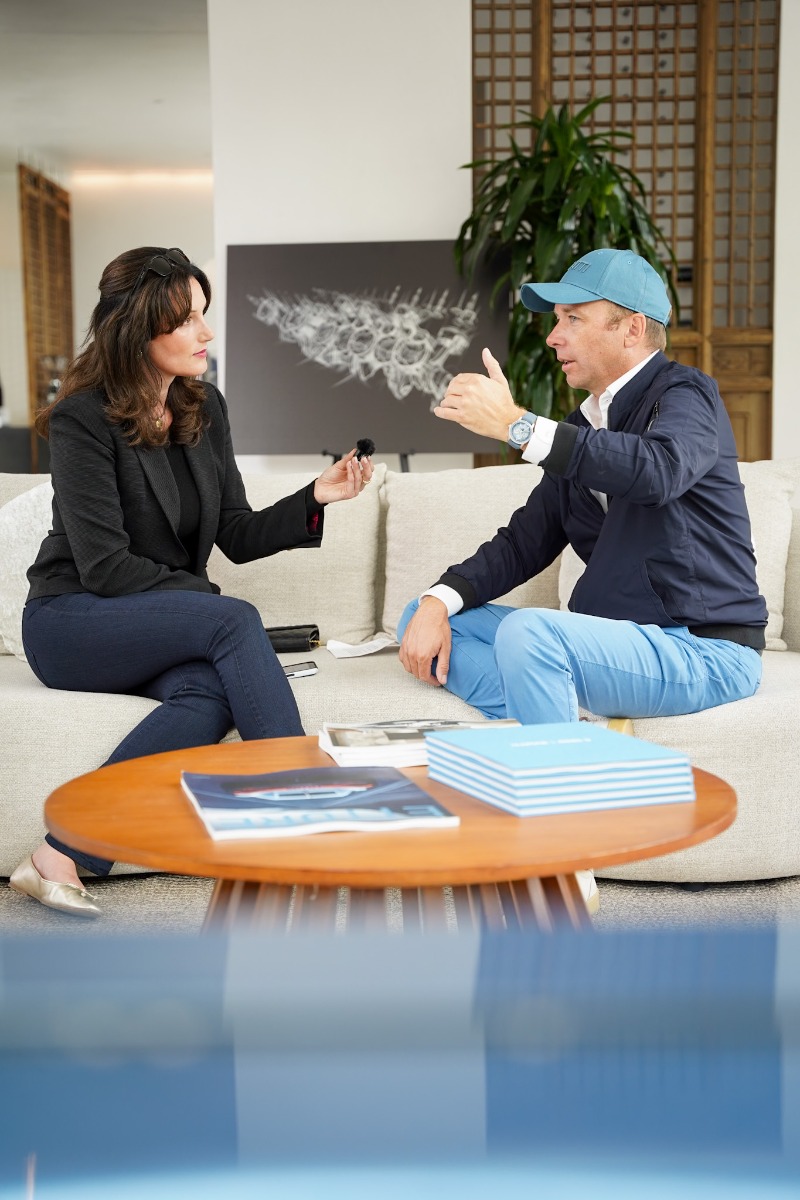
I spoke with Frank Heyl about the thinking behind it.
CLP: Some ultra-luxury brands will build almost anything a client asks for, no matter how far it strays from the brand’s own aesthetic. Bugatti clearly doesn’t operate that way. Where do you draw the line between honoring a client’s vision and protecting what a Bugatti is supposed to be?
FH: Well, that’s a tricky question, because obviously it’s about the experience. To buy a Bugatti, that usually comes with a certain stage in your life and success, and automobile enthusiasm. Most of these customers are connoisseurs — they know cars and have already been through many of the configuration processes. Some customers have a vision of exactly what they want to do. Some like to be inspired, to have proposals. And ultimately, it’s also part of my job as Director of Design to keep a certain custodianship of the style of the brand, which I think we’re managing quite well. If a customer comes with a certain vision for their car, I recall no real configuration where it wasn’t possible to meet that vision in a graceful and stylish way.
One example that comes to mind: a customer wanted a Chiron finished in pink, as a Valentine’s present for his wife. What a lovely present. I wouldn’t say pink is the worst — you can make something amazing with pink. In the end, the car turned out beautifully. That’s what I mean by vision — you come with a vision, and we take care of the rest. That’s also what I define as luxury: being taken care of in a way that’s incomparable, because it’s Bugatti.
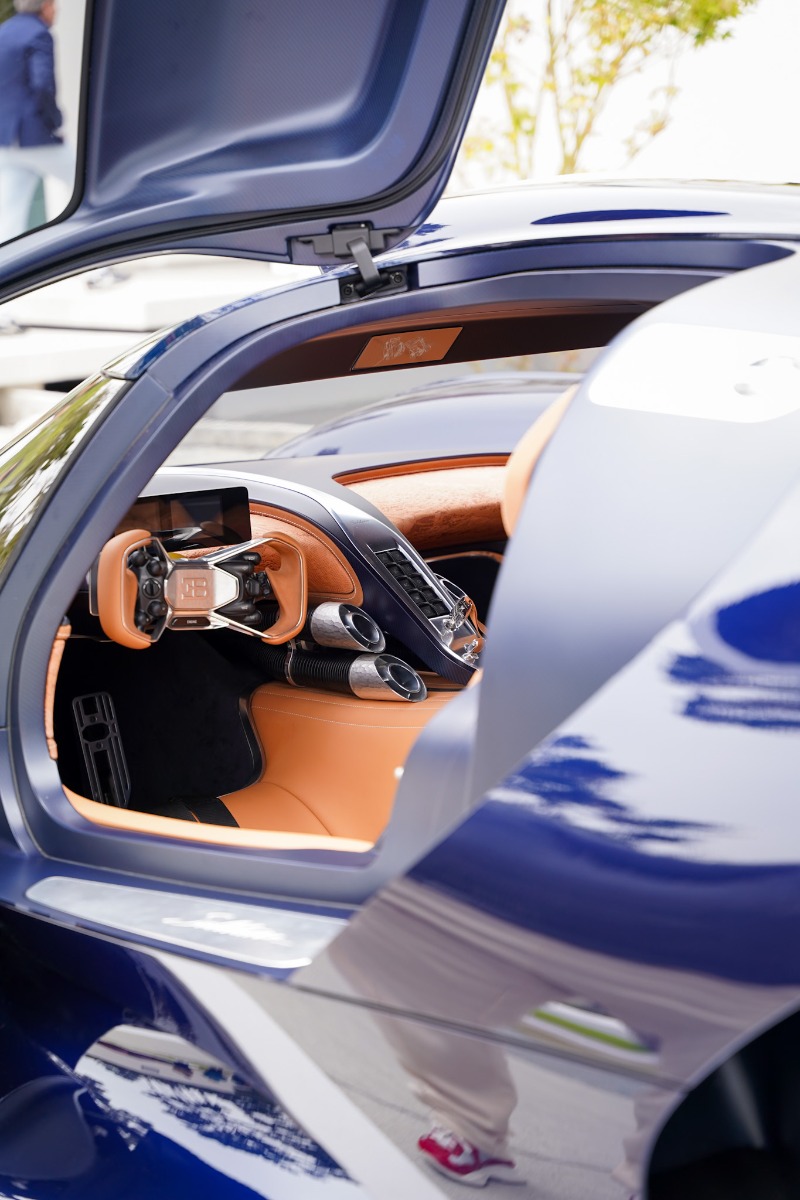
CLP: Sur Mesure lets a client personalize an existing model — paint, trim, details. Programme Solitaire is a completely different tier: a one-off body and interior built from the ground up. Destrier is the third commission. Looking back at Brouillard and F.K.P. Hommage, how has the program evolved from where it started?
FH: It’s true, it’s the third commission — and the first that’s actually based not on a Chiron platform, but the Bolide. It still has the same drivetrain, but pretty soon we’re going to emerge into the V16 era for the Solitaire program, moving toward Tourbillon-based cars. That comes with a whole lot of new proportional opportunities.
I really love the diversity we’ve been able to explore across these three cars — they’re all completely different stories. One is the Brouillard story, with Ettore and his favorite horse, going into hyper-individualization like horsehair in the interior. Another is a celebration of a giant of the automobile industry. This next one is the ultimate in elegance and grace, something meant to stand forever. They’re all completely diverse, and that diversity is what I love. We don’t need to repeat ourselves — there’s an infinite amount of story to be told, both about the brand and about our customers’ visions.
If you do a mainstream model, that’s also so much fun — it’s a huge task, stepping into the footprints of something like the Veyron or Chiron with a new product of the same caliber or better. But the scope is enormous: aero, thermal, power – so many subjects that have to come together for a new main model. Whereas if you only have to build one car, you can dive so deep into one story that every little detail pays into it. You couldn’t do that with a car that has to be built 250 times and configured in a sportier or more elegant direction. So when you talk about evolution, it’s going to be a new story every time, because we can fully immerse ourselves in that story. In a way, design is also storytelling.
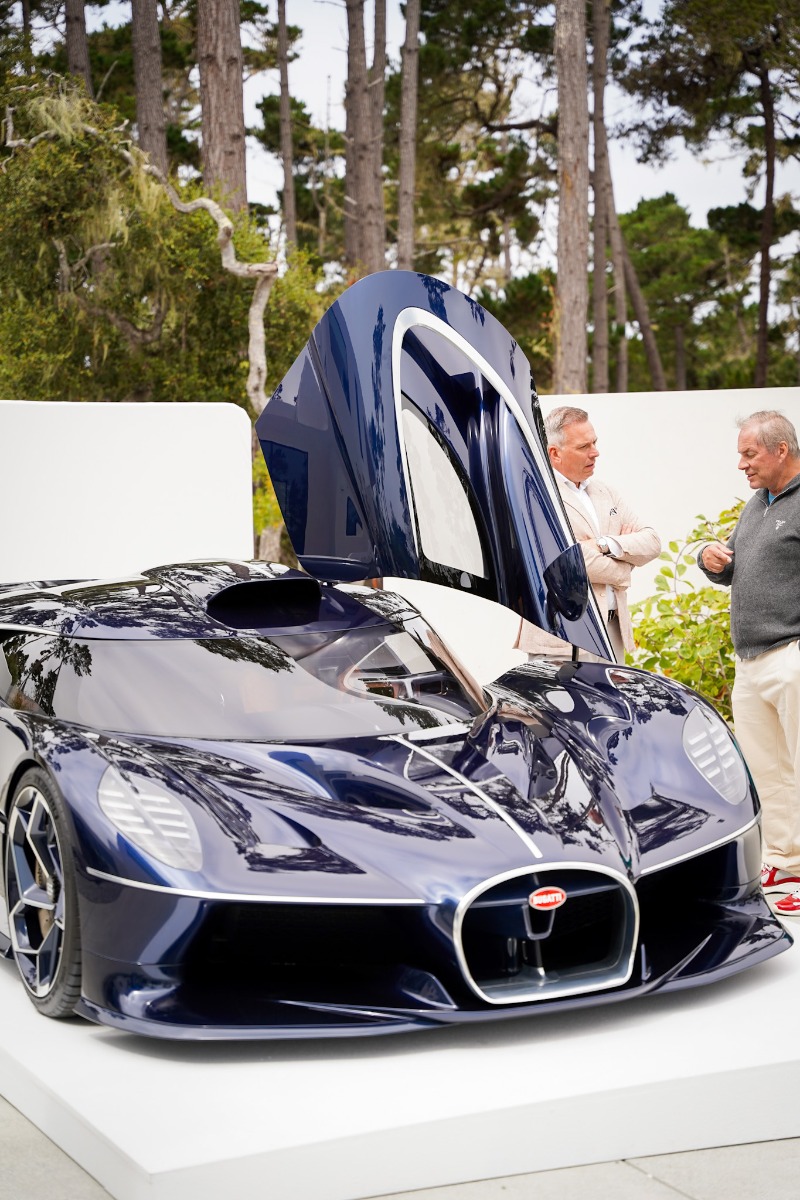
CLP: The destrier was the legendary warhorse of the Middle Ages — the one that carried knights into battle and tournaments, described in its time as “the Great Horse.” What inspired your team to name this car Destrier?
FH: I truly believe this: the Destrier cannot be understood with your head. It’s something that speaks to your heart. You perceive it, and you fall in love with it because it has these gorgeous shapes. It’s not unlike Brouillard, where it was really about the horse as the name-giver. And yes, there are aspects of inspiration you’ll find in the car — the hammer-beaten metalwork, as you’d find on the armor of a knight, or a horse ridden into battle. But that’s not the main concept of the car. The main concept is grace, elegance, timelessness — enduring, being relevant on a Concours lawn a hundred years from now.
We were looking for an adequate new name. In the past, we’ve named mainstream models after factory race drivers — Pierre Veyron, Louis Chiron — or mountain passes, like the Galibier. With Solitaire, we diverted from that; now it’s about the theme. Destrier is French — it just means a type of horse, not “destroyer.” But if you look at the car, it has that momentum, that menacing quality. It’s basically intimidating the car next to it. There was a chain of inspiration there. It’s not ultimately about the horse — but there was something about that particular type of horse that fit the character of this car. That’s why we called it Destrier.

CLP: With a fully bespoke car like this, you’re often working with materials or techniques you’ve never used in production before. What’s that trial-and-error process like — how many attempts does it typically take to get something exactly right?
FH: A lot of times, when people think about styling, they think that’s car design. But styling is something different — there’s already something there, and you put a nice candy wrapper around it, and deal with whatever the outcome is. What we did here is not decoration. We actually designed a completely new thing.
I’ll give you one example. We model these things digitally, and we start in what’s called poly data — little tiny triangles making up a surface, a technique that actually comes from the gaming industry, a way to quickly draft up three-dimensional shapes on the computer. Then we refine that with more precise, spline-based modeling. Then we machine out full-size mock-ups — it’s too expensive and slow to paint them — and it really takes the eye and the experience to judge the surfaces and see the mistakes. We call it “design recovery” — can you see a car? Can you spot its proportional awkwardness?
I had a moment like that on this project. We were looking at the car on a six-meter power wall in VR, trying to avoid every mistake we knew to look for. We’d already spent a couple hundred thousand dollars machining out the model. And I looked at it and thought, the whole cabin needs to be rotated by two degrees — which means redesigning the whole car, because every surface connects to the cabin. That’s experience. Twenty years in the game, learning to spot mistakes. So we had to redo the whole car just to fix that.

CLP: Brouillard was built from an emotional, historical story. Destrier is design-first and sculptural instead. What made you want to take this one in that direction?
FH: The beauty of these Programme Solitaire cars is that, rather than trying to create a universal car that can be configured in many different ways, we can tell one story — and one story only — and really deeply explore it. As a result, these can be vastly different cars. It can be a historical reference, it can reflect a client’s preference for a certain theme, or it can simply be a beautiful sculpture that emotionally appeals to your heart. That was also an option we had here.
When we started the Bolide project back in 2020, my car-designer heart was pounding, because I had always dreamed of a car this low. When you go back to the origins of proportion, you arrive at the Fibonacci circles from some 400 years ago, or the golden cut in photography — it’s part of the toolset we use to make a car appealing and beautiful, and it has everything to do with proportion. When I saw the first technical drawings for the Bolide — which didn’t have to comply with any road-homologation laws — it had unmatched proportions, unlike anything I’d ever been able to work with. I always dreamed about what would happen if, one day, we could use that package and proportion to create a beautiful sculpture, freed from all the track-only necessities of high downforce. That’s really how this came to be. I regard the Destrier as one of the most beautiful things I’ve ever been allowed to lay my hands on. I love that thing.

CLP: On a project this personal, how much of the design comes from the client versus your team’s own instincts? I think back to “The Golden Era,” from your Sur Mesure work, where the client wanted something that reflected Bugatti’s deep history, and your team translated that into the sketch compositions that told the brand’s story. Is Destrier’s owner similarly guided by a feeling or theme they wanted captured, or did they give your team more creative freedom?
FH: When allocating a Programme Solitaire project, we’re extremely careful about who we work with, because it can be a make-or-break factor — the decision needs to be made very carefully. This particular client has been a member of our family for many, many years. There’s a relationship of trust and mutual respect. He’s also been extremely successful entrepreneurially, by entrusting the most competent people he could find and listening to expert opinions. That respect is mutual and very strong. I proposed this approach to him, and he fell in love with it on the spot. He’s one of the greatest automobile enthusiasts I’ve ever met. We had the fortunate opportunity to work together on this project, and I think the outcome speaks for itself.
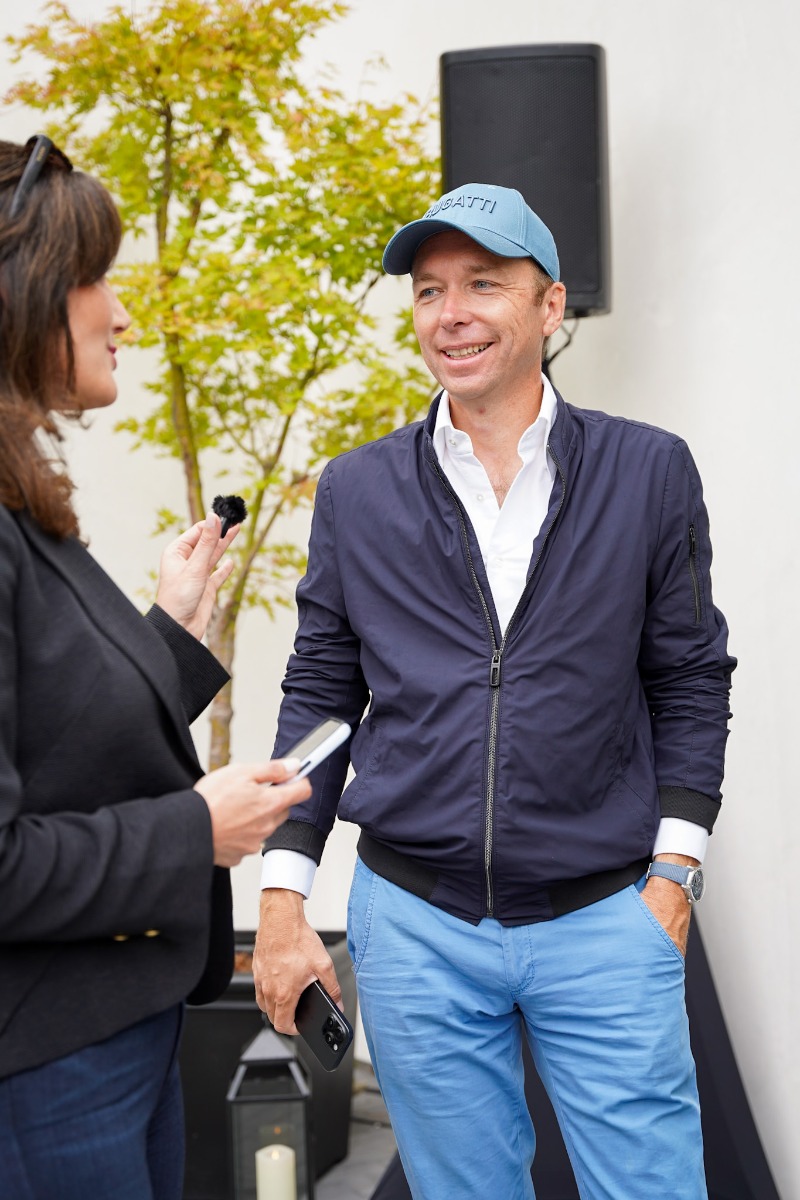
CLP: Bugatti’s quality control is famously exhaustive, as you’re building cars intended to last a century or more, not just a decade. What does that process look like for a one-of-one like Destrier, where there’s no second car to test against?
FH: The beauty of only having to make one car is that you can allow for body-panel constructions so vastly complicated they could never be applied to series production. That’s the beauty of making just one car — it’s truly coach-built. That’s a major differentiator from having to build a series-production car, and it applies to quality too. You can afford to produce a certain number of excess parts that fail to meet the requirements until you achieve one good part that meets the highest standard. We maintain the highest standards across all of our cars. They’re not easy to pass, and there’s no reason to adjust our quality standards simply because we’re making only one car.

CLP: What do you most want people to feel when they see Destrier in person for the first time?
FH: I want their soul and their heart to be touched by something beautiful — something so overwhelmingly poetic, romantic, and moving that they fall in love with it on the spot. It’s simply a feeling that you have. Obviously, that feeling can be constructed through the school of proportion, the surfacing, the gorgeous volumes, and the placement of those volumes. But ultimately, it should simply be something you perceive as beautiful — something that speaks to your heart.
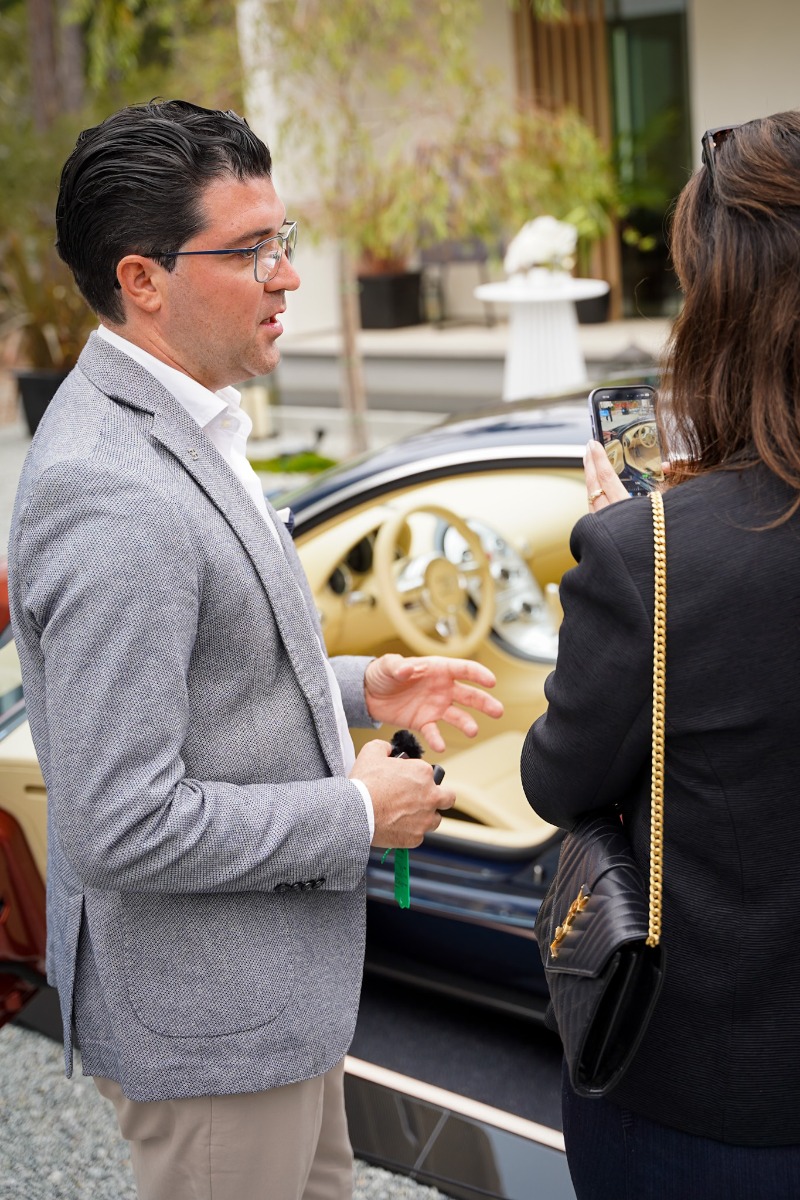
If Programme Solitaire reflects Bugatti’s new chapter, then La Maison Pur Sang exemplifies how the company is making sure the old chapters are never lost. It’s Bugatti’s dedicated restoration and certification division, offering owners of pre-owned Bugattis a path to bring their cars back to their original condition, or reimagine them entirely with fresh materials and finishes, all to Bugatti’s own standards.
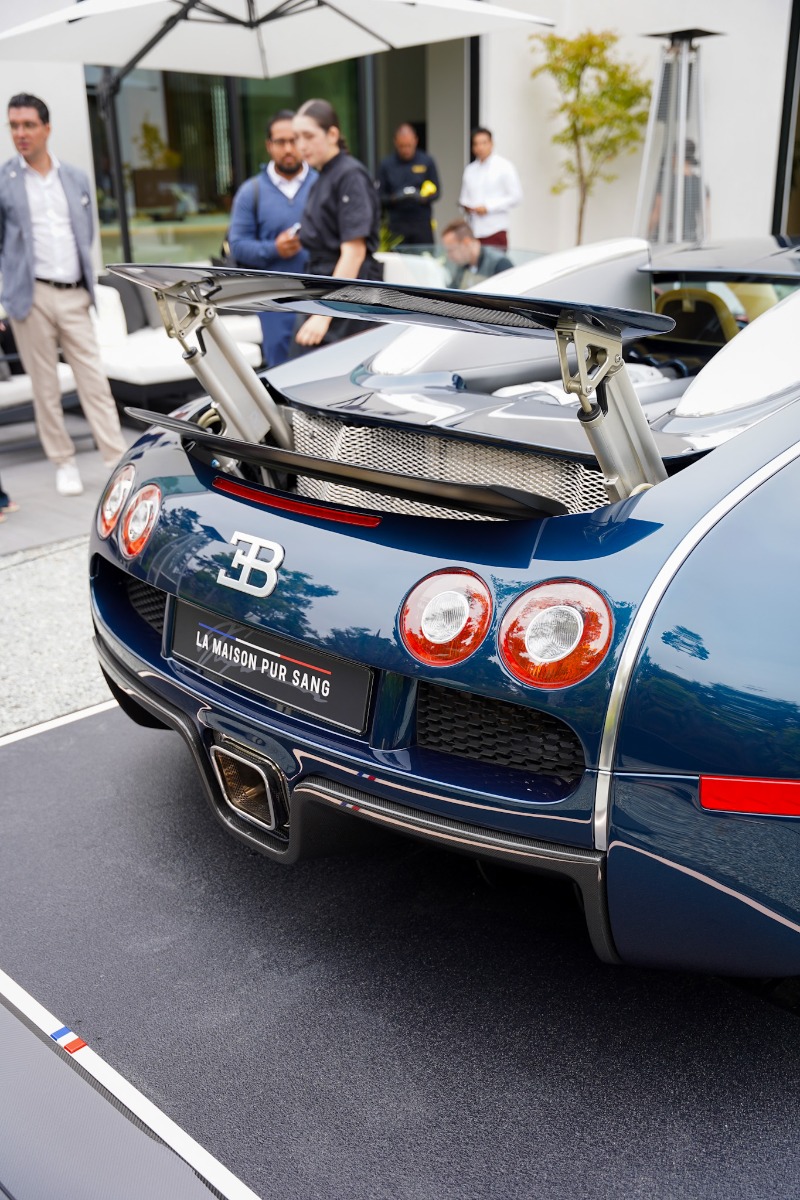
Its steward, Luigi Galli, arrived here almost by accident. A growing fascination with the marque’s history pulled him toward the brand long before he ever expected to work for it — and eventually, that passion led to a job offer. Today, he’s the one helping bring that history back to life, with a fresh, personal perspective on what it means to restore it.
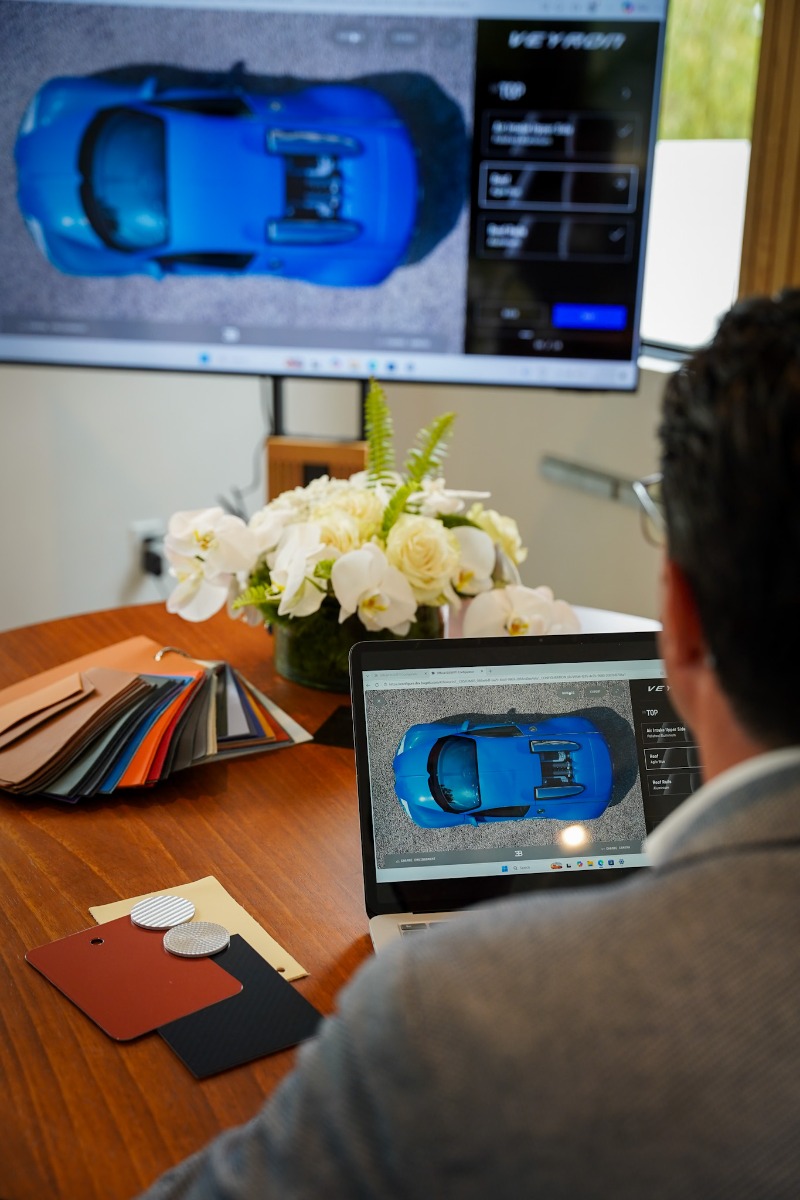
He showed me how the process starts: with a digital rendering of the car as it exists today, before any changes are made. “What we want to do as a process for our customer is quite simple,” he told me. “We start from where the car comes in; we start from that basic configuration, and from that we start to look into the possibilities. It’s not to say that everything is possible, but also we can show the customer how the car will look and explain what our proposal is, and what the reason behind it is.”
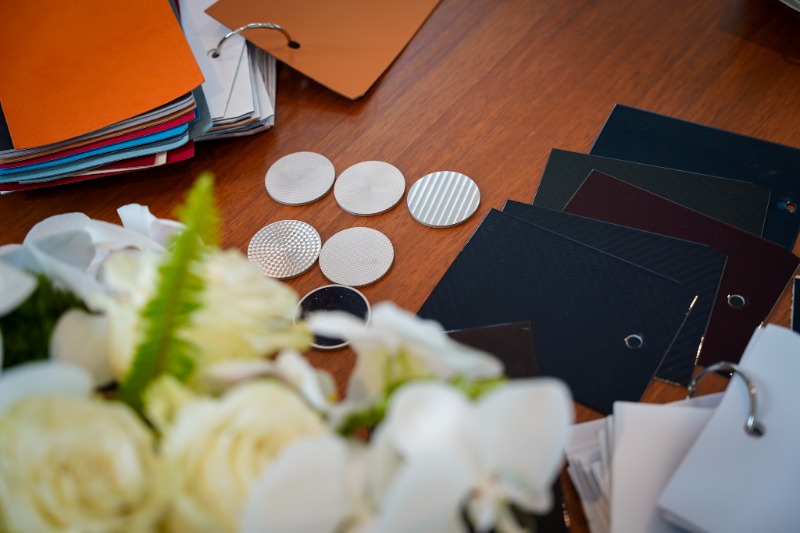
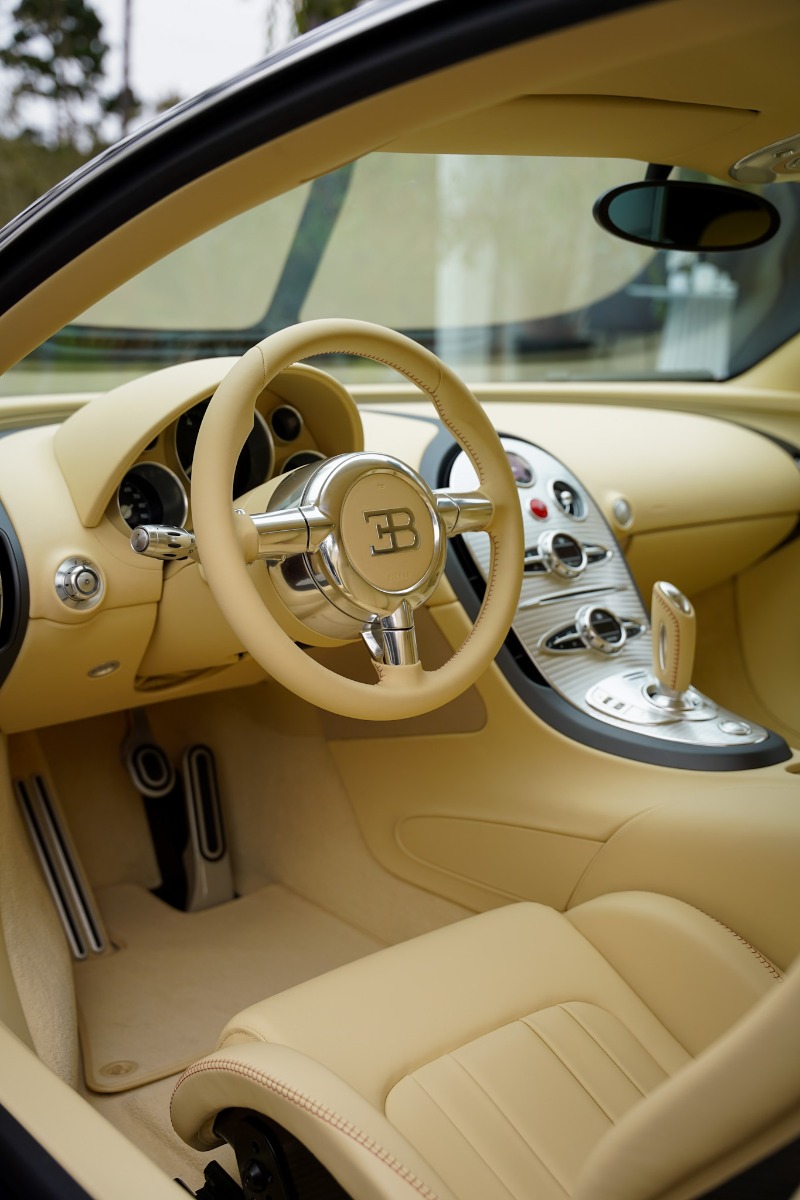
One detail he pointed to on the center console — a rippled, brushed-metal finish called Côte de Genève, borrowed from fine watchmaking — turned out to have a much deeper story than I expected. “Ettore Bugatti was not just looking into technical things, but also beauty,” Luigi explained. “He was also inspired by aeronautics and the aircraft industry, back in the days of World War One… when you look at the aircraft, you have this finishing on the metal because they have to be perfectly flat.” The flat panels reduced turbulence on riveted aircraft skins; decades later, Ettore brought the same idea to his dashboards, since raw aluminum, if left with any texture, scratched too easily. “The reason why we also wanted to have this is that it’s heritage-linked,” Luigi said. “We wanted to integrate this into the Veyron.”
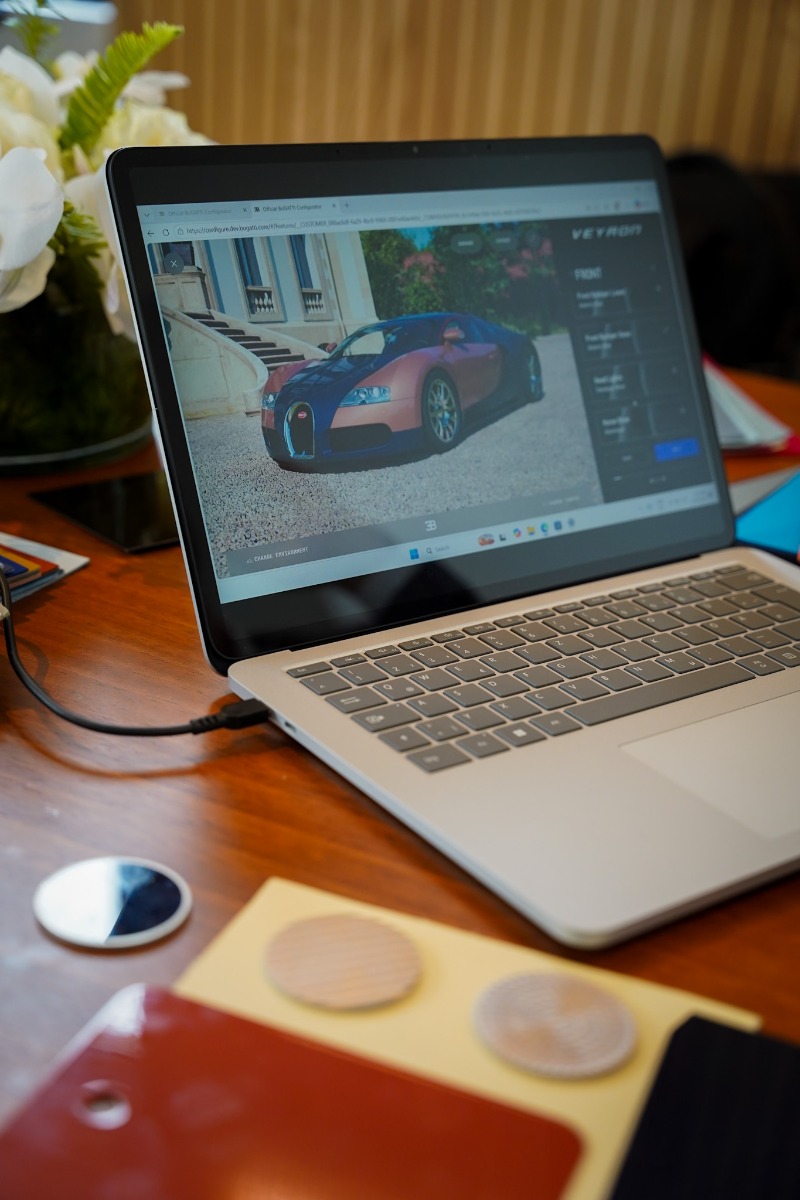
That instinct — protecting history while still allowing it to evolve — is really what La Maison Pur Sang is built on. As Luigi put it, describing the philosophy behind the program: “We believe that cars are a piece of art, but not like a Picasso painting. You cannot modify the Picasso because you like it better in a different way — this is a static piece of art. Cars are not static pieces of art. They’re very personal. They have to feel personal. You can make them personal. So why, today, should you not be able to make your personal dream from twenty years ago?”
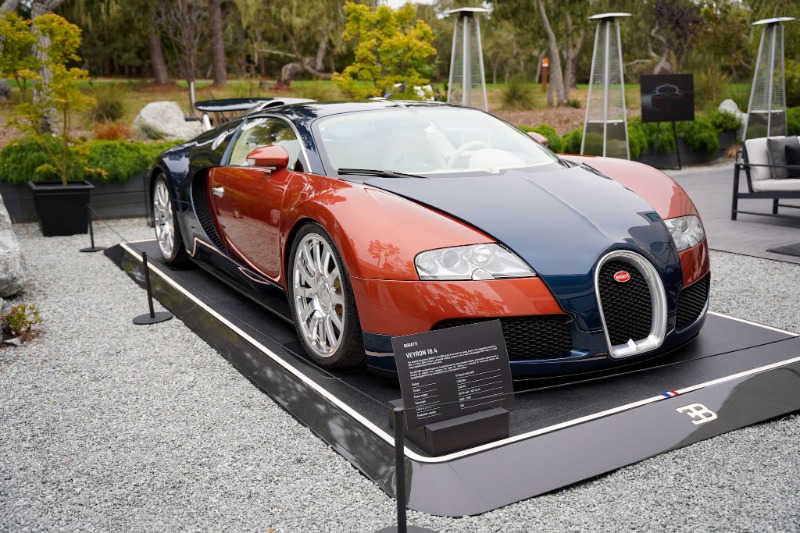
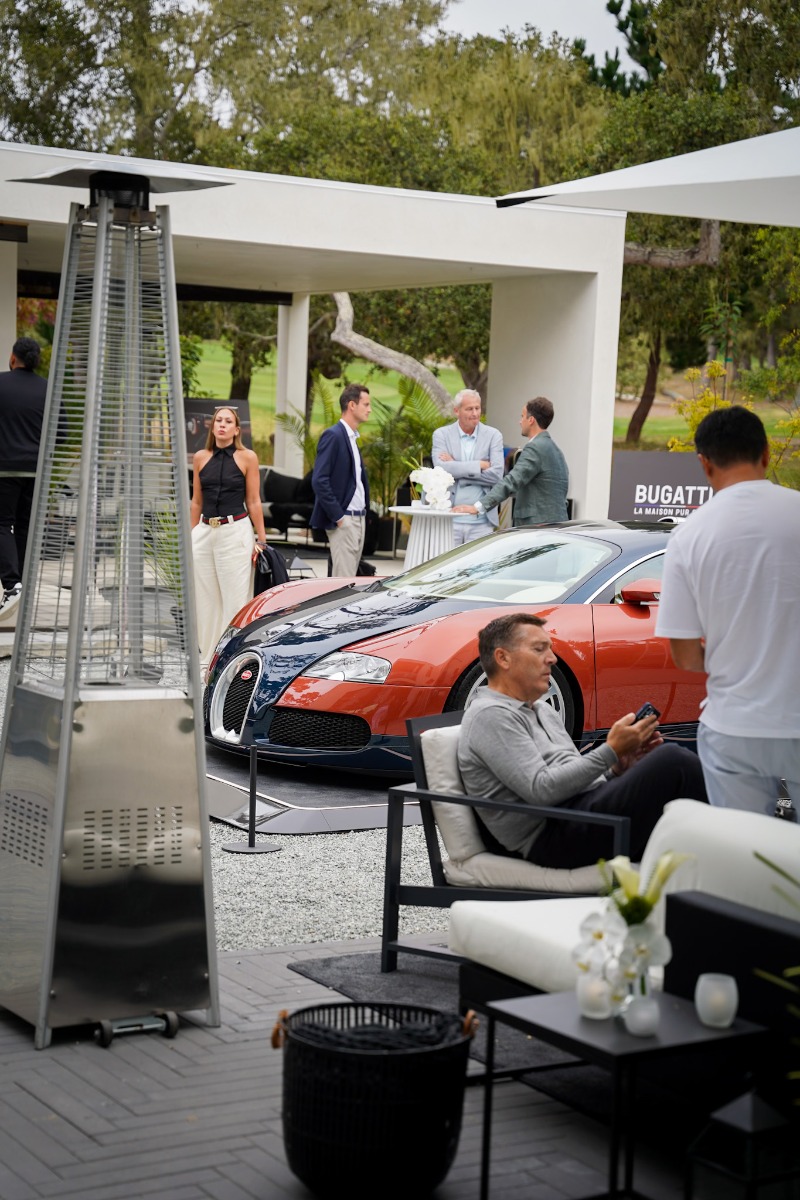
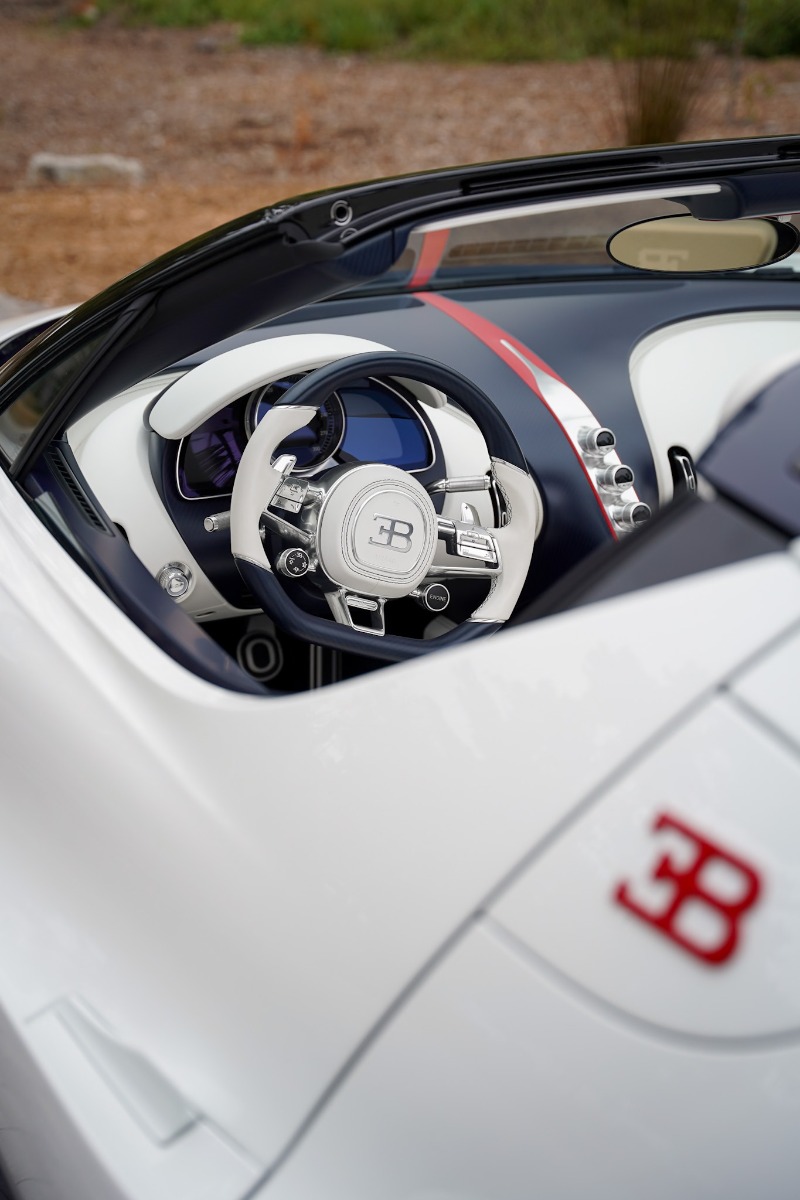
That philosophy came fully into focus this year with a striking one-of-one project: the La Maison Pur Sang Veyron 20 Years, marking two decades since the Veyron first redefined what a hypercar could be. Finished in the Tourbillon’s “Rouge Rembrandt” and the Chiron’s “Petrol Blue,” with a “Magnolia” interior, the car reintroduces the Veyron with a thoroughly modern eye — including a reengineered wheel package that finally solves one of the model’s most notorious pain points, its complex and famously hard-to-service tire system, by adapting Chiron-dimension tires to a reworked Machiavelli wheel design.
Every restored Bugatti also comes with something most classic car owners never receive. “When you get your car, it’s not just getting a car,” Luigi said. “You have a package with a book, around 80 pages, about the history of the car — the provenance.” And the cars, it turns out, are only appreciating: “The Veyron, for two years, is doubling every year.”
One story he shared captures the whole philosophy in miniature: an early restoration project involving a historically significant Grand Sport prototype — the very car used for that model’s world premiere — which a later owner had reconfigured away from its original specification. La Maison Pur Sang bought it back and restored it to its exact original state. “If we were back in the day, we bought it for one million euros,” Luigi said. “After the process, we resold it for two and a half million euros.” Even decades later, he added, the car still comes with a warranty. “Who gives you, after over twenty years, a warranty?”
And then, this week, came news that Bugatti’s Art de Vivre is moving beyond the automobile entirely. Bugatti Residences Miami will bring the marque’s design philosophy to a private residential development on one of Brickell’s last remaining waterfront parcels — positioned along the Miami River with reach toward Biscayne Bay, and proximity to the city’s financial district, art scene, and global dining culture.

The project is a partnership between Prosper Group, led by CEO Jay Roberts, and the more than century-old Belgian developer Versluys Group, led by CEO Bart Versluys, with architecture by Brandon Haw Architecture and interiors by Yabu Pushelberg. Bugatti, meanwhile, oversees the overarching vision — ensuring the development stays true to the same three-part philosophy that shapes its cars: Art, Forme, Technique. Rhodium, whose investors include the Monaco Royal Family, has been named the project’s exclusive global residential operating partner, tasked with translating that philosophy into daily life through white-glove service, discretion, and full personalization.

As Wiebke Ståhl, Managing Director of Bugatti International, put it: “Our vision is to consider every aspect, from exquisite design to seamless service and operations, creating a branded residential experience unlike any other.” It’s Bugatti’s second branded residence globally, following Bugatti Residences by Binghatti in Dubai, and its first in the United States. Sales are expected to launch to customers in 2027.
It’s a striking move for a brand that has spent over a century building fewer than a handful of cars a year for its most exclusive customers — but it’s also a logical one. If Art, Forme, and Technique can define a hypercar, there’s no obvious reason they couldn’t define a home.
Three announcements with three completely different products — a restored icon, a from-scratch hypercar, and a residential tower — and yet the same instinct runs through all of them. Whether the marque is restoring its past, sculpting its present, or building its future, the goal at Bugatti continues to remain the same: design something that is truly incomparable and built to stand the test of time.
[Media access c/o Bugatti. Image credits: Christina-Lauren Pollack, Samuel Cortez, and Bugatti. All opinions are my own.]