
Søren Kierkegaard, the Danish philosopher, once wrote, “For the great thing is not to be this or that, but to be oneself.” In a world that often follows trends or acts like a copycat, the most iconic brands and people are those who decide to do things differently.
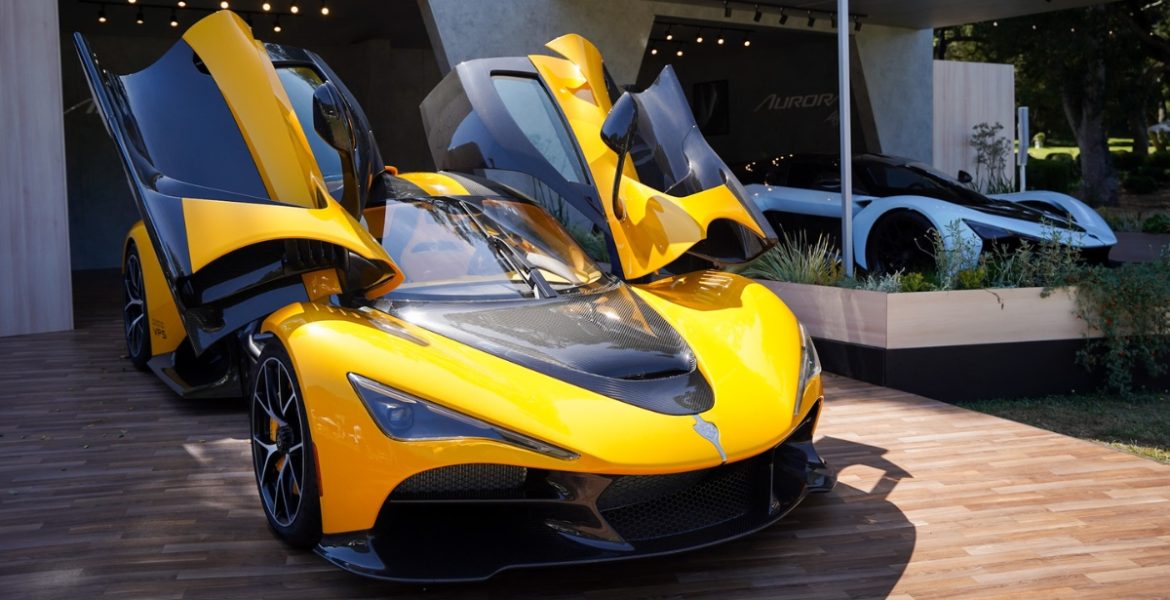
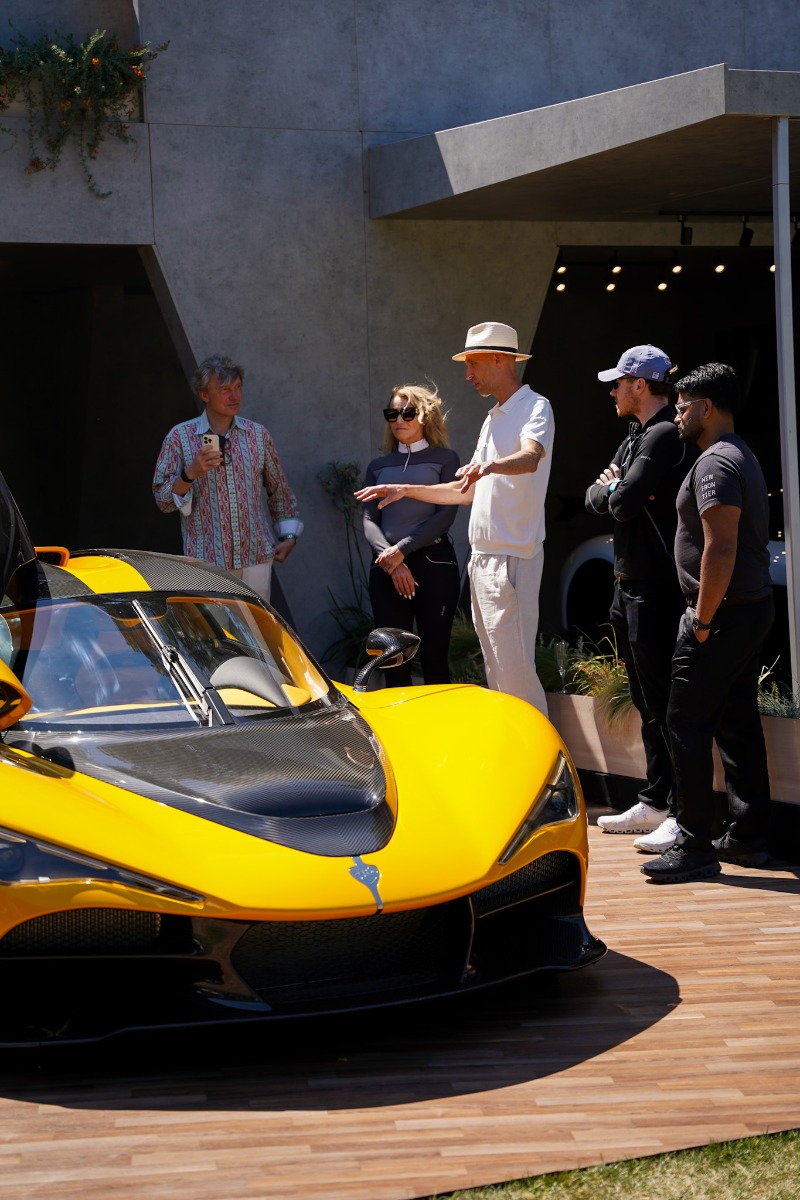
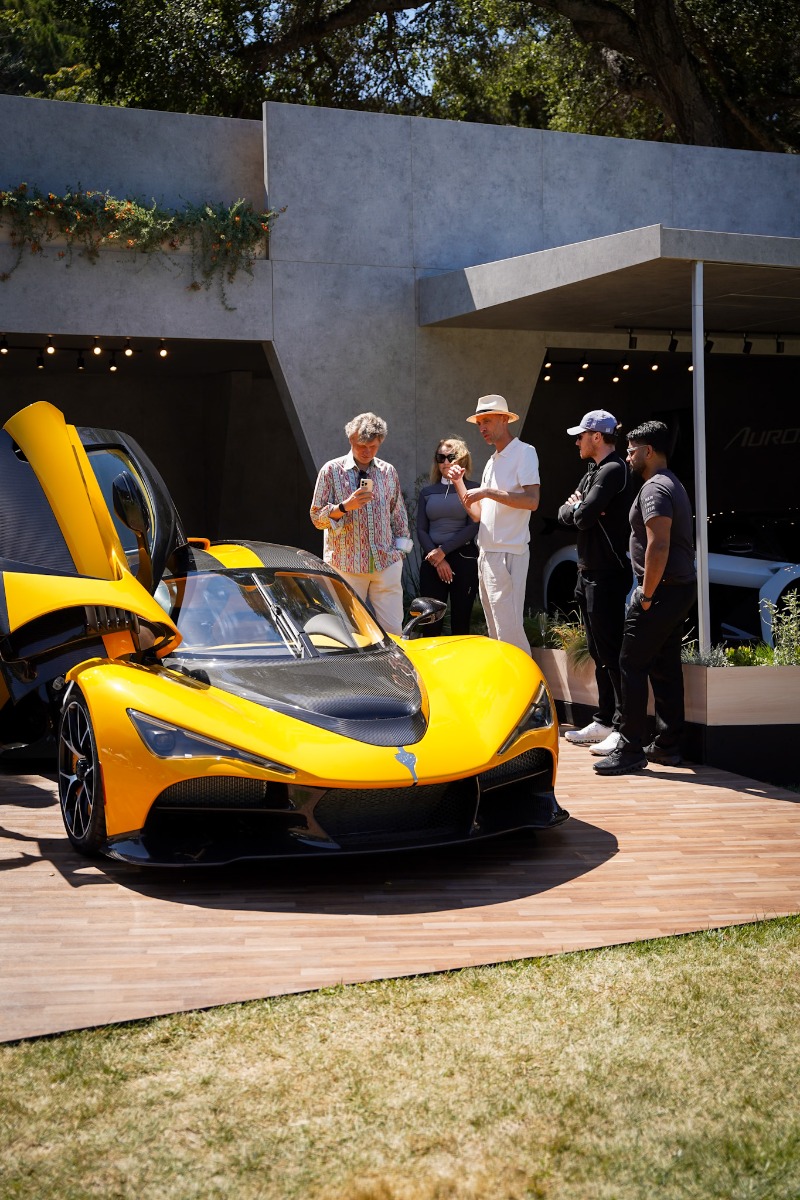
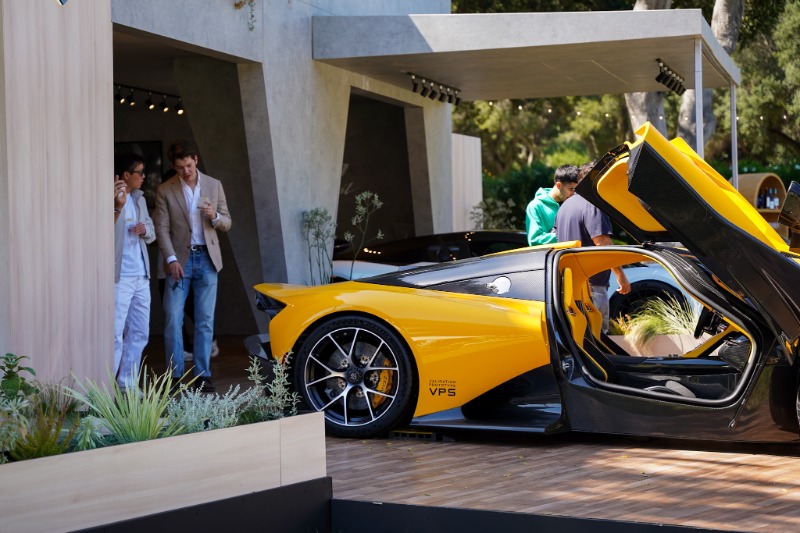
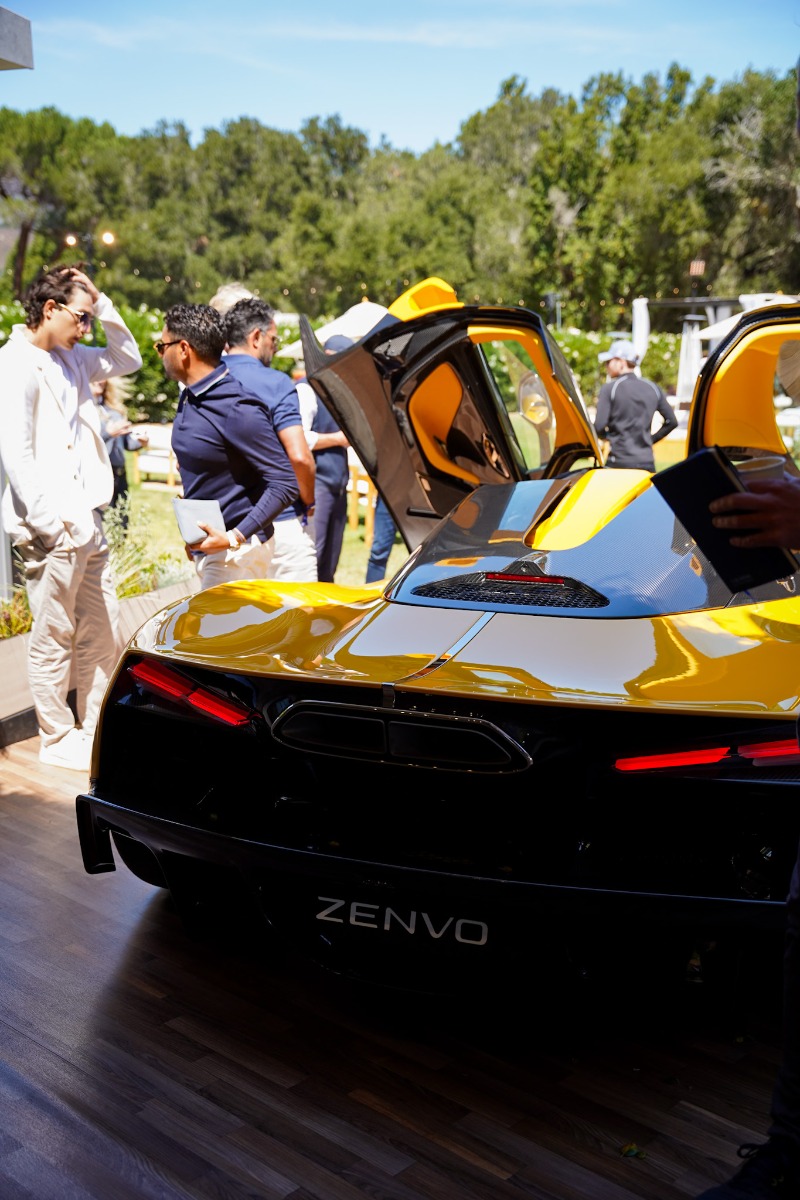
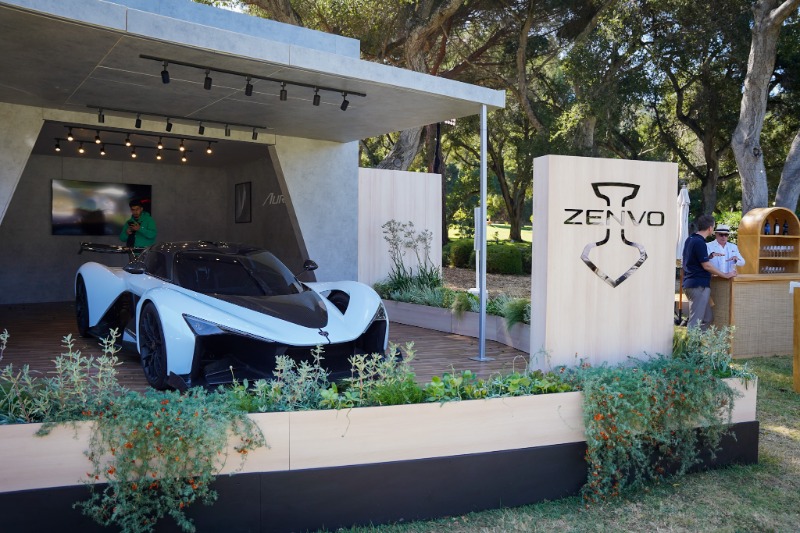
Last month, that philosophy took physical form at Stonepine Estate in Carmel Valley, where Zenvo Automotive hosted its Zenvo House during Monterey Car Week — and, more significantly, staged the United States debut of the Aurora Tur prototype.
Founded in 2007 by Troels Vollertsen and Jesper Jensen in Præstø, a coastal town about an hour south of Copenhagen, Zenvo has never been interested in playing by the established hypercar rulebook. Where Italian marques lean into romance and British brands lean into heritage, Zenvo leans into something more particular: the Danish design tradition of “form follows function”, taught to schoolchildren from an early age.
“It’s very easy to make something functional,” Chief Commercial Officer Mark Harrison told me. “It’s very hard to make it functional and beautiful. That’s the essence of what I see in Danish design.”
That tension – between simplicity, raw power, and undeniable beauty – that invokes all of your senses, might be the best way to understand Zenvo’s own tagline for its cars: “Equilibrium of Extremes”, the brand’s shorthand for the balance struck between uncompromising performance and deliberately restrained design.
At the center of that equilibrium sits Mjølner: Zenvo’s bespoke 6.6-liter, 90-degree hot-V twelve-cylinder engine, developed exclusively in partnership with MAHLE Powertrain. Named after Thor’s hammer, Mjølner produces 1,250 bhp from internal combustion, revving to 9,800 rpm, before its electric motors bring total output as high as 1,850 bhp.
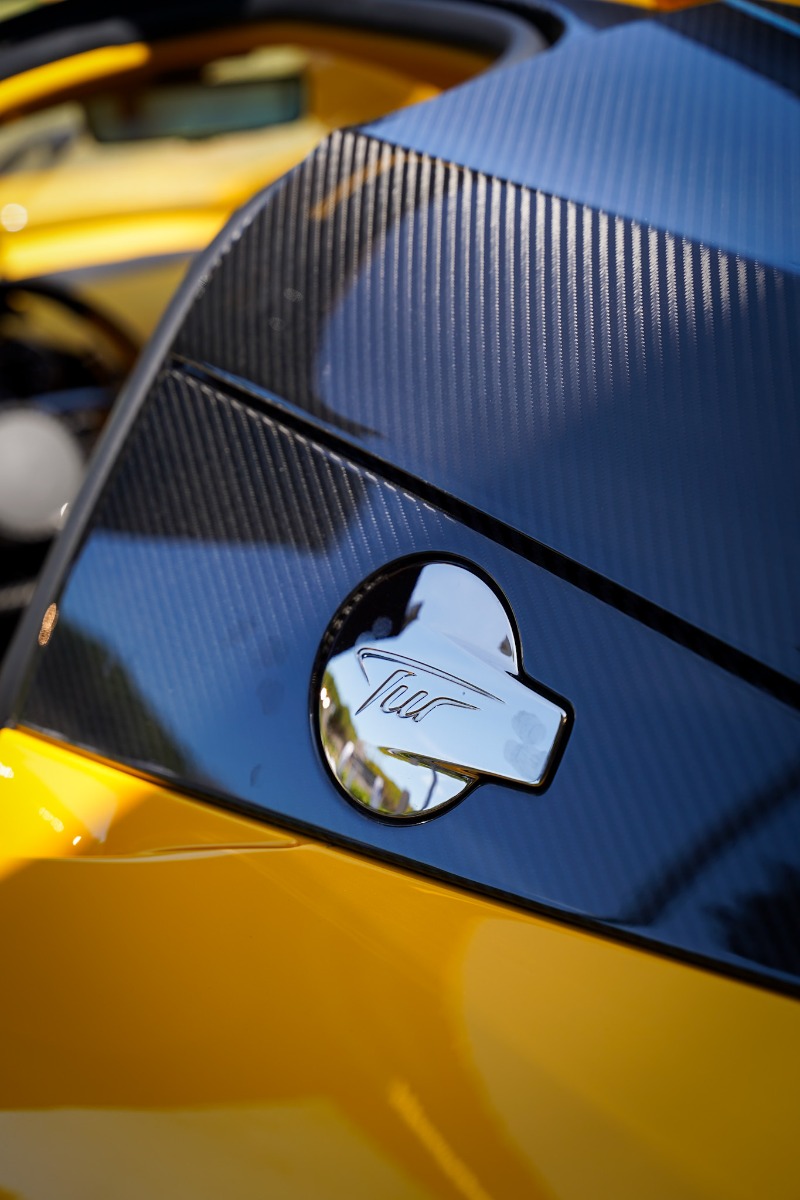
The mythology runs deeper than the name. “If you imagine the N is not there,” Chief Designer Christian Brandt told me, gesturing at Zenvo’s own wordmark, “then that is Thor’s hammer.” The brand’s logo, stripped of a single letter, resolves into the silhouette of the very hammer its engine is named after — a detail so quietly embedded in the identity that most people who’ve seen the badge a hundred times have never noticed it.
It’s the kind of mythological throughline that begs an obvious question, one I couldn’t resist asking both executives: if a superhero were to get behind the wheel of a Zenvo, who would it be?
Harrison exclaimed, “Jeff Goldblum in The Fly… And he’s a brilliant jazz pianist as well, isn’t he? So there you go — someone with multiple aspects to them.”
Brandt’s answer swung in an entirely different direction: Nicolas Cage, playing an exaggerated version of himself in The Unbearable Weight of Massive Talent. It’s a surprisingly apt comparison for a low-volume, wildly personality-driven brand that refuses to take itself too seriously even while building some of the most serious engineering in the industry — daring, utterly unique, and totally captivating.
Zenvo’s current flagship, and the star of its Monterey Car Week showing, is the Aurora — a car whose name, according to Executive Chairman Jens Sverdrup, was chosen with intention. “The Aurora takes its name from the Aurora Borealis, a rare phenomenon of the natural world created by the speed of light,” Sverdrup has said. “With the Aurora, Zenvo has sought to embody the fundamentals of nature: speed through strength, power, but also agility, borne from the obsessive reduction of mass.”
The Aurora is split into two distinct executions, sharing the Mjølner V12 but diverging sharply in character:
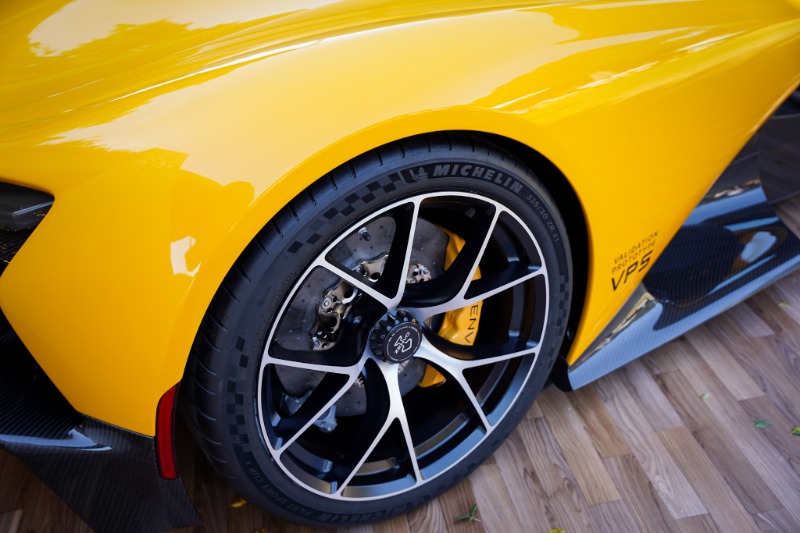
Aurora Agil: the track-focused variant. Rear-biased, stripped down, and built for lap times: an estimated 1,450 bhp, 1,400 Nm of torque, a curb weight of 1,360 kg, and a top speed electronically limited to 360 km/h (224 mph).
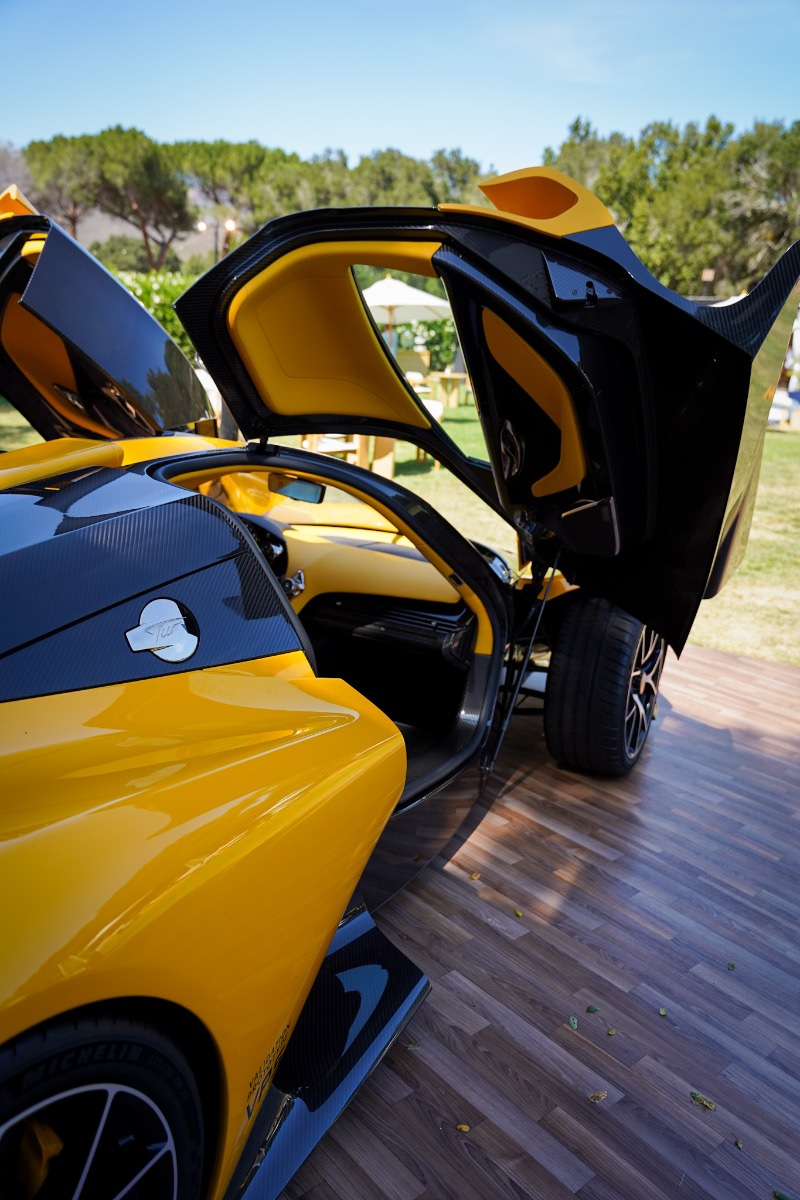
Aurora Tur: the grand-touring variant. All-wheel drive, more luxurious, built for cross-continental distance: up to 1,850 bhp, 1,700 Nm of torque, 1,548 kg, and an estimated top speed of 420 km/h (260 mph).
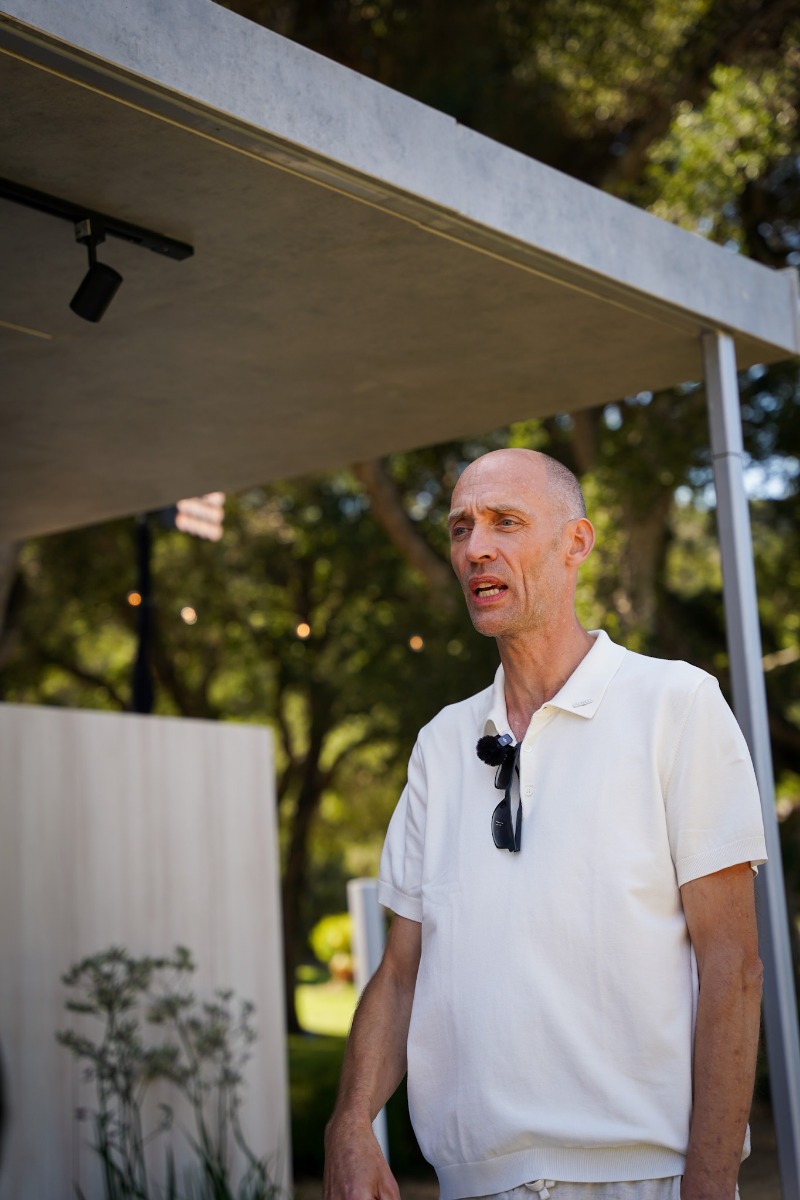
Christian Brandt described the Agil’s engineering in almost aerospace terms. “The whole aerodynamic setup of the car is based on Formula One aerodynamics,” he explained, pointing to its multi-element front wing, bargeboards, and full-length underbody airflow management. “It’s basically a Formula One car where we’ve just added body panels to make it road legal.” But crucially, that downforce isn’t calibrated for professional race drivers. “This is not a car designed for race drivers, but a car designed for gentleman drivers or amateur drivers,” Brandt said. “The whole idea has been to make the car perform aerodynamically at the speeds you would actually do on a track — so you can appreciate the effect, and every time you drive it, you’re able to do faster laps.”
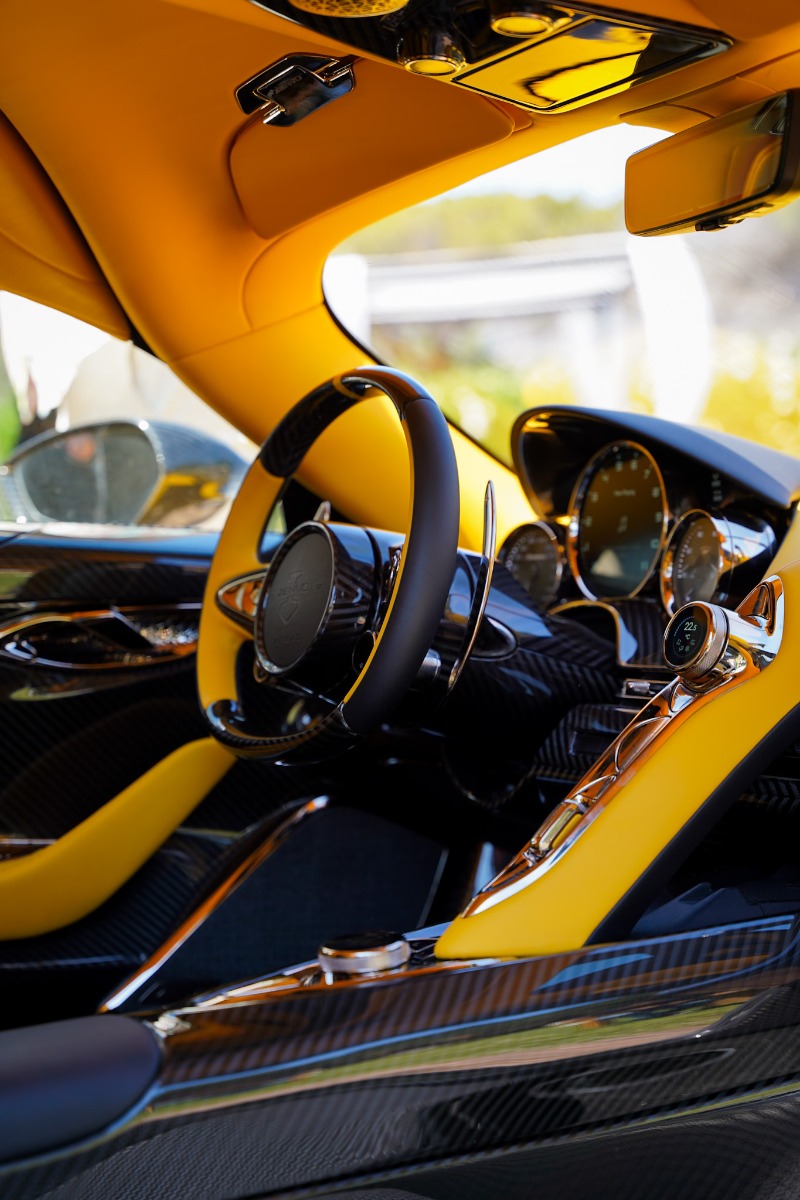
“The chassis and the components of Aurora are all works of art,” Brandt has said, “and we made a very definite decision that we did not want to hide these details away under a monolithic design. It is like a complex timepiece, or the skeletal architecture of a motorcycle.”
Brandt was characteristically uncompromising about what that exposed-structure philosophy required internally. “I had the full support of my CEO and the board to go in this design direction,” he told me. “This design is a pure design vision… when you’re a customer attracted to these kinds of products, you can’t fake that. You feel it, and you see it immediately.”
While the design, performance, and even the identity of the marque were all captivating, there was still a question I was curious to learn: Who actually buys a Zenvo?
If there’s a single throughline across every conversation I had at Stonepine, it’s this: the Zenvo buyer is not chasing recognition from the general public. He (and it is overwhelmingly a “he,” by Harrison’s own account) already owns the expected supercars and hypercars — a Ferrari, a McLaren, perhaps several — but he’s seeking something different and exhilarating, a hypercar that pushes the limits in every possible sense.
“If I look at who we’ve got at the moment as clients, it’s pretty varied — where they are in the world, their demographic, their age, the types of jobs they have,” Harrison told me. But a pattern does emerge once you push past the surface: Zenvo customers skew toward self-made business owners, the kind of people who built something out of nothing and see their own reflection in a brand doing the same thing.

Christian Brandt put it more personally. “The type of people that are attracted to our product… they’re self-made businessmen or women, and they somehow can mirror themselves in the passion that we’ve put into the product,” he said. “Even ones who’ve gone into a line of business far away from their own passion — they’ll say, had I had that opportunity, I would have gone with something like this too.”
Harrison broke the buyer base down into three rough segments. The first 10-20 percent are the true risk-takers — the early adopters willing to put serious money into a car nobody has driven yet, because a factory needs those first orders to start building at all. On the opposite end, another 10 to 15 percent are the wait-and-see buyers, who hold off until the production run is nearly sold out and then rush in once scarcity becomes undeniable. In between sits the largest group: a more rational, considered buyer weighing the car against what’s already in their garage and what’s genuinely missing from their life.
What unites nearly all of them, according to Harrison, is something closer to counter-signaling than status-seeking. A Ferrari gets recognized by a ten-year-old on the street. A Zenvo, parked at Goodwood or Pebble Beach, gets recognized only by the person who already knows exactly what they’re looking at — and that recognition, from a much smaller and more knowledgeable audience, is worth far more to this buyer than mass visibility ever could be.
In a way, acquiring a Zenvo means you’ve joined the ultimate inner circle – the most elite group of hypercar collectors on the planet, the ones who aren’t chasing vanity likes on social media or mass attention from passersby, but rather, the respect and recognition from the most discerning collectors who are truly ‘in the know’.
Every Zenvo is commissioned, not purchased. Harrison estimates the process — from first conversation to delivery — takes two to three years, with a team of roughly 20 people involved in shepherding a single build through specification, fabrication, and assembly.
“Ideally, somebody visits us here, looks at the car, and says, ‘where do I sign,'” Harrison said. “But we’d actually rather build a relationship through the process than get to the end point of signing a contract and getting a deposit. These are long-term relationships. We want somebody to be part of the family — to buy the next car, and the next one.”
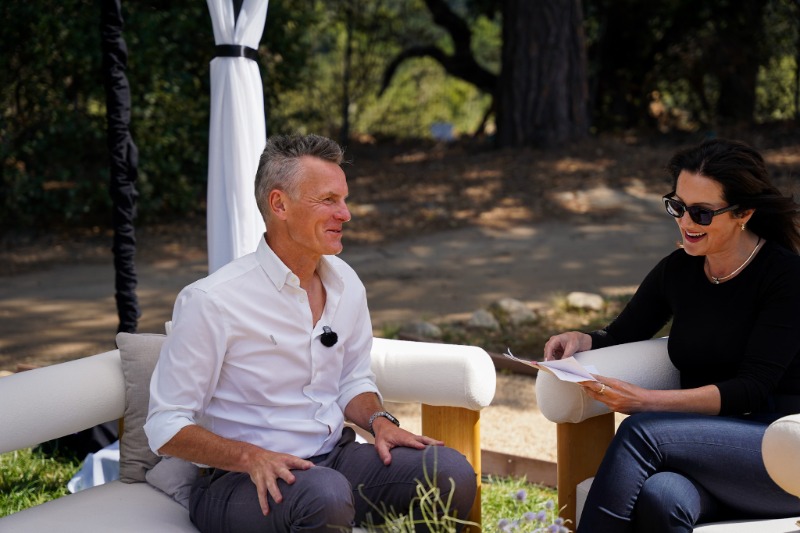
That long game extends well past the sale. Zenvo maintains a deliberately small dealer network — currently around 15 to 16 partners globally, split roughly evenly between the U.S. and the rest of the world — precisely because too many dealers dilute the volume available to each. When something does go wrong, Zenvo dispatches its own factory technicians directly to the car, rather than routing the problem through a conventional service network.
“They’re guys who’ve actually worked on the car and developed the car and engineered it,” Harrison said. “They know the car inside out. Jump on a plane, take the part.” In theory, the next day. It’s not a unique model in this segment, but it is, Harrison notes, table stakes: “Customers know things are being looked after, and it builds really strong relationships with clients.”
With the Aurora’s production capped at 100 units — an even split between Agil and Tur, though Harrison notes the exact ratio remains somewhat flexible — Zenvo faces a challenge common to every ultra-low-volume manufacturer: how do you build broad brand recognition around a product almost nobody will ever own?
Harrison’s answer is architectural as much as marketing. “You need to quickly build a portfolio of products,” he said. The Aurora’s platform was engineered from the outset to be configurable across future models, not unlike Pagani’s approach across the Zonda, Huayra, and Utopia. The Mjølner V12 itself is designed to scale down into V10 and V8 configurations, opening the door to what Harrison calls “a baby hypercar” down the line — a lower price point, higher volume, and, critically, greater brand visibility.
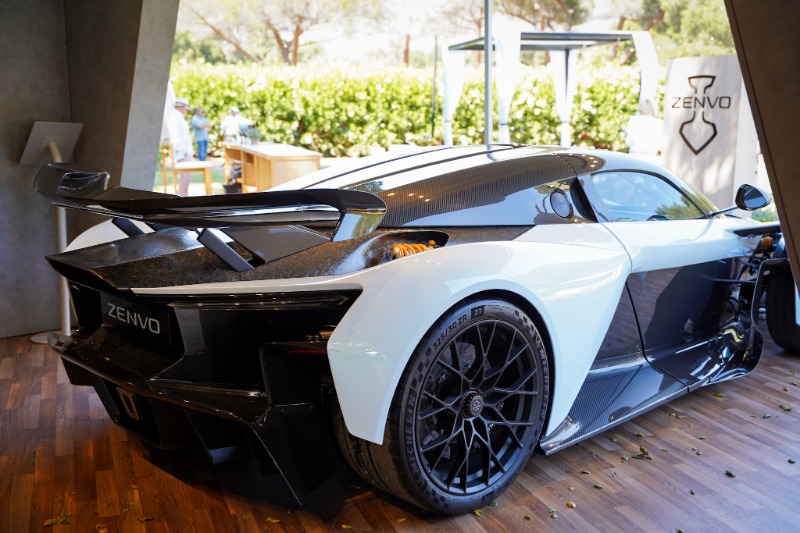
No brand builds credibility through spec sheets alone — it builds it through the people willing to put their own money behind it. Few Zenvo owners are more visible than Tim Burton, known to millions of subscribers as Shmee150, the British automotive YouTuber who has spent over a decade documenting the world’s most exclusive cars — and, since 2021, has owned one of Zenvo’s own: a custom TSR-S finished in “Lilla Perlemor,” a bespoke Mother of Pearl purple.
I asked Burton to reflect on his own path to Zenvo ownership, and what the process actually looks like from the buyer’s side of the table.
CLP: For readers who don’t know Shmee150, you’ve built one of the largest platforms in the world dedicated to supercars and hypercars since 2010. Your TSR-S marked your first hypercar purchase, and Zenvo unveiled it publicly at their Goodwood Festival of Speed stand, one of the most high-profile stages in the industry. What was it like seeing your car revealed there, and how did your audience react?
TB: “The journey from chasing cars around London a decade and a half ago to revealing my own brand-new hypercar at the Goodwood Festival of Speed was quite the pinch-me moment. Beyond the personal side of growing a business that made such a purchase achievable, it’s about being able to bring the audience along for the ride and sharing what the experience is all about.
Even better, Zenvo opened doors to really share more than ever before through the specification process, component fabrication, and assembly of the car itself, creating an unrivaled connection for myself and the audience. As a result, seeing the final product there, and knowing so many others who have been part of everything up to this point could also be involved, made for such a unique and special moment.”
CLP: Zenvo cars are fully bespoke, with customers working directly with the factory in Denmark over six to nine months, going well beyond paint colors into custom carbon weave patterns and hand-built details. What was that process like for you personally, from your first meeting with the team to the final spec?
TB: “Prior to determining the final specification, I already had a few ideas for potential directions that we could take. However, when the process allows you to look into every element — what level of underlying ink you want in the paint, what shade of colour you’d like for the anodised components — you start to really understand the extent of personalisation that is possible.
Over an extended period, we developed a pair of colour schemes before settling on one that would be the general direction. At that point, many samples were produced, and I even traveled to the factory to look at everything in person, while really considering how the final car would look. I often try to describe that a luxury car will allow you to choose from a wide range of colours and select some technical options.
A supercar will then introduce unique paints and bespoke leathers for the interior. But a hypercar, like the vehicles from Zenvo, is where you start exploring a fascinating world of tricks with carbon fibre, tinting elements, anodised components, personal graphics and details, and so much more.”
CLP: You’ve spent over a decade analyzing what makes cars actually work, both on paper and in the metal. How did that depth of knowledge change your approach to commissioning your own TSR-S compared to a typical buyer, and were there any details you specifically pushed for or pushed back on because of it?
TB: When talking about hypercars, it’s an extremely small market and a very different way of thinking compared to more mainstream cars. These products are bought through emotion and desire, not for practicality and convenience; otherwise, it would be impossible to justify the price tag.
In many ways, they are art forms and collectibles, often also viewed as investment assets, which gives a completely different perspective. Having been fortunate to work in this industry for a number of years and understand each element, I decided to purchase the Zenvo TSR-S based on my relationship with the company, the exciting product itself, and my belief in the future direction they were taking with the subsequent model, Aurora.
Regarding the car’s specifics, my normal desire for bold and exuberant colours had been slightly softened, but the Zenvo team encouraged the creation of something that would be a centrepiece, which influenced the choice of colours. The sky was the limit for options, even down to manufacturing a bespoke carbon fibre front grille that would support the size and shape of a UK number plate — which many owners of such a car unfortunately misplace.”
CLP: Beyond the exclusivity of a low-production brand, what was it about the car itself — the engineering, the design, the experience of driving it — that made you want to become a Zenvo owner?
TB: “I’ve grown close to Zenvo as a brand over many years; from a 2013 visit to a storage facility in Dubai to look at the ST1, through to driving various models in the years that followed, including a first drive in the TSR-S back in 2018. With the model’s evolution and numerous former colleagues joining the company, the connection only grew stronger, leading me to seriously consider purchasing one, and eventually making the move forward in 2021. A car in this category needs to stand out, but it also needs to be an experience, and that’s exactly what Zenvo offers. From the TSR-S’s Centripetal rear wing to its rarity and exclusivity, the emotions and talking points make it such an event to own and drive.”
When I asked Harrison to look five years down the road, he said, “The investment and time and effort are going into building a massively strong foundation for the future.” It’s a fittingly Danish answer: simple. And it circles back to where this story began.
Kierkegaard never drove a hypercar, but he understood something Zenvo has built an entire company around — that the hardest, most valuable thing any brand, or any person, can do is simply insist on being itself. Mjølner may be named for a god’s hammer, but the philosophy under the hood is entirely, unmistakably human.
[Media access c/o Zenvo. Image credits: Christina-Lauren Pollack and Samuel Cortez for Inspirations & Celebrations. All opinions are my own.]